Kids Helping Kids Is Universal - But Cultures Help Differently
A simple game reveals a universal instinct in kids
A simple game reveals a universal instinct in kids


Two new studies explore the development of reasoning and perspective-taking in young children.
How to Pass the False-Belief Task Before Your Fourth Birthday
A new study found significant correlation between excessive daytime sleepiness and vitamin D - in patients with normal vitamin D levels, progressively higher levels of daytime sleepiness were correlated inversely with progressively lower levels of vitamin D.
But among patients with vitamin D deficiency, sleepiness and vitamin D levels were associated only among black patients.This correlation was observed in a direct relationship, with higher vitamin D levels associated with a higher level of sleepiness among black patients.
Scientists have discovered a new gene mechanism that appears to regulate triglyceride levels and may protect carriers of a gene variant against cardiovascular disease, especially among those with greater intakes of polyunsaturated fat (PUFA).
Al exercise is good exercise and there is a 100 percent chance you will lose weight if you consume fewer calories than you burn, but if you are interested in optimizing fat and weight loss after the holidays, aerobic training is the best way to go, according to Duke researchers.
They compared aerobic training, resistance training, and a combination of the two in what they say is the largest randomized trial to analyze changes in body composition from the three modes of exercise in overweight or obese adults without diabetes.

Soil organic matter makes up the bulk of terrestrially bound carbon in our biosphere. Those compounds play an important role, not only for soil fertility and agricultural yields but also for controlling the concentration of carbon dioxide in the atmosphere.
Climatic change can therefore be slowed down or accelerated according to our management of soil resources. A new study sheds some light on the process.
A project has identified the mechanism responsible for generating our fingers and toes, and revealed the importance of gene regulation in the transition of fins to limbs during evolution.
Their conclusion involves a theoretical model for pattern formation known as the Turing mechanism. In 1952, mathematician Alan Turing proposed equations for pattern formation, which describe how two uniformly-distributed substances, an activator and a repressor, trigger the formation of complex shapes and structures from initially-equivalent cells.
A recent Finnish analysis determined that approximately ten percent of 6-8 year olds have sleep-disordered breathing, increased among children with enlarged tonsils, crossbite and convex facial profile. Unlike in adults, excess body fat is not associated with sleep-disordered breathing in this age group. The study was part of the Physical Activity and Nutrition in Children (PANIC) Study led by the Institute of Biomedicine at the University of Eastern Finland.
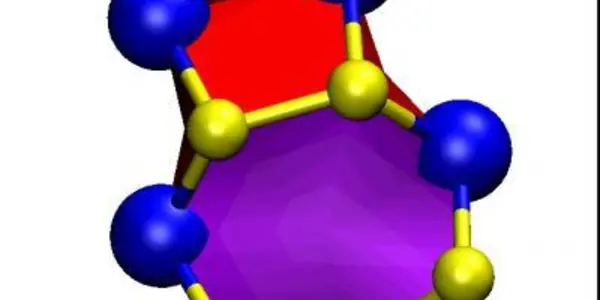
A new hypothetical material offers the tantalizing possibility of a signal path smaller than the nanowires for advanced electronics.
Yes, theoretical materials. It must be the weekend.
Rice University theoretical physicist Boris Yakobson and postdoctoral fellow Xiaolong Zou were investigating the atomic-scale properties of two-dimensional materials - we all have those laying around the house to build Christmas gifts - when they concluded that a particular formation, a grain boundary in metal disulfides, will create a metallic, and therefore conducting, path only a fraction of a nanometer wide.
That's basically the width of a chain of atoms.
Globally, people are living longer and lifespans have increased dramatically in the past 40 years, but the increased life expectancy is not benefiting everyone. Adult males from low- and middle-income countries are most notably falling behind.
The average lifespan is longer than in 1970, and those extra years of life are being achieved at lower cost, but the costs for an extra year of life among adult males in lower-income countries are rising while the costs for an extra year of life among children worldwide and for adults in high-income countries continues to drop.

A new survey by the University of Iowa says casino growth in the state has not influenced gambling by residents. It instead suggests that fewer Iowans gambled overall and also that fewer people have become addicted to gambling despite a recent spurt in gaming facilities.
This is good news for those of you worried about having a crack house in your neighborhood or prostitutes on street corners. They will also apparently not lead to more drug use or prostitution.
Casino gambling was introduced in Iowa in 1991 and the state currently has 21 casinos in Iowa, three licensed by the state and the others owned and operated by Native American tribes.
The survey was conducted between 2006 and 2008 during a family study of problem gambling. The
University of Iowa
A new paper says that altered gut microbiota in humans is associated with symptomatic atherosclerosis and stroke.
The human body contains ten times more bacterial cells than human cells, most of which are found in the gut. These bacteria contain an enormous number of genes in addition to our host genome, and are collectively known as the gut metagenome. How does the metagenome affect health? It's unclear, other than that probiotic foods are a $30 billion placebo. But specifics are currently being addressed by researchers in metagenomic research.
In America, human women wake up every day and decide whether they want to have sex or not. They know somewhere a man is willing to make that happen.
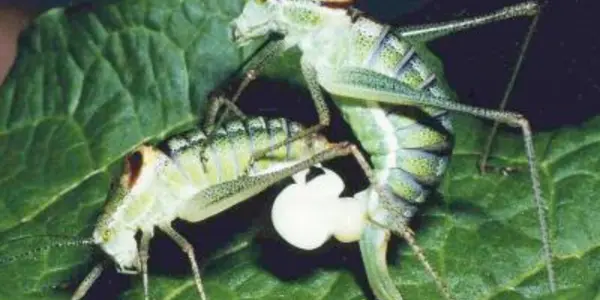
In bushcrickets, the male is in charge.
When bushcrickets mate, the male attaches a spermatophore to the female's abdomen. Alongside the sperm themselves, the spermatophore contains a protein-rich mass that the female eats after mating. It then takes several hours for the sperm to find their way into the female's reproductive tract.
Who decides when this 'bridal present' is delivered? A paper by Bielefeld biologists Professor Klaus Reinhold and Dr. Steven Ramm says the male determines the dynamics of this process, even long after he has 'hopped off' somewhere else.