Kids Helping Kids Is Universal - But Cultures Help Differently
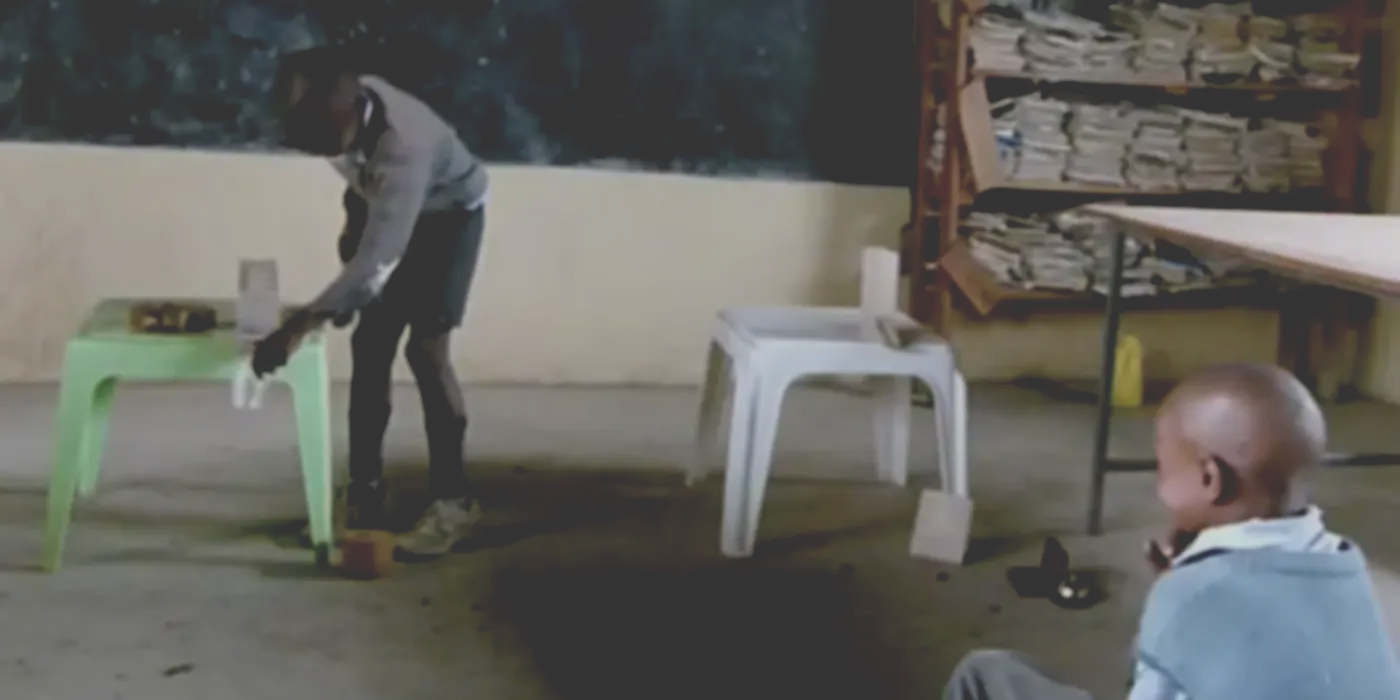
A simple game reveals a universal instinct in kids
A simple game reveals a universal instinct in kids


A new study indicates that clay minerals, formed when water is present for long periods of time, cover a larger portion of Mars than previously thought. Clays were in some of the rocks studied by Opportunity when it landed at Eagle crater in 2004. The rover only detected acidic sulfates and has since driven about 22 miles to Endeavour Crater and clay minerals have been detected using a spectroscopic analysis from the Mars Reconnaissance Orbiter. The clays also exist in the Meridiani plains that Opportunity rolled over as it trekked toward its current position.
It may not work with the ladies, but when it comes to leading a team tasked with developing new products and bringing them to market, new research from North Carolina State University shows that being nice and playing well with others gives you a very real competitive advantage. One new study shows that project managers can get much better performance from their team when they treat team members with honesty, kindness and respect.
A second study shows that product development teams can reap significant quality and cost benefits from socializing with people who work for their suppliers.
In the aftermath of the Newtown, CT shooting, people are searching for answers. The mental illness aspect is obvious, much like with the psychology graduate student in Colorado who opened fire on viewers at a theater, but this time the focus is on the anti-social tendencies of Adam Lanza and how they were exacerbated by video game and Hollywood violence.

In a discovery that may prove important for cognitive science, our understanding of nature and applications for robot vision, researchers at the University of Adelaide have found evidence that the dragonfly is capable of higher-level thought processes when hunting its prey.

Prehistoric farming communities in Europe constructed water wells out of oak timbers - it seems early farmers were skilled carpenters long before metal was discovered or used for tools.
These first Central European farmers migrated from the Great Hungarian Plain approximately 7,500 years ago, and left an archaeological trail of settlements, ceramics and stone tools across the fertile regions of the continent, a record named Linear Pottery Culture (Linearbandkeramik - LBK). However, much of the lifestyle of these early settlers is still a mystery, including the climate they lived in and technology or strategies they used to cope with their surroundings.
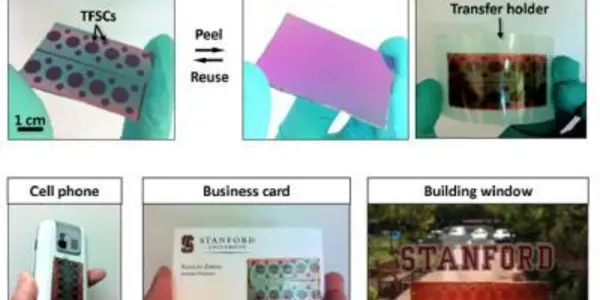
Solar panels are easily susceptible to mechanical problems. Storms, leaves, you name it - but some of that is because they are rigid. That rigidity also limits their applications.
New flexible, decal-like solar panels that can be peeled off like band-aids and stuck to virtually any surface, from papers to window panes, could make solar power a lot more deployable. The world's first peel-and-stick thin-film solar cells have been created by researchers at Stanford University and unlike standard thin-film solar cells, their peel-and-stick version does not require any direct fabrication on the final carrier substrate.
When is diversity a bad thing? When it comes to environmental action, according to a new paper from the University of East Anglia (UEA).
Scandinavian countries, low in ethnic and religious diversity, take more collective action than more diverse nations, like the UK, China and the United States. But the UEA paper frames diversity using the more negative term 'fragmentation'.
Americans may love separation of church and state and the mix of multiple religions in the USA but Dr. Elissaios Papyrakis, a senior lecturer in UEA's School of International Development and a senior researcher at Vrije Universiteit
in Holland, found that religious diversity has an even greater detrimental impact on environmental performance than ethnic diversity.
Human hands and their remarkable dexterity have given us everything from the guitar of Segovia to the art of the Dutch masters but, says David Carrier from the University of Utah, they evolved to be what they are for a more practical reason. As a weapon.
Carrier and colleague Michael Morgan publish their hypothesis that human hands evolved their square palms and long thumb to stabilise the fist and produce a compact club for use in combat in The Journal of Experimental Biology.
Scientists have found that therizinosaurs defied the sterotype of sensory abilities of plant-eating animals. Their exceptional sensory abilities - smell, hearing and balance - were well developed and might have affected or benefited from an enlarged forebrain, something typically associated with predators.
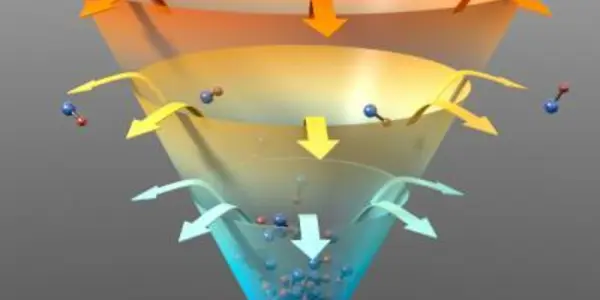
Evaporative cooling has been used to cool atoms to extraordinarily low temperatures. The process was used in 1995 to create a new state of matter, the Bose-Einstein condensate (BEC) of rubidium atoms (see Nobel laureate Carl Wieman and his Science 2.0 articles here), which was so revolutionary and unnatural that BEC atoms travel at a rate of only three feet per hour. Now in its 50th year, Joint Institute for Laboratory Astrophysics (JILA) physicists have met a goal once bordering on the impossible - they have chilled a gas of molecules to very low temperatures by adapting the familiar process by which a hot cup of coffee cools
Our eyes are the window to the world, but making sense of the thousands of images that flood us each day is squarely in the purview of the brain - and now researchers say they have created the first interactive map of how the brain organizes these groupings.
The result, achieved through computational models of brain imaging data collected while the subjects watched hours of movie clips, is what researchers call "a continuous semantic space."
Some relationships between categories make sense (humans and animals share the same "semantic neighborhood", for example) while others such hallways and buckets are less obvious. But the researchers found that different people share a similar semantic layout.
It's too late to treat Lou Gehrig, but he would probably still be batting .300 and playing every day for the New York Yankees if he had not been struck down by the disease that now bears his name.
Researchers who are not in the US, or who are Red Sox fans, prefer the more scientific amyotrophic lateral sclerosis (ALS) term for Lou Gehrig's Disease and results from eleven independent ALS studies provide some hope for the afflicted community – because they reveal that the disease may be treatable by targeting new mechanisms revealed in neural stem cell-based studies.