Kids Helping Kids Is Universal - But Cultures Help Differently
A simple game reveals a universal instinct in kids
A simple game reveals a universal instinct in kids


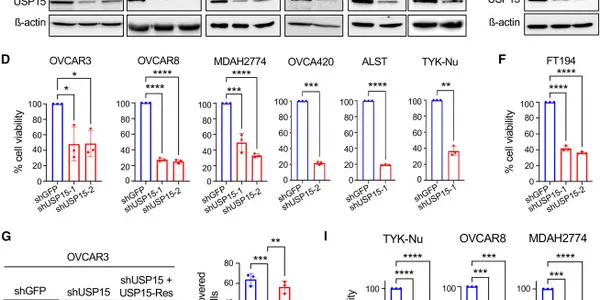
A new technology can make nanoscale protein measurements - which may mean understanding the effects of therapeutic agents in tumor cells and different cell populations within patients, a key step toward being able to tailor therapy for each patient.Currently, research on cancer agent activity requires patients to undergo several invasive biopsies to generate enough cells for testing. A group of researchers have developed a highly sensitive test called the nano-immunoassay (NIA) that can make nanoscale protein measurements in cells from minimally invasive blood draws or fine-needle aspirates. The researchers used a microfluidic instrument called the Nanopro1000.
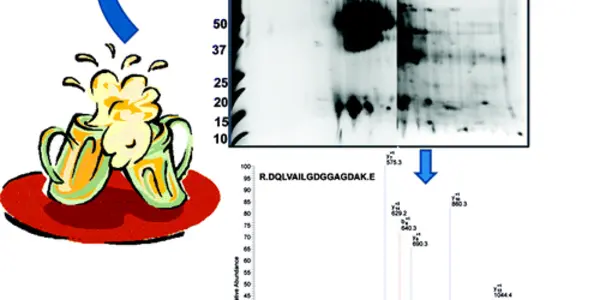
Quick, what's the world's favorite beverage?If you said 'beer', you're wrong, water and tea are way ahead, but it means the most comprehensive deciphering of the beer's proteome (the set of proteins that make beer "beer") ever reported will interest you just the same. Their report on the beer proteome could give brewers a new way to engineer and even customize the flavor and aroma of beer by experimenting with the proteinaceous components.Beer is the world's favorite alcoholic beverage, so you needn't feel bad about your beverage answer.
Can crowdsourcing lead to better medicine? Crowdsourcing is used in astronomy and protein folding in biology, along with engineering and computer software. But can the 'wisdom of crowds' also help cure disease?It's certainly possible. An unheralded clockmaker in England named John Harrison showed that longitude could be determined by using a timepiece, making the study of astronomy by experts overkill and revolutionizing travel by seaA group at Harvard created The Challenge in February to find out if citizen science could work for diabetes research too, and their results are in.
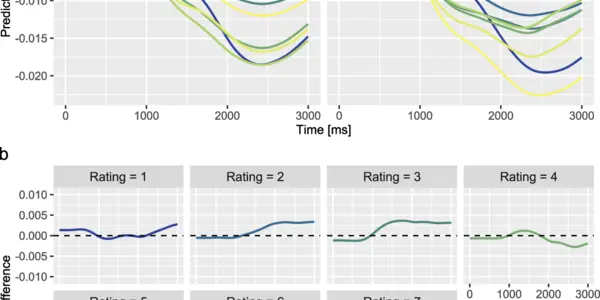
Social rejection isn't just emotionally unsettling, it can also impact your heart in a literal sense, according to a new study which finds that being romantically rejected makes your heart rate drop for a moment. Bregtje Gunther Moor, Eveline A. Crone, and Maurits W. van der Molen of the University of Amsterdam and Leiden University in the Netherlands say research has shown that the brain processes physical and social pain in some of the same regions but they wanted to find out how social pain affects people physically.

There are some Happy Coffins from Singapore challenging death's taboos. Today, designer coffins deck a nursing home where three residents fulfill their pre-departure wishes about how their final resting places should look.
"Without any fear," Elsie Chua said, "I am not afraid to talk about my eventual departure. It is very meaningful to be able to shape the design of my coffin and see it before I die. I want to have a matching kebaya to go along."
A kebaya is a traditional Straits Chinese garment for women.
The art of dying
Elsie's wish was granted through an initiative between the Lien Foundation, a Singapore philanthropic house and St Joseph's Home and Hospice.

A group of scientists say they have conducted a comprehensive study of how different body measurements correspond with ratings of female attractiveness. Even across cultural divides, women who are young, tall and long armed were considered the most attractive, they found, to little surprise.According to the researchers, traditional studies of attractiveness used a natural selection framework - an individual will always choose the best possible mate that circumstances will allow (romance of the fitter?). Those studies focused on torso, waist, bust and hip measurements.

In the Houston-Galveston Coastal Subsidence District, a group of researchers have found that a large section of northwestern Harris County, particularly the Jersey Village area, is sinking rapidly. They analyzed a decade's worth of GPS data measuring ground elevation in the Houston area and found that some points in Jersey Village are subsiding by up to 5.5 centimeters (about 2 inches) a year.
A semiconductor material called gallium manganese arsenide has been shown to have an interesting new effect that converts heat into a quantum mechanical phenomenon – known as spin – in a semiconductor. If developed, the effect could enable integrated circuits that run on heat, rather than electricity.This research merges two new technologies, thermo-electricity and spintronics. Researchers around the world are working to develop electronics that utilize the spin of electrons to read and write data - desirable because in principle they could store more data in less space, process data faster and consume less power.
A new study says sodium nitrate, like you get if you eat plenty of vegetables, reverses features of metabolic syndrome in mice. Metabolic syndrome is the list of risk factors of metabolic origin that increase likelihood of getting cardiovascular disease and type 2 diabetes.As obesity has increased, and the number of people with metabolic syndrome right along with it, various attempts have been made to identify a common underlying molecular mechanism for metabolic syndrome. One group has pointed to a defect in endogenous synthesis and bioavailability of nitric oxide (NO) and their new study says one contributing issue in metabolic syndrome is a decrease in the amount of nitric oxide from endothelial NO synthase (eNOS).
We know people have positive social behavior in part because of emotional reactions to real or imagined social harm - we may not like seeing others slighted or we may not want to be perceived as the kind of person who does that sort of thing.But some are a lot more sensitive than others and a new study says that the neurotransmitter serotonin can directly alter both moral judgment and behavior through increasing our aversion to personally harming others, rather than just controlling violent impulses or helping you sleep.
Ronald Fisher, evolutionary biologist and statistician who introduced the method of maximum likelihood and the fiducial interval into life sciences, said basically that the more complex a plant or animal is, the more difficulty it should have adapting to changes in the environment. But there are well-adapted, complex organisms, orchids, humans, you name it, and confusion about 'cost of complexity' offers ammunition to proponents of Creationism, who hold that intricacy could only arise only through the efforts of a divine designer and not natural selection.
Unable to exercise? Some new research may be hope in keeping muscles from atrophy. Researchers from Stanford University have shown how to use light to induce muscle contraction.But don't cancel your gym membership just yet. The study used bioengineered mice whose nerve-cell surfaces were coated with special light-sensitive proteins.They used a technology known as optogenetics, which involves the insertion of a specialized gene derived from algae into the genomes of experimental animals. This gene encodes a light-sensitive protein that situates itself on nerve-cell surfaces. Particular wavelengths of light can trigger nerve activity in animals endowed with these proteins, modifying nerve cells' firing patterns at the experimenters' will.