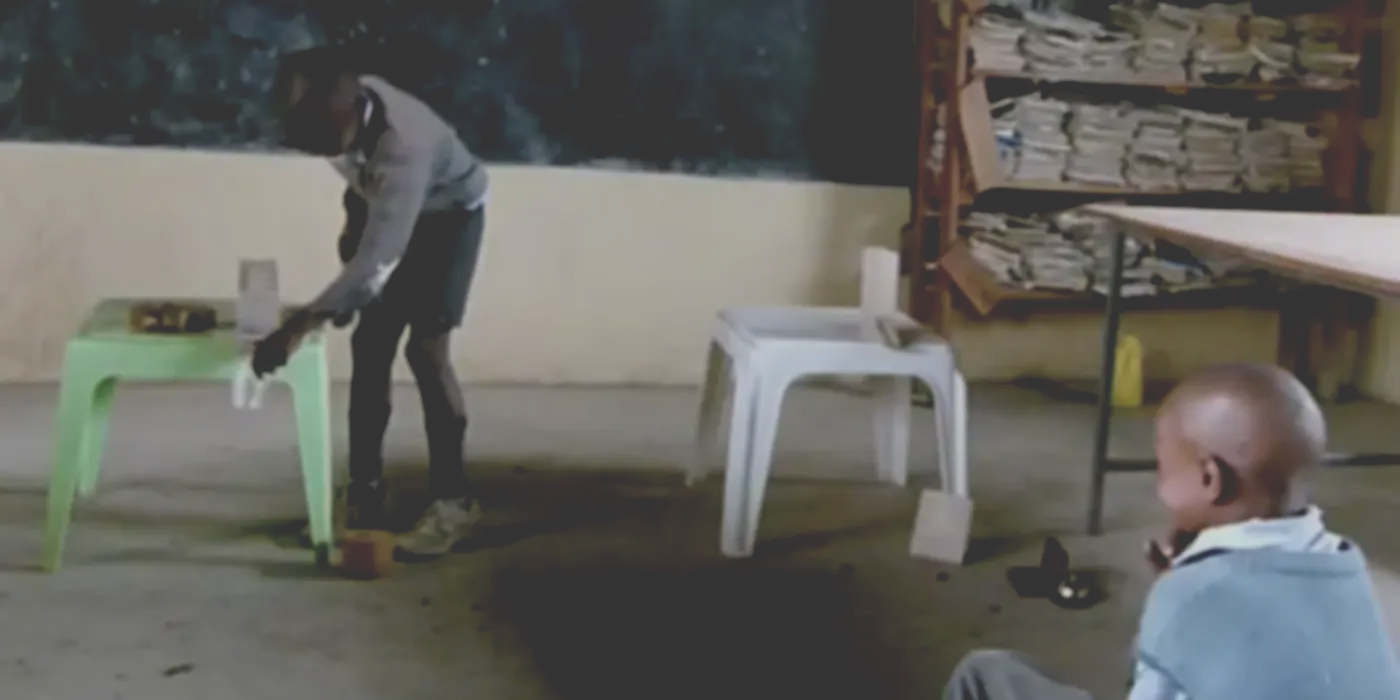
Kids Helping Kids Is Universal - But Cultures Help Differently
A simple game reveals a universal instinct in kids
A simple game reveals a universal instinct in kids


What is really happening in apparently empty areas of the Galaxy? It may get a rethink because scientists have managed to find a molecule that has an unexpectedly complicated structure in interstellar clouds of extremely small density. Translucent interstellar clouds are penetrated by highly energetic ultraviolet and cosmic radiation which should break any chemical species it meets but a group of scientists have managed to observe in those clouds a molecule made up of an unexpectedly large number of atoms: the diacetylene cation; a discovery which may contribute to solving the oldest unsolved puzzle of spectroscopy. The density of translucent interstellar clouds is extremely small.

Tolerance has meant different things in different eras. For some religions in the past, there was a 'convert or die' mentality, which tended to drive out competitors but, at least when it comes to works of art, old religions have always survived.A fresco of Tyche, the Greek goddess of fortune from the Byzantine period had been discovered at the Sussita site, on the east shore of the Sea of Galilee, and a maenad, one of the companions of the wine god Dionysus, was found also. The city of Sussita is located within the Sussita National Park under the management of the Israel Nature and Parks Authority.
Human vision is very advanced. While a human child can look at a cartoon picture of a chicken and know that's a chicken, computers cannot. We can also recognize cars, people, trees and lampposts instantaneously on a busy street without much thought and decide what to do.That's an enormous number of computations and just one reason that coming up with a computer-driven system that can mimic the human brain in visually recognizing objects has been difficult. Eugenio Culurciello of Yale's School of Engineering&Applied Science has developed a machine dubbed Neuflow, which is 'based' on the human visual system and operates much more quickly and efficiently than predecessors, coming closer to the mammalian visual system.

Premature ovarian failure (POF) is when a woman's ovaries stop working before she is 40. Missed periods are usually the first sign of POF. Later symptoms may be similar to those of natural menopause. Most women with POF cannot get pregnant naturally. Fertility treatments help a few women; others use donor eggs to have children. There is no treatment that will restore normal ovarian function, though many health care providers suggest taking hormones until age 50. According to the International Premature Ovarian Failure Association, between 1 and 4% of women suffer from POF – equivalent to between 250,000 and 1 million women in the USA alone.
Multidisciplinary collaborative research teams are essential in modern day science - climate scientists need to make more accurate numerical models and genome data in biology can be overwhelming and that means working with experts in other fields – but working as part of a team with experts outside a researcher's discipline can create its own problems so a group of researchers has published a commentary outlining a new field of study that could help resolve problems facing interdisciplinary research teams.The new area of study, which they called the "science of team science," or SciTS (rhymes with sights), would focus on what works and what doesn't when teams of scientists are working together to accomplish an overarching research goal.
Micro air vehicles (MAVs) under development by the Air Force Office of Scientific Research are on track to evolve into robotic, insect-scale devices for monitoring and exploration of hazardous environments, like collapsed structures, caves and chemical spills.
Researchers say they have found 13 genes linked to human body mass.Starting with DNA samples extracted from Icelanders' white blood cells banked in 1991 and 2002 by scientists there as part of the AGES–Reykjavik study of individuals in the general population, scientists used a customized, genome-wide profiling method dubbed CHARM (comprehensive high-throughput arrays for relative methylation) to look for regions that were the most variable, all chemically marked by DNA methylation. The DNA methylation analyses revealed epigenetic fingerprints which are unique to each individual and remain stable over time and may also be associated with various common traits including risks for common, complex diseases such as cancer and other conditions.

We've all enjoyed the spectacular results when glaciers carved their way through the landscape and it seems intuitive that glaciers inhibit mountain growth due to erosion.Not necessarily, say geologists, they can actually encourage mountain growth.
To cure global warming we have to trade some acid rain - at least given current battery technology, which uses toxic heavy metals.Obviously, plants have a much better solution and we have written about it often - artificial photosynthesis - but despite nature being our best example of efficiency, she isn't easy to duplicate. But a group of chemists say they have made a step towards that, by discovering a new way to pass electrons back and forth between two molecules. Understanding the electron transfer processes in these molecules provides a way to design organic materials for storing electrical energy that could then be retrieved for later use - an organic battery.
In vitro fertilization (IVF) is quite common these days, with over 4 million children born following IVF treatments worldwide and it is generally regarded as a safe technique, but some scientific reports have noted an increased rate of problems following IVF in comparison to ‘natural’ conception and birth. A review by the Chair of the international body which collects data on IVF concludes that IVF is generally safe, although he stresses that patients need to be made aware of the slight risks, and that we need to continue to monitor the results of the technique.
Think boys mature faster than girls? Or vice versa? Let's go to the MRI!Researchers at Oregon Health&Science University and Washington University in St. Louis say they can now accurately predict a young person's age simply by taking an MRI brain scan and analyzing it with a numerical model.
Since man has been able to think about big issues, such as why we are the way we are, it has been known that what happens during the daytime, including emotional stress and physical activity, can affect sleep. When an animal is active and awake, research shows, regulatory substances also build up in the brain that induce sleep.But what in wakefulness is driving these sleep regulatory substances? Sleep disorders affect between 50 and 70 million Americans, according to the Institute of Medicine of the National Academies. The Institute also estimates the lost productivity and mishaps of fatigue cost businesses roughly $150 billion, while motor vehicle accidents involving tired drivers cost at least $48 billion a year.