You Feel Colder As You Age: The Science Reason Why
Older people report feeling colder, enough that it is clearly happening, but why has been a mystery. Until now.
Older people report feeling colder, enough that it is clearly happening, but why has been a mystery. Until now.


Strange so-called Green Pea galaxies were first discovered in 2007 by citizen scientists and it has now been shown that these extraordinary and extremely compact star cities have low amounts of complex elements after being diluted by streams of gas and strong supernova winds.Green Pea galaxies were discovered by participants in Galaxy Zoo, which grew out of the need to provide more help to astronomers with a huge number of night sky images produced by the Sloan Digital Sky Survey.

People can learn to control the activity of some brain regions when they get feedback signals provided by functional magnetic resonance brain imaging (fMRI), according to researchers who used fMRI during training sessions with three groups of healthy participants who were asked to assess visual emotional stimuli (negative or neutral pictures). They were interested in the signals generated by the insula, a brain region implicated in emotion regulation. While performing the test, the investigators provided the subjects with specific, unspecific, or no feedback about the extent of the activation of the insula.

An archaeological team has discovered the oldest Roman baths in Asia Minor - underneath existing Roman baths. Location: Sagalassos, Turkey, which was inhabited as a city until the 7th century AD, when it was destroyed by earthquakes. Prior to the Sagalassos discovery, the Capito Baths in Miletus, built during the reign of Emperor Claudius (41-54 AD), were the oldest known Roman bathing complex in Asia Minor.

In almost everything, size matters. And usually, being bigger helps. I don't know anyone who couldn't use a larger refrigerator but University of Bristol physicists have done the unthinkable and made the smallest refrigerator ever.
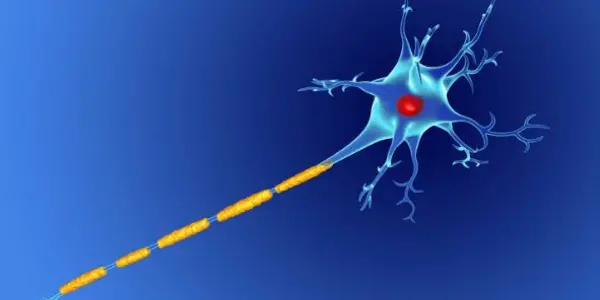
When nerve cells communicate with each other, they do so through electrical pulses. Most everything in our bodies comes down to induction when you think about it. Since the early days of neuroscience, the accepted idea was that nerve cells simply sum up tiny action potentials generated by the incoming pulses and emit an action potential themselves when a threshold is reached but Moritz Helias and Markus Diesmann from the RIKEN Brain Science Institute (Japan) and Moritz Deger and Stefan Rotter from the Bernstein Center Freiburg (Germany) say they have figured out exactly what happens right before a nerve cell emits a pulse
Fish in a wind tunnel? How else will you learn how they fly?It turns out flying fish can remain airborne for over 40 seconds and cover distances of up to a quarter mile hitting a top speed up to 40 miles an hours, says Haecheon Choi, a mechanical engineer from Seoul National University, Korea. Choi said a children's science book inspired him to look into the aerodynamics of flying fish, and a paper of his results appear in The Journal of Experimental Biology. Choi and colleague Hyungmin Park posted similar results in a poster for the American Physical Society meeting in 2006.
22 scientists have published a study they say provides clear evidence about the effectiveness of Non-pharmacological Therapies in Alzheimer's disease and are calling on governments to make these useful treatments readily available.
A cure for Alzheimer's is not in sight and available drugs have worthwhile but limited benefits the study says scientifically developed and rigorously tested Non-pharmacological Therapies can significantly improve the lives of people with dementia and their caregivers.
They say he strongest evidence is for individualized intervention packages for family caregivers which can improve the well-being of caregivers and help delay admissions to care homes.

What happens to the laws of physics if a fundamental constant turns out to be not a constant after all? The 'magic number' known as the fine-structure constant, called 'alpha' by physicists, appears to vary throughout the universe, according to a team of astrophysicists.That means the laws of physics would vary throughout the universe also.The arXiv preprint describes how they determined that the fine-structure constant 'alpha' varies by measuring light from a quasar as it red-shifted due to universal expansion.
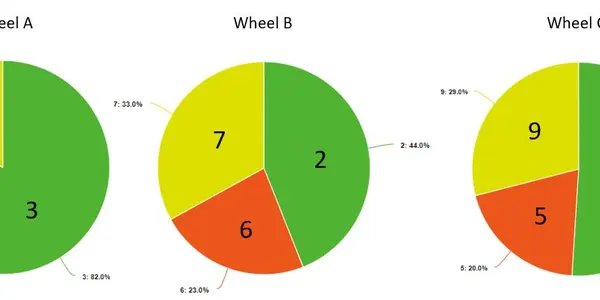
Remembering numbers is one of the most basic things we do from a young age - early on, a combination lock or a phone number and later any number of things such as ATM codes, social security numbers, and more.In Western cultures, children learn to place numbers on a mental number line - smaller numbers to the left and spaced further apart than the larger numbers on the right. Then the number line changes to become more linear, with small and large numbers the same distance apart. Children whose number line has made this change are better at remembering numbers, according to a new study published in Psychological Science.

To physicists, nothing is really a coincidence. Even cats in quantum boxes can be explained in mathematical terms, not to mention roulette or the success or failure of an attack in Dungeons&Dragons, but researchers at the Max Planck Institute for the Physics of Light in Erlangen say they have constructed a device that is truly random and generates random numbers that cannot be predicted in advance.The researchers exploit the fact that measurements based on quantum physics can only produce a special result with a certain degree of probability, that is, randomly. True random numbers are needed for the secure encryption of data and to enable the reliable simulation of economic processes and changes in the climate.

Paleontologists have released details about Concavenator corcovatus, a carnivorous humpbacked dinosaur discovered in Spain - and it oddly had both feathers and scales.Concavenator corcovatus was a theropod dinosaur that lived during the Cretaceous period, about 130 million years ago. Concavenator corcovatus translates to 'hump-backed predator from Cuenca', where it was discovered.
"We hear a lot about bioterrorism and pandemics," says Sheldon H. Jacobson, a professor of computer science and pediatrics at University of Illinois at Urbana-Champaign,"but the fact of the matter is, the threat to routine immunization is one of the greatest threats we face. If we had problems with our vaccine supply chain, it would have the potential to cause more deaths than any of those other issues."