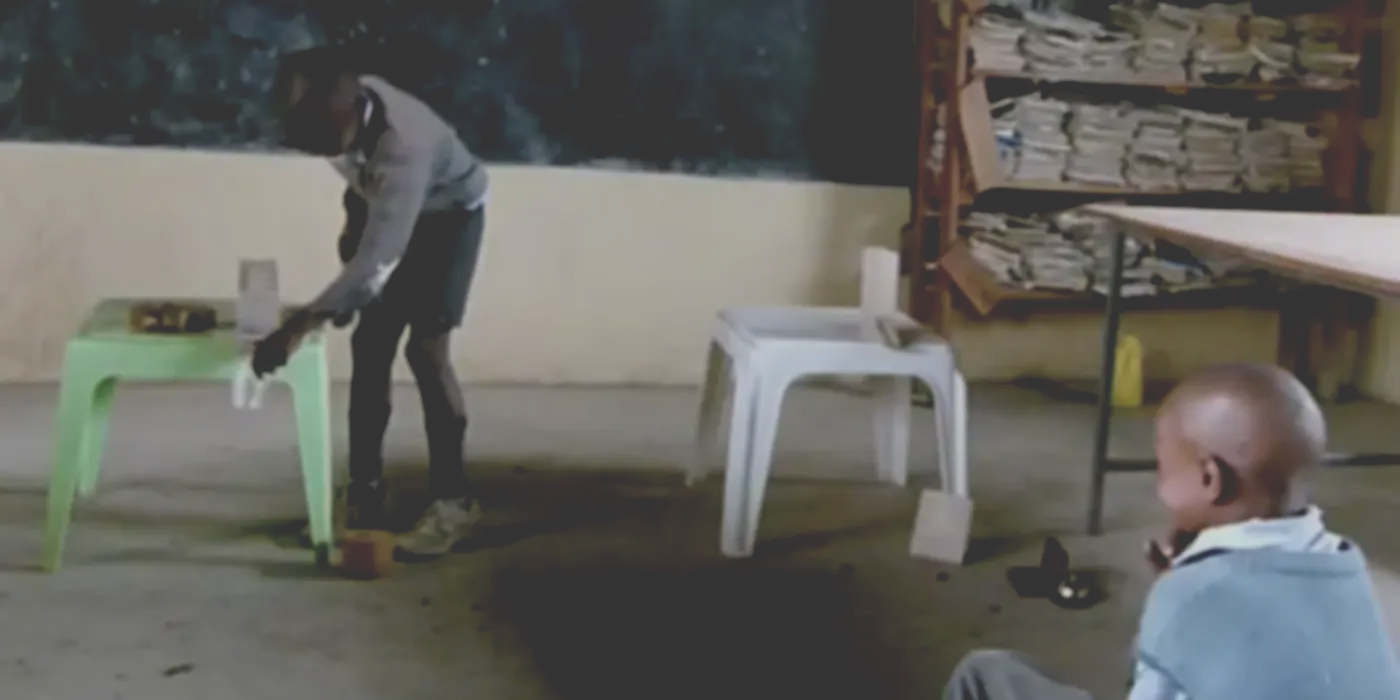
Kids Helping Kids Is Universal - But Cultures Help Differently
A simple game reveals a universal instinct in kids
A simple game reveals a universal instinct in kids


A study in the latest JAMA using data from two nationally representative surveys indicates that hearing loss among U.S. adolescents increased by about 30 percent in a 12 year period ending 2006, with 1 in 5 adolescents having hearing loss in the 2005-2006 results.Hearing loss is a common sensory disorder, affecting tens of millions of people in the United States. Adolescent hearing loss is not well understood but some risk factors, like loud sound exposure from listening to music, may be of particular importance to both adolescents and parents.

Princeton scientists say they may have discovered the oldest fossils of animal bodies; sponge-like creatures that were living in ocean reefs 650 million years ago. The shelly fossils, found beneath a 635 million-year-old glacial deposit in South Australia, would represent the earliest evidence of animal body forms in the current fossil record by at least 70 million years.
Is attention deficit hyperactivity disorder (ADHD) too often confused with immaturity or just young age? It may be, according to new research by a Michigan State University economist published in the Journal of Health Economics.ADHD is the most commonly diagnosed behavioral disorder for kids in the United States, with at least 4.5 million diagnoses among children under age 18, according to the Centers for Disease Control and Prevention.
Science has a long history of being multinational and has long been a way to bridge cultures and balance the public good with private gain. Science, being about excellence, has zero interest in race, creed or religion. Maybe it has too much concern with politics and policies in some corners but even that is a minor blemish. The fact is, cooperation works.Cooperation comes naturally to science, as the big problems science is being called upon to address, like the future of energy, climate change and new pandemics, respect no boundaries. The days of science as a solitary thing are good. Modern science at its best is now a group effort, inclusive and open. Social even.
Donald Light, professor of comparative health policy at the University of Medicine and Dentistry of New Jersey, says the pharmaceutical industry is a market for 'lemons' - a market in which the seller knows much more than the buyer about the product and can profit from selling products less effective and even less safe than consumers are led to believe.Talking at the meeting of the American Sociological Association, he said three reasons why the pharmaceutical market produces "lemons" are: Having companies in charge of testing new drugs, providing firewalls of legal protection behind which information about harms or effectiveness can be hidden, and the relatively low bar set for drug efficacy in order for a new drug to be approved.
Being married has been associated with improving health but a new study suggests that having that long-term bond alters hormones in a way that reduces stress - but you don't need to buy a ring just yet; unmarried people in a committed relationship show the same reduced responses to stress, said Dario Maestripieri, Professor in Comparative Human Development at the University of Chicago and lead author of a new study in Stress.
A new Rice University study's side-by-side comparison of 10 human genetic models to determine when 'mitochondrial Eve'(mtEve), the maternal ancestor of all living humans, lived uses a very different set of assumptions about the way humans migrated, expanded and spread across Earth - and it won't be without some controversy.Mitochondrial Eve studies are an example of how scientists probe the genetic past to learn more about mutation, selection and other genetic processes that play key roles in disease but deterministic models may not be enough, says the new study. Statisticians to the rescue.
Children are natural psychologists and by the time they reach preschool they understand that other people have desires, preferences, beliefs, and emotions too.Exactly how they learn this isn't clear but a new study says that one way children figure out another's preferences is by using a topic you'd think they won't formally encounter until college: statistics. In one experiment, children aged 3 and 4 saw a puppet named "Squirrel" remove five toys of the same type from a container full of toys and happily play with them. Across the children, the toys that Squirrel removed were the same (for example, all five were blue flowers).What varied, however, were the contents of the container.
Researchers at the Buck Institute for Age Research writing in the journal Stem Cells say they have successfully used human induced pluripotent stem cells (iPSCs) to treat rodents afflicted with Parkinson's Disease (PD).They say the research validates a scalable protocol that the same group had previously developed and can be used to manufacture the type of neurons needed to treat the disease and paves the way for the use of iPSC's in various biomedical applications. iPSC research has come strongly into play during the last few years because of limitations on human embryonic stem cell research in the Bush and Obama administrations and are a hot topic among scientists focused on regenerative medicine.
Research presented at the annual meeting of the American Sociological Association had a surprising finding for women and careers - women who are economically dependent on a man are less likely to cheat but in men it is just the opposite. So strippers beware. Your boyfriend who is 'getting his band going' may not be faithful for long.
Alec Baldwin never actually left the United States, even though he said he would if George W. Bush won in 2004. So people make silly threats about politics but do political outcomes have any effect on more serious issues, like suicide?Suicide risk factors are something sociologists love to think about and a new longitudinal study published in Social Science Quarterly says it analyzed suicide rates at a state level from 1981-2005 and determined that presidential election outcomes directly influence suicide rates among voters.
Belief: Girls tend to hang out in smaller, more intimate groups than boys.Not really. At least not by the time children reach the eighth grade, says a new Journal of Social and Personal Relationships article.Jennifer Watling Neal, assistant professor of psychology at Michigan State University, says her study is one of the first to look at how girls' and boys' peer networks develop across grades. Because children's peer-group structure can promote or mitigate negative behaviors like bullying and positive behaviors like helping others, Neal said it's important for researchers to have a better picture of what these groups look like.