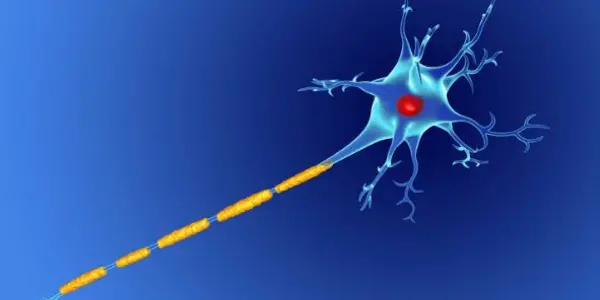
You Feel Colder As You Age: The Science Reason Why
Older people report feeling colder, enough that it is clearly happening, but why has been a mystery. Until now.
Older people report feeling colder, enough that it is clearly happening, but why has been a mystery. Until now.


A research team says they have discovered one of the key drivers of human evolution and diversity, accounting for changes that occur between different generations of people.Professor Alec Jeffreys, who discovered DNA fingerprinting at the University of Leicester in 1984, and has spent the decades since investigating what he describes as "pretty bizarre bits of DNA" - highly variable repeated parts of DNA called 'minisatellites' - found in the human genome. Jeffreys observed that these seemed to be changing and "picking up mutations at an extraordinary rate" when compared to other DNA.

It would seem that mimicking nature would be among the easiest things to do for science. After all, it's right there, in front of us, happening for millions of years. Take plants, for instance. Every day they absorb sunlight and turn it into energy but our solar technology is bordering on laughable and, if solar lobbyists get there way and it gets more subsidies and even mandates, criminal. The issue science has is that the sun's rays are highly destructive to man-made materials and that leads to a gradual degradation of many systems developed to harness it.

Most fashion students keep finished designs in a wardrobe but Emily Crane has to use a freezer. Unlike the stereotypical fashion designer, Crane is more likely to be found in a lab coat and wearing goggles than working with pencils or scissors.Crane’s work forms an exotic part of Kingston University’s display at Vauxhall Fashion Scout on September 17, during London Fashion Week, and she is currently preparing her collection but can’t promise what she’ll be showing - because it doesn't always work, being that her clothes are made of things like gelatin and seaweed.
The sharing, preservation and reuse of data has become an increasingly important element of modern scientific research, but even though granting agencies like the National Science Foundation (NSF) and National Institutes of Health (NIH) naturally embrace data sharing, resistance from parts of the scientific community has continued to block scientific progress and valuable research data over the world is kept under lock and key or hidden away in lab drawers, forcing time and cost of unnecessary duplication. BMC Research Notes is commissioning a large, ongoing collection of educational articles which outline procedures for sharing data that enable the data to be readily re-used by others and providing researchers with best practice guidance.
Scientists at the universities in Tübingen and Mainz say they have developed a blood test that can provide conclusive proof of gene doping - even after 56 days.To date, it has been impossible to prove that an athlete had undergone gene doping but they say the new test provides a clear answer based on whether or not transgenic DNA is present in blood samples. Transgenic DNA (tDNA) does not stem from the person being tested but has been transferred into their body, often via viruses, in order to create performance-enhancing substances such as erythropoetin (EPO) for forming red blood cells.

Darwin’s Theory of Evolution describes the survival of the fitter, the best adapted organisms, but biologist Gerard Jagers op Akkerhuis says it does not pay enough attention to the succession of living things during evolution and so has developed what he calls the ‘operator hierarchy’, a system based on the complexity of particles and of organisms, which can predict the next step in evolution: a technical life form, that can pass on its knowledge and experience to the next generation.
Phosphorus is a critical ingredient in fertilizers, pesticides, detergents and various industrial and household chemicals but once phosphorus is mined from rocks, getting it into products is hazardous and expensive, so chemists have been trying to streamline the process for decades.
While the public has a great respect for scientists, they don't trust scientists, at least when it comes to issues that also overlap with politics, like the environment.When it comes to policy-related topics, scientists have a limited effect on the public, perhaps not because people are stupid but because some in science have moved away from being trusted guides and into being advocates, which damages the credibility of science overall. And once those beliefs are locked in, they are difficult to change.So while oil drilling is safe, scientists who say so now will go unheard because some in science have gone out of their way to say it isn't due to a cultural agenda.

End-stage renal disease, or chronic kidney failure, affects more than 500,000 people per year in the United States alone and is only fully treated with a kidney transplant. Yet there were only 17,000 donated kidneys for transplants last year and the number of patients on the transplant waiting list currently exceeds 85,000, according to the Organ Procurement and Transplant Network.

Do social networks which features many distant connections, or "long ties," produce large-scale changes most quickly, as social media lore claims? No, says a new study by Damon Centola, assistant professor at the MIT Sloan School of Management. Instead, individuals are more likely to acquire new health practices while living in networks with dense clusters of connections — that is, when in close contact with people they already know well.
If you're a print magazine, or in marketing consumer goods, you care about packaging.
The general science magazine "New Scientist" approached neuroscience marketing firm NeuroFocus to test three different cover designs for an August issue of the magazine.
Applying their EEG-based full brain measurements of test subjects' subconscious responses to the three covers, NeuroFocus identified one as clearly superior in terms of its overall neurological effectiveness, saying it scored exceptionally well in emotional engagement, one of their primary metrics, the others being attention and memory retention.
This neuromarketing research was the first time that the publishing industry used EEG technology to determine the appeal of cover designs.
Fish oil has been used as an anti-inflammatory (and a lot of other things) but scientists haven't been sure how the omega-3 fatty acids in fish oil work in that capacity but a new report in Cell shows how omega-3 fatty acids both shut down inflammation and reverse diabetes in obese mice. The report says omega-3s alleviate inflammation by acting on a receptor (GPR120) found in fat tissue and on inflammatory immune cells called macrophages, studies in mice show.GPR120 is a G protein-coupled receptor (GPCRs), a group involved in many important cell functions and that includes the targets of many drugs. Other researchers had recently shown that five orphan GPCRs, GPR120 included, respond to free fatty acids.