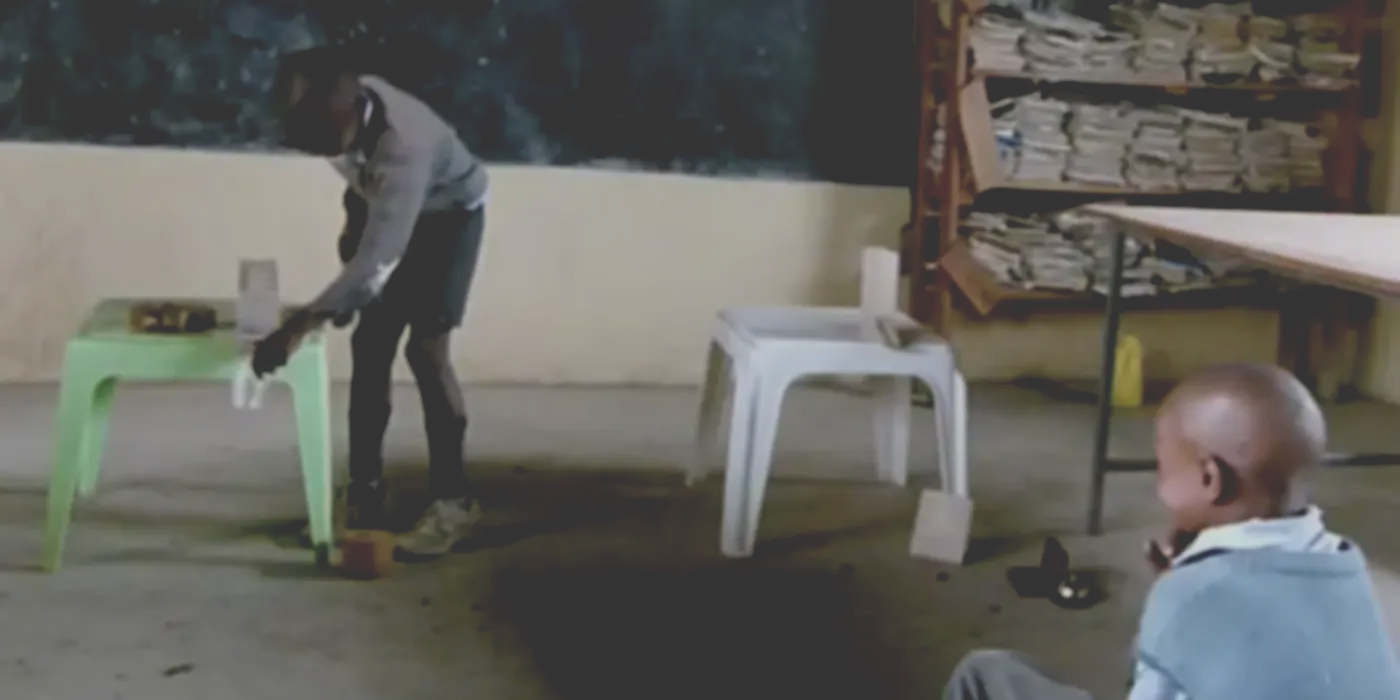
Kids Helping Kids Is Universal - But Cultures Help Differently
A simple game reveals a universal instinct in kids
A simple game reveals a universal instinct in kids


The exoplanet GJ 436b has left scientists confused after defying their assumptions about the composition of its atmosphere. Neptune-sized planets as hot as 800 Kelvin -- about 1,000 degrees Fahrenheit -- should contain high levels of methane and very little carbon monoxide. Instead, the researchers found 7,000 times less methane than expected and plenty of carbon monoxide.Using NASA's Spitzer Space Telescope, researchers measured the dimming of light as GJ 436b passed behind its star and re-emerged. The difference in the two light levels -- measured six times at different infrared wavelengths -- represents the light emitted by the planet itself.

A team of virologists have discovered important details about a genetic mechanism pathogenic viruses use to evade the immune systems of their hosts. They say their results could point the way to new treatments that use the viruses' own trick against them. The research is detailed in Cell Host and Microbe. The mechanism is based on the production of short RNA molecules (microRNAs) by the virus. RNA is chemically related to the genetic material DNA, and full-length RNA copies of gene sequences specify the structures of all cell proteins. MicroRNAs (miRNAs), on the other hand, play a crucial role in regulating gene expression.
Health Mullahs everywhere have a brand new set of statistics to push when they lobby the government for more tobacco regulations. A new study in Revista Española de Cardiología suggests that active and former smokers are likely fatter than non-smokers. The authors of the study say their results confirm that nicotine addiction is not an effective way of to prevent obesity. Researchers followed 7565 college students over a four-year period. After adjusting for age, sex, initial BMI and lifestyle, weight gain in people who stopped smoking during the study was higher the more cigarettes they smoked a day when the investigation began. Those who continued smoking also gained more weight during this period than the non-smokers.
Researchers studying the differential expression of microRNA say they may have discovered a way to treat autism by reversing the effects of the disease. Taken together with recently published research regarding “DNA tagging” by methylation, they say their new study in Genome medicine illustrates two different “epigenetic” mechanisms controlling gene activity in autism that lie beyond genetic mutations. While methylation inhibits gene expression at the level of DNA, microRNA inhibits at the level of RNA. MicroRNA are snippets of RNA, each of which can inhibit the expression of hundreds to more than a thousand genes. The effects of microRNA are also reversible by treatment with complementary “anti-sense” RNA.

Scientists studying the effects of particulate matter on cloud cover in the Amazon say increasing air pollution could have serious consequences for local weather patterns, rainfall and thunderstorms. The results, published in Geophysical Research Letters, could be used by climate scientists trying to understand the impact of pollution on global weather patterns, the author says.Researchers demonstrated how pollution's effects on cloud development could negatively impact our environment. While low levels of particulate matter actually help the development of thunderstorms, the reverse is true once a certain concentration is reached ― the particles then inhibit the formation of clouds and thunderstorms.
Osteoporosis is a risk factor for hip fractures, and a study published in BMC Research Notes has found that martial arts training is a suitable way to teach seniors with osteoporosis how to fall down safely, avoiding injury. Working with six healthy adults, scientists measured the force of their falls and compared it to known information about the amount of impact a patient with osteoporosis could withstand. The falls taught in this study all involved turning a fall into a rolling movement by bending and twisting the trunk and neck, and researchers believe it is possible for older people to learn these impact-reducing techniques.
Ocean acidification is a real problem, and unless our weather breaking carbon dioxide emissions are substantially curbed, the ocean will continue to become more acidic, according to a new report by National Research Council. The long-term consequences of ocean acidification on marine life are unknown, but the problem is apparently serious enough that Hollywood celebrities need to lobby Congress over the issue."My hope, one shared by millions of Americans, is that you, our
legislators, will put aside your differences and enact climate and
Researchers writing in the American Journal of Physical Anthropology say they have discovered an 11 million-year-old species of Pliopithecus primate, Pliopithecus canmatensis, in the Vallès-Penedès basin in Catalonia.Named in honor of the place they were discovered in Catalonia, the new fossil species sheds light on the evolution of the superfamily of the Pliopithecoidea, primates that include various genera of basal Catarrhini, a group that diverged before the separation of the two current superfamilies of the group: the cercopithecoids (Old World monkeys) and the hominoids (anthromorphs and humans); and which prospered in Eurasia during the Early and Late Miocene (between 23.5 and 5.3 million years ago).
A new study in the International Journal of Health Geographics has linked cold, dry weather to an increased incidence of prostate cancer in the Northern United States. While unsure why the association exists, researchers say that meteorological effects on persistent organic pollutants, such as some pesticides and industrial by-products, may be to blame.The current explanation for the spatial pattern of prostate cancer is low vitamin D levels in individuals living at northerly latitudes. But the authors of the new study contend that this hypothesis doesn't fully explain the higher incidence of the disease.
The ESO's VISTA telescope has captured a stunning new image of the Cat's Paw Nebula - NGC 6334. The view in the infrared is strikingly different from that in visible light. With dust obscuring the view far less, astronomers can learn much more about how stars in the nebula form and develop in their first few million years of life.NGC 6334 is one of the most active nurseries of massive stars in our galaxy and lies toward the heart of the Milky Way, 5500 light-years from Earth in the constellation of Scorpius (the Scorpion).
A team of chemical engineers have discovered what may be the "ancestral Eve" crystal that billions of years ago gave life on Earth its curious and exclusive preference for so-called left-handed amino acids. The results are published in Crystal Growth and Design.Researchers used mixtures of both left- and right-handed aspartic acid (an amino acid) in laboratory experiments to see how temperature and other conditions affected formation of crystals of the material.

The future effects of global warming could be significantly altered over very small distances by local air movements in complex or mountainous terrain, according to a new paper in the International Journal of Climatology. Based on a regional temperature increase of about 5 degrees projected for western Oregon by 2100, scientists say that some locations, such as mountain ridge tops, could actually increase as much as 14 degrees at some times, while cold air pools in the valleys below them with temperature increases similar to the regional average.