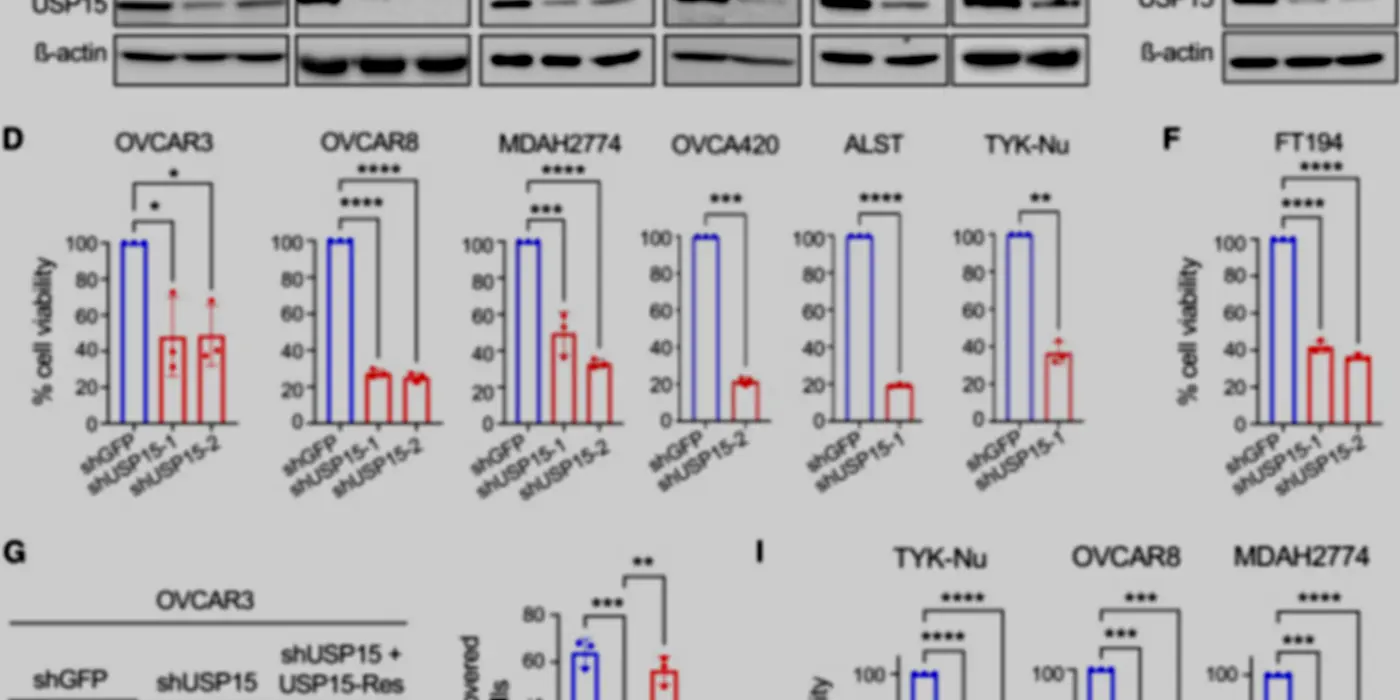
Enzyme USP15 Limits Ovarian Cancer Cells And Boosts Chemotherapy
Ovarian cancer is devastating, five-year survival rate under 30%, when detected after it has spread. New basic research may improve that.
Ovarian cancer is devastating, five-year survival rate under 30%, when detected after it has spread. New basic research may improve that.


Conventional types of genetic analysis may not be as accurate as believed, according to researchers writing in Trends in Genetics.Their analysis of penguins that died 44,000 years ago in Antarctica have provided extraordinary frozen DNA samples that they say challenges the accuracy of traditional genetic aging measurements, and suggest those approaches have been routinely underestimating the age of many specimens by 200 to 600 percent. So a biological specimen determined by traditional DNA testing to be 100,000 years old may actually be 200,000 to 600,000 years old.They say their findings raise doubts about the accuracy of many evolutionary rates based on conventional types of genetic analysis.
While it's generally accepted that melting polar ice due to global warming is bad, scientists from the British Antarctic Survey are reporting this week that the loss of ice in the world's southernmost region could actually be slightly slowing the pace of climate change. Large blooms of tiny marine plants called phytoplankton are flourishing in areas of open water left exposed by the recent and rapid melting of ice shelves and glaciers around the Antarctic Peninsula. This remarkable colonization is having a beneficial impact on climate change. As the blooms die back phytoplankton sinks to the sea-bed where it can store carbon for thousands or millions of years.
With the so called obesity epidemic in full swing, many people have turned to low-carb, high-fat diets as an alternative way to lose weight in recent years. While these diets can help people lose weight, some scientists say that they do very little to improve mood and cognition. A study published today in the Archives of Internal Medicine followed two groups of dieters for one year and found that a low-calorie, low-fat diet appears to be more beneficial to dieters' mood than a low-carbohydrate plan with the same number of calories
Boston University Researchers have shown that intermittent access to fatty and sugary foods induces changes in the brain that are comparable to those observed in drug dependence. The findings, reported in the Proceedings of the National Academy of Sciences, may help explain how abstinence from these foods contributes to relapse eating among dieters as well as related eating disorders.The researchers used 155 rats to measure the neurobiological responses. The first group, the diet cycled subjects, repeatedly ate standard rat chow for five days, followed by a highly palatable, high-sugar, chocolate-flavored chow for two days.
The first human embryonic stem cell treatment approved by the FDA for human testing has been shown to restore limb function in rats with neck spinal cord injuries – a finding that could expand the clinical trial to include people with cervical damage.Results of the cervical study currently appear online in the journal Stem Cells. UCI scientist Hans Keirstead hopes the data will prompt the FDA to authorize clinical testing of the treatment in people with both types of spinal cord damage. About 52 percent of spinal cord injuries are cervical and 48 percent thoracic.
Everybody has memories they'd like to forget forever. Now, thanks to research conducted by scientists at the Friedrich Miescher Institute for Biomedical Research, there might be a pill for that.According to their study recently published in Science, it may soon be possible to control fear memories with extinction-based drug therapies. The Researchers studied proteins in mice known as extracellular matrix chondroitin sulfate proteoglycans and discovered that they form 'neural nets' in the brain which protect against the erasure of fear memories. By giving the mice a drug called chondroitinase ABC, the researchers say they were able to degrade these perineuronal nets and render subsequently acquired fear memories susceptible to erasure.
In July 1999, Medicare began increasing coverage for people needing a simultaneous kidney/pancreas transplant in hopes of addressing racial and economic disparities that existed. But increased Medicare dollars have not translated into more access for African Americans or Hispanics, and researchers from Georgetown University claim they know why. The team says that racial bias among physicians may prevent black and Hispanic patients from receiving necessary kidney/pancreas transplants at the same rate as similar patients in other racial groups. Their research is published in the November issue of the American Journal of Transplantation

Female water striders don't like the bad boys and they don't even have to reach the age of 30 before they wise up about choices in males.Water striders are those insects commonly seen skittering hurriedly across the surface of streams but when it comes to romance, male water striders who played it cool mated with more females than did groups of aggressive males, according to a study led by Omar Tonsi Eldakar of the University of Arizona's Arizona Research Laboratories.
The Ecuadorian government has devised a novel, albeit idealistic, plan to prevent gas and oil development in the Yasuní National Park in hopes of protecting biodiversity and combating climate change. The proposal, known as the Yasuní-ITT Initiative, would leave untouched nearlyone billion barrels of oil that lie beneath the national Park in Ecuador.
When you use popular search engines like Google or Yahoo to find something on the internet, the information you input is collected and built into a profile that helps those companies market products you may find interesting. Your favorite search engines justify this practice by claiming that it allows them to learn about your interests and offer more efficient responses as a result. That's well and good if you don't care about privacy. But if you do, a team of researchers has developed a new protocol based on cryptographic tools to distort the user profile generated by internet search engines, in such a way that they cannot save the searches undertaken by internet users and thus preserve their privacy.
People living in volcanic areas may face a higher risk for thyroid cancer, says a new study published online in the Journal of the National Cancer Institute. While the increasing incidence of thyroid cancer has been attributed to more sensitive screening, recent evidence suggests that this may not be the only cause. Various environmental factors, such as those associated with volcanoes, have not been excluded as risk factors.The authors point out that a volcanic environment—which can produce toxic compounds that are suspended particulate matter and gases and elements that may pollute the water—could increase the incidence of thyroid cancer; however, the mechanism by which it affects risk is unknown.
Biologists say they have found a population of tropical butterflies that may be on its way to a split into two distinct species. The cause of this particular break-up? A shift in wing color and mate preference.In a paper published this week in the journal Science, the researchers describe the relationship between diverging color patterns in Heliconius butterflies and the long-term divergence of populations into new and distinct species.