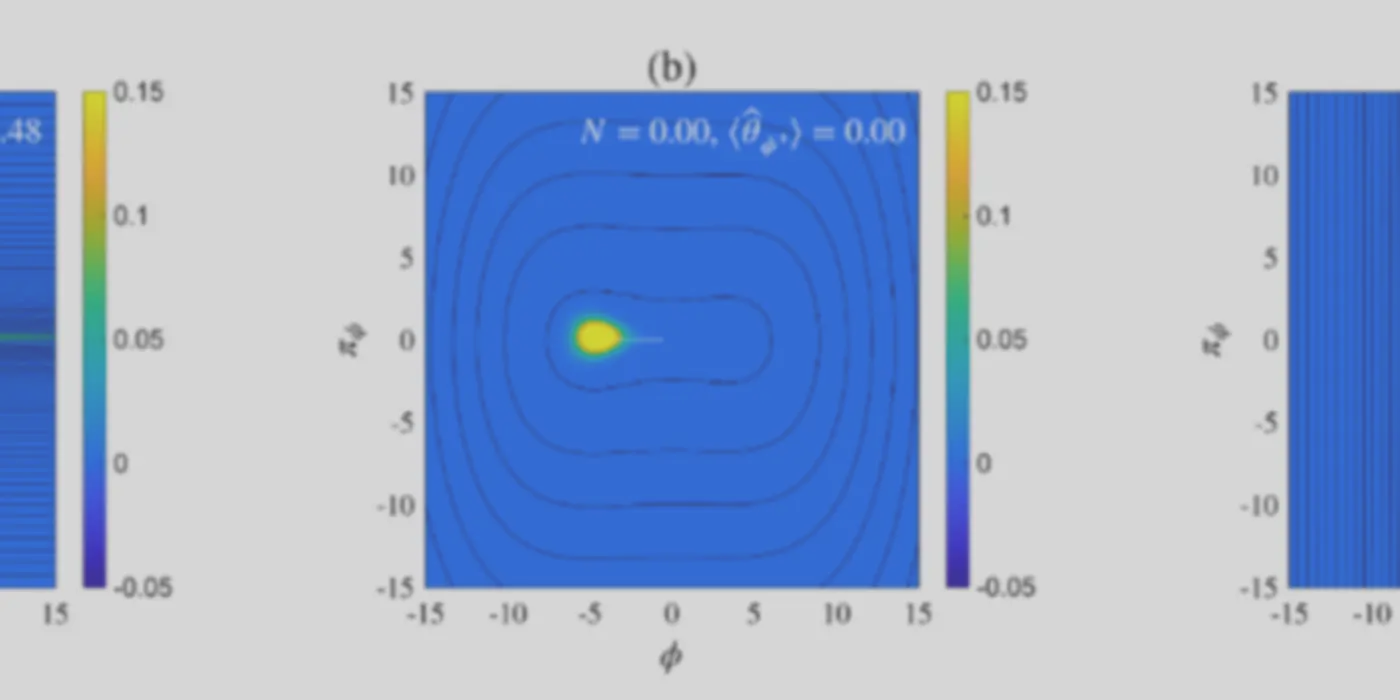
Sorry Higgs, There May Be A New Contender For Low Energy States
If we're trapped in a false vacuum, there's still hope to break free of cosmic lockdown
If we're trapped in a false vacuum, there's still hope to break free of cosmic lockdown


The DNA's double helix--the sub-microscopic core of our life--has been the subject of intense study and scrutiny for decades.
Observations and measurements at the scale of DNA are tricky. The distance between the rungs in DNA's ladder (or base pairs), for example, was thought to be barely over 3 millionths of a millimeter, or 3.4 Å (angstroms). And this ladder has been typically assumed to be very rigid.
But now a team of Stanford scientists, supported in part by the National Science Foundation, have used a novel molecular ruler to cast doubts on this picture. Using this molecular ruler, they marked each end of a snippet of DNA with electron-dense gold nanocrystals. These markers scattered X-rays directed at the sample differently than the rest of the molecules, and allowed for a more precise calculation.

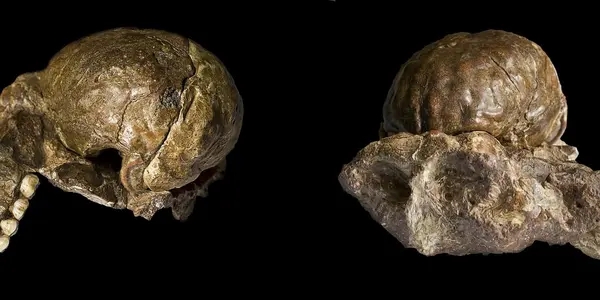
A new University of Sussex study provides evidence that gorilla communication is linked to the left hemisphere of the brain - just as it is in humans.
Psychologist Dr Gillian Sebestyen Forrester developed a new method of analysing the behaviour of gorillas in captivity and found there was a right-handed bias for actions that also involved head and mouth movements. The right side of the body is controlled by the left hemisphere of the brain, which is also the location for language development.

As the world’s money markets do their best to combat the 'credit crunch', a University of Sunderland politics lecturer says that the root of modern democracy’s money woes may lay with the first corporations – pirates.
Dr Peter Hayes is Senior Lecturer in politics at the University of Sunderland. In his latest paper ‘Pirates, Privateers and the contract theories of Hobbes and Locke’ Dr Hayes argues that the roots of modern democracy were not in Britain or the USA, but were the ‘corporations’ which were created on pirate ships during the golden age of buccaneering.
Newswise — With the economy in crisis and foreclosures at an all time high, financial anxiety among Americans seems to be soaring to new heights. In a poll distributed by the American Psychological Association (APA) to more than 1,700 U.S. adults, eight out of 10 surveyed said the economy is a significant cause of stress.
“When there is a sense of uncertainty about the future or when folks feel as if their long-term goals such as retirement or children’s college funds are being threatened, a number of emotions may surface,” says Michael Groat, PhD, a psychologist for the Professionals in Crisis program at The Menninger Clinic in Houston. “We may feel as if we are no longer in control or there may be feelings of anger or lack of trust in our government leaders. All these factors together may make it difficult for people to cope, causing not only emotional distress, but stress related physical ailments as well.”

Is there a connection between what children believe and how they act, and how strong is the link? Researchers from four universities who studied these questions were surprised by the results.
"For me the biggest surprise was how the link between beliefs and behaviors changed from kindergarten to later in childhood and adolescence," said Jennifer Lansford, one of the researchers from Duke University's Center for Child and Family Policy. "Often we assume that if someone believes something, they will act in a way consistent with those beliefs, but that wasn't necessarily the case for the kindergarteners in our sample."
The means by which proteins provide a 'border control' service, allowing cells to take up chemicals and substances from their surroundings, whilst keeping others out, is revealed in unprecedented molecular detail for the first time in Science Express.
The scientists behind the new study have visualised the structure of a protein called Microbacterium hydantoin permease, or 'Mhp1', which lives in the oily membrane that surrounds bacteria cells. It belongs to a group of proteins known as 'transporters' which help cells take up certain substances from the environment around them. This is the first time scientists have been able to show how a transporter protein opens and closes to allow molecules across the membrane and into the cell, by accurate analysis of its molecular structure in different states.
Nothing drives biologists crazier than people who think the colloquial meaning of 'junk' means junk DNA is valueless. For about 15 years, scientists have known that certain junk DNA, repetitive DNA segments previously thought to have no function, could evolve into exons, which are the building blocks for protein-coding genes in higher organisms like animals and plants.
A new University of Iowa study has found evidence that a significant number of exons created from junk DNA seem to play a role in gene regulation. The findings increase our understanding of how humans differ from other animals, including non-human primates.

Lightning and gases from volcanic eruptions could have given rise to the first life on Earth, according to a new analysis of samples from a classic origin-of-life experiment by NASA and university researchers. The NASA-funded result is the subject of a paper in Science appearing October 16.
"Historically, you don't get many experiments that might be more famous than these; they re-defined our thoughts on the origin of life and showed unequivocally that the fundamental building blocks of life could be derived from natural processes," said lead author Adam Johnson, a graduate student with the NASA Astrobiology Institute team at Indiana University, Bloomington, Ind.
From 1953 to 1954, Professor Stanley Miller, then at the University of Chicago, performed a series of experiments with a system of closed flasks containing water and a gas of simple molecules. At the time, the molecules used in the experiment (hydrogen, methane, and ammonia) were thought to be common in Earth's ancient atmosphere.
Using brain imaging and chocolate milkshakes, scientists have found that women with weakened "reward circuitry" in their brains are at increased risk of weight gain over time and potential obesity. The risk increases even more for women who also have a gene associated with compromised dopamine signaling in the brain.
The results, drawn from two studies using functional magnetic resonance imaging (fMRI) at the University of Oregon's Lewis Center for Neuroimaging, appear in the Oct. 17 issue of the journal Science. The first-of-its-kind approach unveiled blunted activation in the brain's dorsal stratium when subjects were given milkshakes, which may reflect less-than-normal dopamine output.
Sunlight contains the entire spectrum of colors that can be seen with the naked eye -- all the colors of the rainbow. What our eyes interpret as color are really different energy levels, or frequencies of light. Today's solar cell materials can only capture a small range of frequencies, so they can only capture a small fraction of the energy contained in sunlight.
Researchers have created a new material that overcomes two of the major obstacles to solar power: it absorbs all the energy contained in sunlight, and generates electrons in a way that makes them easier to capture.
Ohio State University chemists and their colleagues combined electrically conductive plastic with metals including molybdenum and titanium to create the hybrid material.

For decades, scientists and resource managers have known that wildfires affect forest soils - in a direct sense because it kills vegetation and disrupts soil structure and then in an indirect sense because that then causes erosion. But, the lack of detailed knowledge of forest soils before they are burned by wildfire has hampered efforts to understand fire's effects on soil fertility and forest ecology.
A new study led by the Pacific Northwest (PNW) Research Station addresses this critical information gap and represents the first direct evidence of the toll wildfire can take on forest soil layers. It draws on data from the 2002 Biscuit Fire, which scorched some 500,000 acres in southwest Oregon, including half of a pre-existing study's experimental plots, which had been studied extensively before the fire. The result was a serendipitous and unprecedented opportunity to directly examine how wildfire changes soil by sampling soils before and after a wildfire. The study appears in the November issue of the Canadian Journal of Forest Research.
Modern nuclear techniques are giving the world's scientists and regulators better tools to fight pollution and other environmental threats – even those that may be lurking naturally at the beach or near your backyard. Many of the world's top "radioecologists" are in Morocco this week to assess a dynamic picture.
Environmental protection is drawing more attention in countries at all stages of development. A special area is monitoring the presence and movement of radionuclides in nature -- many of which are associated with societal activities -- to track and prevent contamination of soils, water, air, and food.
Studies reported this week, for example, cover mining in Romania and Kenya, electricity generation in Spain and Serbia, waste disposal in Lithuania, well water pumping in the USA, coastal climate changes in Sweden, ocean studies in Turkey, air pollution monitoring in Morocco, and phosphate fertilizer use in Cuba. Associated environmental and radioactive elements include isotopes of radon, potassium, polonium, thorium, carbon, uranium, and lead.
Reports were presented at the 4th International Symposium on Nuclear Metrology as a Tool for Radioecology, being hosted in Rabat by Morocco's National Centre for Energy, Sciences and Nuclear Techniques (CNESTEN) with the support of the IAEA and other regional and global partners.
Many activities are outside the nuclear industry, and involve what are known as "naturally occurring radioactive materials" or NORM for short. The activities pose different levels of risk, and are regulated in different ways, sometimes not at all. Through its programmes, the IAEA is reviewing issues related to the management and regulation of NORM industries, with a view to developing additional guidance documents on specific activities.
"Human activities are increasingly having an impact on the environment," noted Francois Brechignac of the International Union of Radioecology in Morocco this week. "But we are too often reacting once the impacts are already there, sometimes too late to counteract environmental detriment."