Enzyme USP15 Limits Ovarian Cancer Cells And Boosts Chemotherapy
Ovarian cancer is devastating, five-year survival rate under 30%, when detected after it has spread. New basic research may improve that.
Ovarian cancer is devastating, five-year survival rate under 30%, when detected after it has spread. New basic research may improve that.


Humans have a built-in weapon against HIV, but until recently no one knew how to unlock its potential. A study published in Nature reveals the atomic structure of this weapon, an enzyme known as APOBEC-3G, and suggests new directions for drug development.
APOBEC-3G is present in every human cell. It is capable of stopping HIV at the first step of replication, when the retrovirus transcribes its RNA into viral DNA.
The study's authors, led by Xiaojiang Chen of the University of Southern California, were able to show the atomic structure of the active portion of APOBEC-3G.
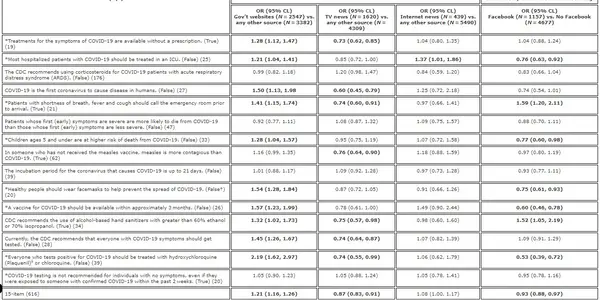
The Internet is a powerful resource can may help patients make informed treatment decisions but the quality of the content on health-related Web sites is not rigorously monitored and studies have shown that some Web sites present inaccurate information.
More than 110 million adults in the United States have searched online for health information, and two-thirds of these patients seek information through a search engine rather than directly accessing a specific Web site, so helping people to gain an understanding of which types of sites will be most reliable has a great deal of benefit.

LBG J2135-0102 (also known as the "Cosmic Eye" due to its morphological similarity to the Egyptian "Eye of Horus") was discovered from a Hubble Space Telescope (HST) image in an effort to survey high redshift galaxy clusters. This galaxy is a typical star-forming galaxy at z=3 (seen when the Universe was only two billion years old) which has been gravitationally lensed by a factor 28x by a foreground galaxy cluster. The discovery paper can be found in Smail et al. (2007) ApJL 654 33 , whilst the detailed lens modelling used to correct for the lensing distortion is available in Dye et al. (2007) MNRAS 379 308.
This Cosmic Eye has given scientists a unique insight into galaxy formation in the very early Universe.
The rapidity of ejaculation in men is genetically determined, according to research by Utrecht University Neuropsychiatrist Dr. Marcel Waldinger and Pharmacological Researcher Paddy Janssen.
The participants in the study by Waldinger and Janssen were 89 Dutch men who suffer from the primary form of premature ejaculation, in other words, men who always had this problem. A control group of 92 men was also studied. For a month the female partners used a stopwatch at home to measure the time until ejaculation each time they had intercourse.

Supercomputer simulations of dusty disks around sunlike stars show that planets even as small as Mars can create patterns that future telescopes might detect.
Much of the dust in our solar system forms inward of Jupiter's orbit, as comets crumble near the sun and asteroids of all sizes collide. The dust reflects sunlight and sometimes can be seen as a wedge-shaped sky glow -- called the zodiacal light -- before sunrise or after sunset.
The computer models account for the dust's response to gravity and other forces, including the star's light. Starlight exerts a slight drag on small particles that makes them lose orbital energy and drift closer to the star.

If you're riding a bike at Copenhagen's November 2009 U.N. Climate Change Conference, you may be able to take advantage of some new 'Smart Biking' techology created by MIT - it will help you make friends with people you pass and even tells you how much CO2 you didn't use by taking a bike(1).
MIT researchers unveiled the project today called Smart Biking, aimed at transforming bicycle use in Denmark’s largest city, promoting urban sustainability and building new connections between the city’s cyclists.
The project utilizes a self-organizing 'smart-tag' system that will allow the city’s residents to exchange basic information and share their relative positioning with each other.
Hospital for Special Surgery researchers writing in the Journal of Clinical Investigation say that statins may be able to prevent miscarriages in women who are suffering from pregnancy complications caused by antiphospholipid syndrome (APS), according to a study in mice. In this autoimmune syndrome, the body produces antibodies directed at phospholipids, the main components of cell membranes.
In low risk pregnancies, APS is associated with a nine-fold increase in miscarriage. In high-risk pregnancies (women who have had at least three prior losses), APS is associated with a 90 percent risk of miscarriage.

Scientists have confirmed the second-ever case of a 'virgin birth' in a shark, further confirming that female sharks can reproduce without mating and that many female sharks may have this incredible capacity.
Lead author Dr. Demian Chapman, shark scientist with the Institute for Ocean Conservation Science at Stony Brook University, Beth Firchau of the Virginia Aquarium & Marine Science Center, and Dr. Mahmood Shivji, Director of the Guy Harvey Research Institute and Professor at Nova Southeastern University in Florida, have proven through DNA testing that the offspring of a female blacktip shark named 'Tidbit' contained no genetic material from a father.

The stickleback fish, Gasterosteus aculeatus, is one of the most thoroughly studied organisms in the wild, and has been a particularly useful model for understanding variation in physiology, behavior, life history and morphology caused by different ecological situations in the wild.
On biological levels from molecular and genetic to developmental and morphological, and finally ending with the population level, it has proven far more complex than even imagined.
Studies of stickleback have provided us with a much better understanding of how organisms cope with new environmental conditions, first through acclimation over an individual's lifespan, and subsequently through adaptation of population via changes in gene form (allele) frequencies.
Given the rapidly changing global environment, this research not only provides insight into evolutionary processes, but is of practical importance in understanding how organisms will adapt to a changing world.

In a seminar co-organized by Stanford University and the American Institute of Mathematics, Kannam Soundararajan, Professor of Mathematics, announced that he and Roman Holowinsky have proven a significant version of the quantum unique ergodicity (QUE) conjecture.
The motivation behind the problem is to understand how waves are influenced by the geometry of their enclosure. Imagine sound waves in a concert hall. In a well-designed concert hall you can hear every note from every seat. The sound waves spread out uniformly and evenly. At the opposite extreme are "whispering galleries" where sound concentrates in a small area.
The mathematical world is populated by all kinds of shapes, some of which are easy to picture, like spheres and donuts, and others which are constructed from abstract mathematics. All of these shapes have waves associated with them. Soundararajan and Holowinsky showed that for certain shapes that come from number theory, the waves always spread out evenly. For these shapes there are no "whispering galleries."
This week, Astronomy & Astrophysics is publishing new observations with AMBER/VLTI of the gas component in the vicinity of young stars. An international team of astronomers led by E. Tatulli (Grenoble, France) and S. Kraus (Bonn, Germany) [1] used the VLT near-infrared interferometer, coupled with spectroscopy, to probe the gaseous environment of Herbig Ae/Be stars. These are young stars of intermediate mass (approximately 2 to 10 solar masses), which are still contracting and often show strong line emissions.

Scientists from the Universities of Bath and Exeter have developed a rapid new way of checking for toxic genes in disease-causing bacteria which infect insects and humans. Their findings could in the future lead to new vaccines and anti-bacterial drugs.
They studied a bacterium called Photorhabdus asymbiotica, which normally infects and kills insects, but which can also cause an unpleasant infection in humans.
By testing groups of genes from the bacteria against three types of invertebrates (insects, worms and amoebae) and mammalian cells, the scientists were able to identify toxins and other molecules, called virulence factors, made by the bacteria that allow it to infect each type of organism.