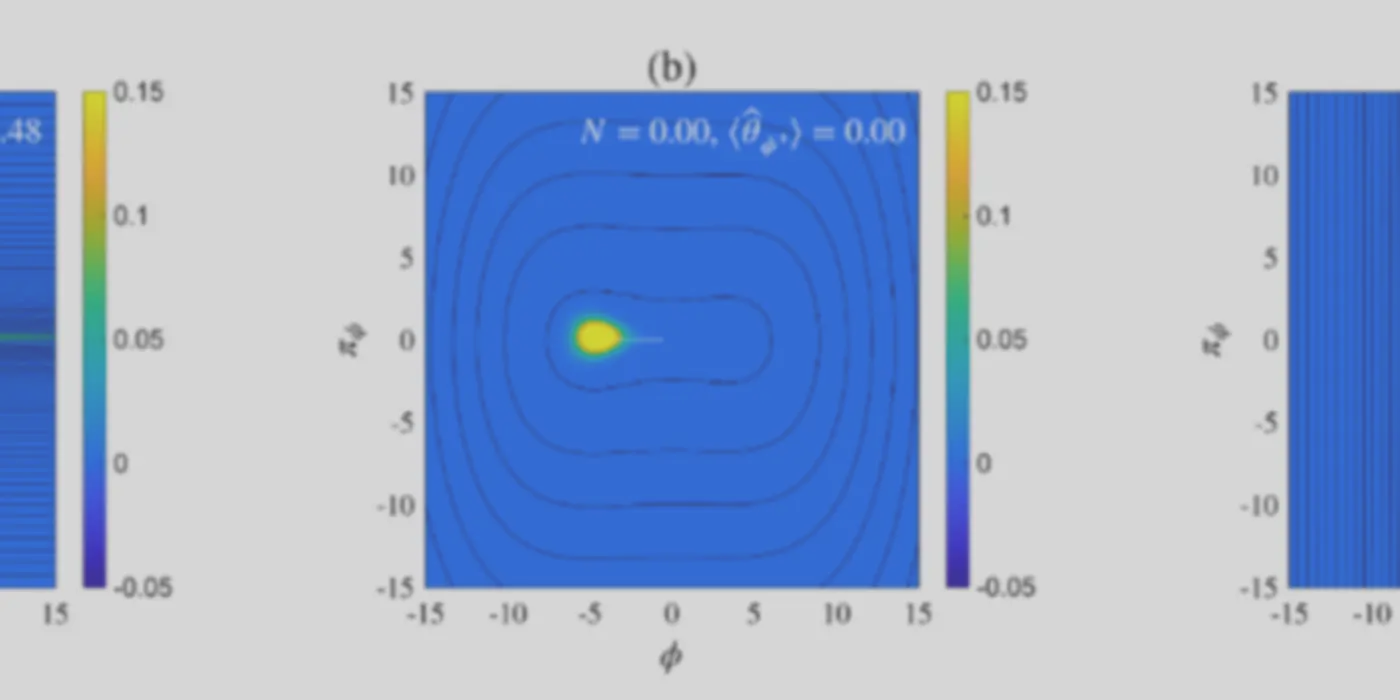
Sorry Higgs, There May Be A New Contender For Low Energy States
If we're trapped in a false vacuum, there's still hope to break free of cosmic lockdown
If we're trapped in a false vacuum, there's still hope to break free of cosmic lockdown


Researchers in Iran are publishing what they describe as the first study on a fungus that can remove sulfur, a major source of air pollution, from crude oil more effectively than conventional refining methods. The finding could help reduce air pollution and acid rain caused by the release of sulfur components in gasoline and may help oil companies meet tougher emission standards for fuel, the scientists say. Their study is scheduled for the Oct. 1 issue of Industrial & Engineering Chemistry Research.
Jalal Shayegan and colleagues point out that existing processes for refining so-called "heavy," or high-sulfur, crude oil convert sulfur to hydrogen sulfide gas at high temperatures and pressures. However, they leave behind some kinds of sulfur-based compounds, which wind up in gasoline and other fuels. Scientists long have known that certain microbes can remove sulfur from oil. But nobody had tried using these microbes in so-called biodesulfurization of heavy crude oil until now, they indicate.
After several years of research and development on the promising idea of an intelligent writing tool for correcting and enhancing a user's text, WhiteSmoke 2009 says thet can deliver it. Featuring a grammar checking engine that detects a wider range of errors than any other commercial grammar checker, and a range of other tools to create an all-in-one writing solution, WhiteSmoke 2009 says it is the ideal software application for writers, copy editors and at-home Internet users who are concerned with creating error-free texts.
Community is the Key

The Nobel Assembly at Karolinska Institutet has today decided to award The Nobel Prize in Physiology or Medicine for 2008 with one half to Harald zur Hausen for his discovery of "human papilloma viruses causing cervical cancer" and the other half jointly to Françoise Barré-Sinoussi and Luc Montagnier for their discovery of "human immunodeficiency virus."
Harald zur Hausen went against current dogma and postulated that oncogenic human papilloma virus (HPV) caused cervical cancer, the second most common cancer among women. He realized that HPV-DNA could exist in a non-productive state in the tumours, and should be detectable by specific searches for viral DNA. He found HPV to be a heterogeneous family of viruses. Only some HPV types cause cancer. His discovery has led to characterization of the natural history of HPV infection, an understanding of mechanisms of HPV-induced carcinogenesis and the development of prophylactic vaccines against HPV acquisition.
Afraid to fly? It may not be rational, since airplanes are quite safe, but to people who have that phobia, it defies rationality. Researchers from the Center for Obesity Research and Education and the department of kinesiology at Temple University say the same psychological barrier may inhibit some obese women from exercising.
Much like a crippling worry that arachnophobes have about spiders, the research presented at the Obesity Society's Annual Meeting on October 5th says some obese women face a barrier when it comes to exercise that normal weight women do not.
Chemicals used in the environment to kill bacteria could be making them stronger, according to a paper published in Microbiology. Low levels of these chemicals, called biocides, can make the potentially lethal bacterium Staphylococcus aureus remove toxic chemicals from the cell even more efficiently, potentially making it resistant to being killed by some antibiotics.
Biocides are used in disinfectants and antiseptics to kill microbes. They are commonly used in cleaning hospitals and home environments, sterilizing medical equipment and decontaminating skin before surgery. At the correct strength, biocides kill bacteria and other microbes. However, if lower levels are used the bacteria can survive and become resistant to treatment.

The fossilized trail of an aquatic creature suggests that animals walked using legs at least 30 million years earlier than had been thought. The tracks, two parallel rows of small dots, each about 2 millimeters in diameter, date back some 570 million years, to the Ediacaran period.
The Ediacaran preceded the Cambrian period, the time when most major groups of animals first evolved.
Scientists once thought that it was primarily microbes and simple multicellular animals that existed prior to the Cambrian, but that notion is changing, explained Loren Babcock, professor of earth sciences at Ohio State University.
"We keep talking about the possibility of more complex animals in the Ediacaran -- soft corals, some arthropods, and flatworms -- but the evidence has not been totally convincing," he said. "But if you find evidence, like we did, of an animal with legs -- an animal walking around -- then that makes the possibility much more likely."
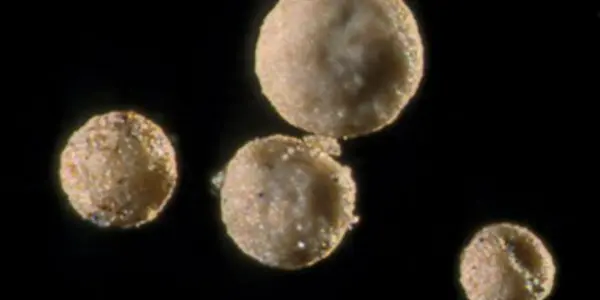
Scientists of the Soil Science and Geopharmacy Research Group of the University of Granada (Spain), directed by Rafael Delgado, have discovered and characterized a new type of atmospheric aerosols named ‘iberulites’, which could be useful for the study of relevant atmospheric reactions from Earth.
Researchers José Luis Díaz Hernández, of the Andalusian Research and Farming, Fishing, Food, and Ecological Production Training Institute and Jesús Párraga Martínez, of the Department of Edaphology and Farming Chemistry of the University of Granada, have insisted that such iberulites form in the troposphere from mineral small grains emitted from desert soils and bordering regions, burst into the atmosphere in a chaotic way, collect water vapour which becomes condensed and make up little rain drops.
"As we all know, the Sahara is a powerful emitter of atmospheric dust, which travels to the Amazon and Caribbean regions, including Florida, also reaching the North of Europe, Israel and even the Himalayas. Such mineral grains, which contain iron, calcium, sulphur and sometimes phosphorus, fertilize the soil, forests and plankton of the oceans, lakes and seas they go through," they write.

German athlete Wojtek Czyz, running with a space-tech enhanced prosthetic leg, set a new world record at the Paralympics 2008 in Beijing, reaching 6.50 m and beating the previous world record by 27 cm.
In spring 2004, ESA’s Technology Transfer Programme (TTP) technology broker MST Aerospace met with Wojtek Czyz and his trainer to perform a pre-screening of the most crucial elements of the prosthesis used by Czyz. Having lost part of his left leg three years before in a sports accident, he now uses a prosthesis in two athletic disciplines: long jump and sprint competitions.
The advantage of these space materials is that they are extremely strong and at the same time lighter than conventional products available, both important advantages for top athletes’ performance. The problem with Czyz’ previous prosthesis was that it tended to break when he performed to the maximum of his capacity.
Sarah Palin lost the room immediately after Joe Biden choked up, say Karen Kohn Bradley and Karen Studd, certified movement analysts who study the nonverbal and movement behaviors of political leaders.
They don't say (though it's easy to guess) their political party so you have to calibrate their analysis carefully, but they do say that on a movement level, both Vice-Presidential candidates showed a sense of urgency and the increasing speed of their deliveries meant that, halfway through, everyone in the huge nationwide audience was in some sort of trance, like watching a merry-go-round spin faster and faster, punctuated only by strange smiles.

Obesity is a health problem in western countries in part from an increase in the mass and number of white fat cells. Because white fat cells are post-mitotic, meaning that they cannot divide, scientists have hypothesized that a population of fat precursor cells must exist in the fat depot in order to produce new fat cells. But identifying these fat precursor cells has been difficult.
Scientists at the Howard Hughes Medical Institute and Rockefeller University have discovered an important fat precursor cell that may in time explain how changes in the numbers of fat cells might increase and lead to obesity. The finding, published in Cell, could also have implications for understanding how fat cells affect conditions such as diabetes and cardiovascular disease.
Reading is good for the brain but researchers at Duke Children's Hospital say a good book can also help kids lose weight. It just has to be the right kind of book.
The Duke researchers asked obese females aged 9 to 13 who were already in a comprehensive weight loss program to read an age-appropriate novel called Lake Rescue (Beacon Street Press) - a book carefully crafted with the help of pediatric experts to include specific healthy lifestyle and weight management guidance, as well as positive messages and strong role models.
Want to cause a fight between anthropologists and evolutionary biologists? Throw out an opinion on whether early societies were heirarchical or egalitarian.
Great apes societies are very heirarchical despite the presence of alliances and 'political' maneuvering but a new paper in PLoS says the first coalition-based societies of equals (they use the term 'egalitarian') occurred tens of thousands of years ago, and that has implications for the context of social networks and cognitive evolution.
Great apes' societies have each animal occupying a particular place in the existing dominance hierarchy. A major function of coalitions in apes is to maintain or change the dominance ranking. When an alpha male is well established, he usually can intimidate any hostile coalition or the entire community.