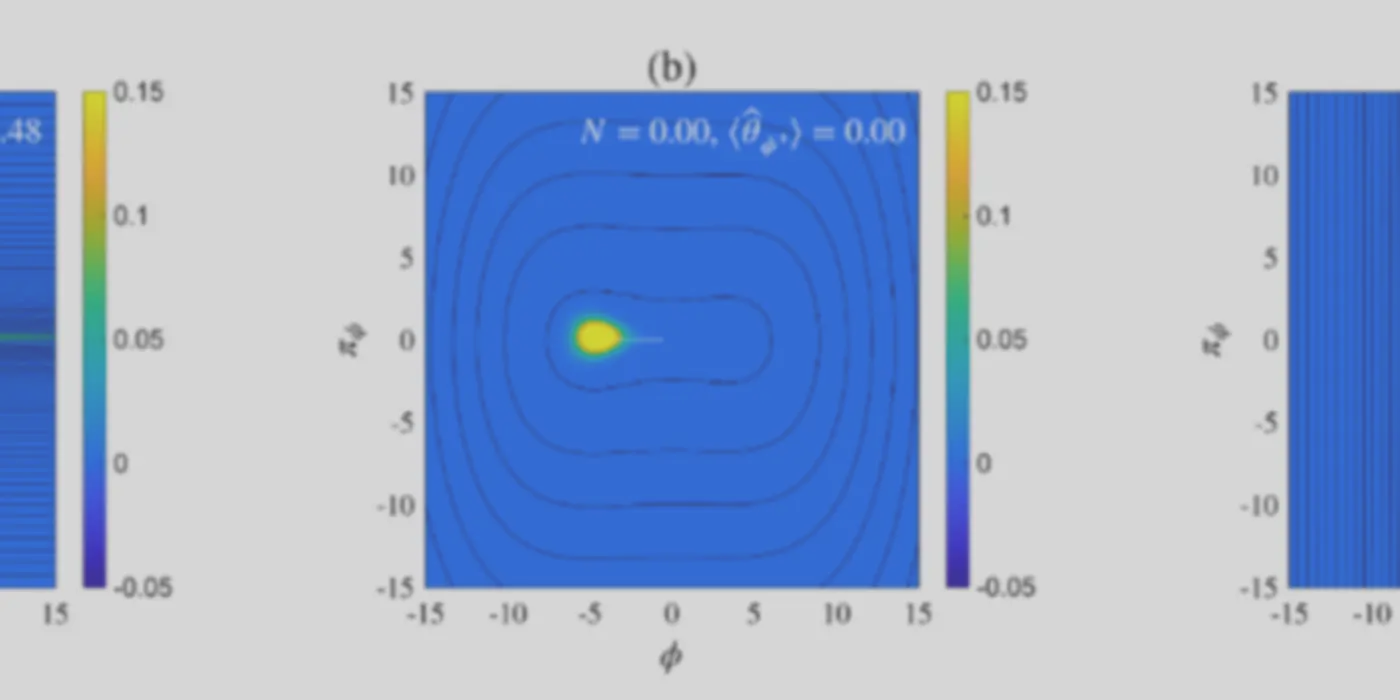
Sorry Higgs, There May Be A New Contender For Low Energy States
If we're trapped in a false vacuum, there's still hope to break free of cosmic lockdown
If we're trapped in a false vacuum, there's still hope to break free of cosmic lockdown


Researchers from Ohio State say that wetlands in tropical areas are able to absorb and hold onto about 80 percent more carbon than wetlands in temperate zones.
The scientists extracted soil cores from wetlands in Costa Rica and in Ohio and analyzed the contents of the sediment from the past 40 years. Based on their analysis, they estimated that the tropical wetland accumulated a little over 1 ton of carbon per acre per year, and the temperate wetland accumulated .6 tons of carbon per acre per year.
The temperate Ohio wetland in the study covers almost 140 acres, meaning it sequesters 80 tons of carbon per year. The tropical wetland covers nearly 290 acres and stores 300 tons of carbon each year.

Superconductors are materials that conduct current with negligible resistance and reduced energy waste so research has always generated enormous interest.
Magne Runde and Niklas Magnusson at SINTEF Energy Research are testing superconductors in the huge induction heaters utilized by the aluminium industry. Currently, companies have to preheat huge aluminium cylinders, known as billets, in induction heaters with copper conductors. When the temperature reaches 500 °C, the billet is extruded to profiles.
“This heating process leads to large losses in energy,” says Runde. “Only half the energy supplied is used to heat the billet. The remaining 50 percent is waste energy. This is something super conductors can improve.”
Edward O. Wilson is a Pulitzer Prize winning author and Harvard research professor emeritus and has pioneered seminal works in evolution of social behavior and organization; and a commitment to conservation that has shaped the face of science, philosophy, ethics and activism for more than a half century.
Who does he admire? Charles Darwin, whose audacious ideas on natural selection, evolution, and the nature of human origins turned a Victorian public and scientific establishment on its collective ear.
On Nov. 4, Wilson will kick off Arizona State University’s Darwinfest, a series of events and speakers that will tap into what Darwin set in motion when he stepped outside of the box 150 years ago to publish “On the Origin of Species.” Wilson will speak about “Darwin and the Future of Science” at 7 p.m. at the Tempe Center for the Arts.
A research team at Singapore A*STAR's Data Storage Institute (DSI) has invented a new phase change material that has the potential to change the design of future memory storage devices.
Phase change materials are substances that are capable of changing their structure between amorphous and crystalline at high speed. Currently, these materials are used to make Phase change memory (PCM), the most promising alternative to replace FLASH memory.
This research advance was given special mention in Nature's Asia Materials journal. In the August issue of Nature Photonics journal, the creation of a needle of longitudinally polarized light in vacuum using binary optics was featured.
The Royal Swedish Academy of Sciences has decided to award the Nobel Prize in Chemistry for 2008 jointly to Japanese citizen Osamu Shimomura, of Marine Biological Laboratory (MBL), Woods Hole, MA, and Boston University Medical School along with Americans Martin Chalfie, Columbia University, New York and Roger Y. Tsien, University of California, San Diego, La Jolla, "for the discovery and development of the green fluorescent protein, GFP".
Glowing proteins – a guiding star for biochemistry
The remarkable brightly glowing green fluorescent protein, GFP, was first observed in the beautiful jellyfish, Aequorea victoria in 1962. Since then, this protein has become one of the most important tools used in contemporary bioscience. With the aid of GFP, researchers have developed ways to watch processes that were previously invisible, such as the development of nerve cells in the brain or how cancer cells spread.
With increasing consumer pressure on both farmers and supermarkets to minimize the use of chemical pesticides in fruit and vegetables, a new study funded by the Economic and Social Research Council (ESRC) looks at why there is currently little use of biological alternatives in the UK.
The research suggests that consumer concerns about toxic residues could undermine the recommended ‘five a day’ target for the consumption of fresh fruit and vegetables. Supermarkets have responded to consumer pressure by banning some approved pesticides, but have been slow to embrace biopesticides.
Biopesticides, can play a significant role in a more sustainable food chain as chemical pesticides are withdrawn due to resistance problems or because they are no longer commercially viable, according to the research. Chemicals also endanger workers’ health and can contaminate groundwater.
Honey may reduce healing times in patients suffering mild to moderate burn wounds., according to a systematic review by Cochrane Library Researchers who concluded that honey might be useful as an alternative to traditional wound dressings in treating burns.
Honey has been used in wound treatment since ancient times. The mechanism of action is unclear. While honey may help the body remove dead tissue and provide a favourable environment for the growth of new, healthy tissue, current interest in medicinal honey focuses largely on its antibacterial effects.
Recent studies indicate that infusing hearts with stem cells taken from bone marrow could improve cardiac function after myocardial infarction - tissue damage that results from a heart attack. But in a recent systematic review, Cochrane Researchers concluded that more clinical trials are needed to assess the effectiveness of stem cell therapies for heart patients, as well as studies to establish how these treatments work.
In a heart attack, blocked arteries can cut off the blood supply to areas of heart tissue. This leads to myocardial infarction - severe tissue damage caused by lack of oxygen, which is transported in the blood.
New research provides support for the use of St. John’s wort extracts in treating major depression - Cochrane Systematic Review backs up previous research that showed the plant extract is effective in treating mild to moderate depressive disorders.
Extracts of the plant Hypericum perforatum, commonly known as St. John’s wort, have long been used in folk medicine to treat depression and sleep disorders. The plant produces a number of different substances that may have anti-depressive properties, but the whole extract is considered to be more effective.
There is no evidence probiotics can relieve the symptoms of eczema and there is evidence that they may occasionally cause infections and gut problems. These findings from The Cochrane Library come at a time when use of probiotics to treat eczema is increasing.
Eczema is an itchy skin condition that affects more than 1 in 20 people at some time in their lives and is especially common in children. Its cause is complex and not well understood, but sufferers do have different bacteria in their guts compared to unaffected people. Consequently, some nutritionists have suggested that eating live gut-dwelling bacteria, such as those found in probiotic yogurts and some infant formulas, could be beneficial.
Scientists at the University of Leicester, where genetic 'fingerprinting' was invented by Professor Sir Alec Jeffreys, say they are developing techniques which may one day allow police to work out someone’s surname from DNA alone.
Research by Turi King has shown that, unsurprisingly, men with the same British surname are highly likely to be genetically linked even in today's multicultural world. The results of her research have implications in the fields of forensics, genealogy, epidemiology and the history of surnames.
On Wednesday 8th October Dr King will present the key findings of her Ph.D. research in which she recruited over two and a half thousand men bearing over 500 different surnames to take part in the study. Carried out in Professor Mark Jobling’s lab, Dr Turi King’s research involved exploring this potential link between surname and Y chromosome type.

Scientists filming in one of the world’s deepest ocean trenches have found groups of highly sociable snailfish swarming over their bait, nearly five miles (7700 metres) beneath the surface of the Pacific Ocean. This is the first time cameras have been sent to this depth.
‘We got some absolutely amazing footage from 7700 metres. More fish than we or anyone in the world would ever have thought possible at these depths,’ says project leader Dr Alan Jamieson of the University of Aberdeen’s Oceanlab, on board the Japanese research ship the Hakuho-Maru.
‘It’s incredible. These videos vastly exceed all our expectations from this research. We thought the deepest fishes would be motionless, solitary, fragile individuals eking out an existence in a food-sparse environment,’ says Professor Monty Priede, director of Oceanlab.