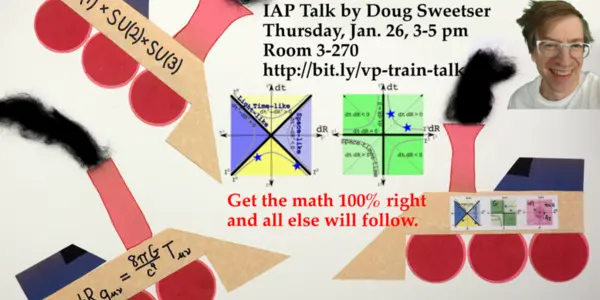
Sorry Higgs, There May Be A New Contender For Low Energy States
If we're trapped in a false vacuum, there's still hope to break free of cosmic lockdown
If we're trapped in a false vacuum, there's still hope to break free of cosmic lockdown


Bring on the bad weather. A single typhoon in Taiwan buries as much carbon in the ocean (in the form of sediment) as all the other rains in that country all year long - combined.
The study published in Geology the first to examine the chemistry of stream water and sediments that were being washed out to sea while a typhoon was happening at full force. This new knowledhe should help scientists develop better models of global climate change.
Anne Carey, associate professor of earth sciences at Ohio State, said that she and her colleagues have braved two typhoons since starting the project in 2004. The Geology paper details their findings from a study of Taiwan's Choshui River during Typhoon Mindulle in July of that year.
Along with all the other changes that come with age, healthy older people also lose some capacity for sleep, according to a new report published online on July 24th in Current Biology, a Cell Press publication. When asked to stay in bed for 16 hours in the dark each day for several days, younger people get an average of 9 hours of shuteye compared to 7.5 for older people, the researchers report.
The study also found that most healthy people, and young people in particular, don't get as much sleep as they need.
The idea that sleep changes markedly across the life span isn't new. In fact, insomnia is a common complaint among older people. But whether age-related changes in sleep were due to changes in social factors, circadian rhythms, or shifts in an internal "set point" for sleep need or the ability to sleep had remained unresolved.
UC Irvine researchers have found a molecular link between circadian rhythms, our body clock, and metabolism. The discovery reveals new possibilities for the treatment of diabetes, obesity and other related diseases.
Circadian rhythms of 24 hours govern fundamental physiological functions in almost all organisms. The circadian clocks are intrinsic time-tracking systems in our bodies that anticipate environmental changes and adapt themselves to the appropriate time of day.
Disruption of these rhythms can profoundly influence human health and has been linked to metabolic disorders, insomnia, depression, coronary heart diseases and cancer.
One of the reasons people on low-carbohydrate diets may lose weight is that they reduce their intake of fructose, a type of sugar that can be made into body fat quickly, according to a researcher at UT Southwestern Medical Center.
Dr. Elizabeth Parks, associate professor of clinical nutrition and lead author of a study appearing in a current issue of the Journal of Nutrition, said her team's findings suggest that the right type of carbohydrates a person eats may be just as important in weight control as the number of calories a person eats.
Current health guidelines suggest that limiting processed carbohydrates, many of which contain high-fructose corn syrup, may help prevent weight gain, and the new data on fructose clearly support this recommendation.
Livestock manure, left to decompose naturally, emits two particularly potent greenhouse gas emissions (GHGs) – nitrous oxide and methane. According to the Intergovernmental Panel on Climate Change, nitrous oxide warms the atmosphere 310 times more than carbon dioxide, methane does so 21 times more.
Converting livestock manure into a domestic renewable fuel source could lead to a significant reduction in GHGs and generate enough electricity to meet up to three per cent of North America's entire consumption needs, according to research published in the Institute of Physics' Environmental Research Letters.
The paper, 'Cow Power: The Energy and Emissions Benefits of Converting Manure to Biogas', has implications for all countries with livestock as it is the first attempt to outline a procedure for quantifying the national amount of renewable energy that herds of cattle and other livestock can generate and the concomitant GHG emission reductions.
Isoflavones (daidzein, genistein and glycitein), found mainly in soy beans and soy-derived products, are plant-derived compounds with estrogenic effects. While animal studies have linked the high consumption of isoflavones with infertility, there had been little evidence of this effect in humans.
Now research published in the journal Human Reproduction states that men who eat an average of half a serving of soy foods a day have lower concentrations of sperm than men who do not eat soy foods. The association was particularly marked in men who were overweight or obese, the study found.
In the largest study in humans to examine the relationship between semen quality and phytoestrogens (plant compounds that can behave like the hormone, oestrogen), Dr Jorge Chavarro, a research fellow in the department of nutrition at Harvard School of Public Health, Boston, USA, and his colleagues found that men who ate the most soy food had 41 million sperm per millilitre less than men who did not consume soy products. (The "normal" sperm concentration for men ranges between 80-120 million/ml).
According to a study conducted at Washington University School of Medicine in St. Louis, older people who did endurance exercise training for about a year ended up with metabolically much younger hearts. The researchers also showed that by one metabolic measure, women benefited more than men from the training.
The researchers measured heart metabolism in sedentary older people both at rest and during administration of dobutamine, a drug that makes the heart race as if a person were exercising vigorously. At the start of the study, they found that in response to the increased energy demands produced by dobutamine, the hearts of the study subjects didn't increase their uptake of energy in the form of glucose (blood sugar).
Although state lotteries, on average, return just 53 cents for every dollar spent on a ticket, people continue to pour money into them — especially low-income people, who spend a larger percentage of their incomes on lottery tickets than do the wealthier segments of society. A new Carnegie Mellon University study sheds light on the reasons why low-income lottery players eagerly invest in a product that provides poor returns.
In the study published in the Journal of Behavioral Decision Making, participants who were made to feel subjectively poor bought nearly twice as many lottery tickets as a comparison group that was made to feel subjectively more affluent. The Carnegie Mellon findings point to poverty's central role in people's decisions to buy lottery tickets.
If you walk down a US city street and don't think a lot of people are overweight, you probably are. Likewise, thin people will increasingly be regarded as an anomaly to be eliminated out of concern as people get heavier. In a culture of obesity, thin is like a cancer.
Research by economists at the University of Warwick, Dartmouth College, and the University of Leuven, finds that people are subconsciously influenced by the weight of those around them - human beings keep up with the weight of the society they live in, which can lead to a spiral of imitative obesity.
The researchers will present their results on Friday July 25th at a National Bureau of Economic Research conference in Cambridge Massachusetts in a paper entitled Imitative Obesity and Relative Utility at the NBER Summer Institute on Health Economics.
Ronald B. Herberman, MD, the director of the University of Pittsburgh Cancer Institute and UPMC Cancer Centers, issued the following directive to thousands of University of Pittsburgh employees:
*******************************
FROM: Ronald B. Herberman, MD
Recently I have become aware of the growing body of literature linking long-term cell phone use to possible adverse health effects including cancer. Although the evidence is still controversial, I am convinced that there are sufficient data to warrant issuing an advisory to share some precautionary advice on cell phone use.
An international expert panel of pathologists, oncologists and public health specialists recently declared that electromagnetic fields emitted by cell phones should be considered a potential human health risk (see The Case for Precaution in Cell Phone Use, attached). To date, a number of countries including France, Germany and India have issued recommendations that exposure to electromagnetic fields should be limited. In addition, Toronto’s Department of Public Health is advising teenagers and young children to limit their use of cell phones, to avoid potential health risks.
A group of scientists who set out to study sex pheromones in a tiny worm found that the same family of pheromones also controls a stage in the worms' life cycle, the long-lived dauer larva. The findings in Nature represent the first time that reproduction and lifespan have been linked through so-called small molecules.
Where scientists once focused on DNA and proteins as the major players in an organism's biology, they are now realizing that smaller, but more structurally diverse chemicals - simply called "small molecules" - are a significant part of a living thing's biology. "They're as important to biology as the genes are," says Frank Schroeder, last author of the paper and a scientist at the Boyce Thompson Institute.

SENSOPAC, an EU-funded project whose goal is to create a robotic arm, hand and brain with human-like physical and cognitive capabilities, is bringing human-like robots closer to reality - their newest electronic brain is modelled on the human cerebellum.
Existing robots, such as those that help assemble cars or computers, can perform repetitive actions quickly and precisely. However, says Patrick van der Smagt, the coordinator of SENSOPAC, “they are not very intelligent or flexible and they don’t do very much sensing.”
While the movies have convinced many people that humanoid robots, such as C-3PO or WALL-E are realistic, van der Smagt knows all too well how difficult it is to build robots with even basic human abilities.