News Articles

News Account

News Account

News Releases From All Over The World, Right To You
RSS Feed
ChatGPT Is The Great Equalizer For Those Born With Socioeconomic And Genetic Disadvantages

ChatGPT Is The Great Equalizer For Those Born With Socioeconomic And Genetic Disadvantages

There is a lot of concern about the ability of ChatGPT to replace lower-skilled workers but it will probably make them better. In the 19th century a phrase went, "God man but Sam Colt made them equal" and ChatGPT could give those without inherent gifts that same leg up soon.The days when you could seem smart by having a good memory and confident delivery style may be over, which means greater equity for all.

Atherosclerosis: Understanding Why Arteries Harden

Atherosclerosis: Understanding Why Arteries Harden

Atherosclerosis, a condition that causes arteries to thicken, is a risk factor for a number of diseases that as a group are the leading cause of death in the U.S. What it really means, why it happens, and why it matters is unclear, since nearly half of Americans are told they have it.Understanding its progression and possible impact of fatty buildup in the arteries is important, as is calcification. A new pilot is geared toward learning where that calcification comes from, and if perhaps its origin is inside the arteries.

In Defense Of Dating Apps - They're Used For Affirmation, And That's A Good Thing

In Defense Of Dating Apps - They're Used For Affirmation, And That's A Good Thing

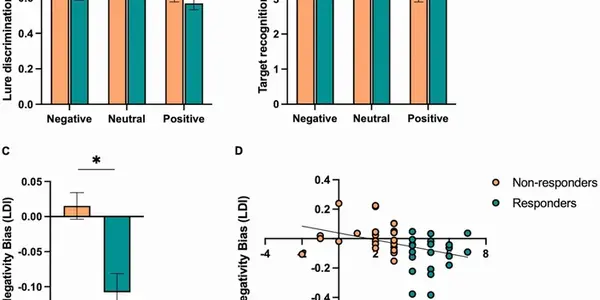
A survey of over one thousand Tinder users found that were not interested in meeting anyone, and nearly two-thirds were already married or "in a relationship."Instead of being used to find dates, people instead it has a similar appeal as social media - a source of entertainment, distraction and self-esteem.The data were 1,387 English-speaking Tinder users, ages 17 to 84, asking about their motivations for using the app; the number of matches and offline dates they had; their relationship status; their selectiveness in choosing partners; and, among other factors, psychological measures like impulsivity, depression, loneliness and self-esteem.

Can Energy From Food Waste Be Viable, Or Would It Be Another Ethanol Subsidy?

Can Energy From Food Waste Be Viable, Or Would It Be Another Ethanol Subsidy?

Food waste is a major problem in the developed world. People new to buying organic food are annoyed at how quickly it spoils but what if that wilted brown lettuce could be converted into energy?Anaerobic digestion hasn't been done on a large scale, the numbers don't work, but academics say it could. In a numerical model. The authors looked at supply chain logistics - potential sites, transportation, production, and facility costs, as well as revenue and return on investments.

Climate Doomsday Narratives Are Working, Say Media Academics

Climate Doomsday Narratives Are Working, Say Media Academics

A decade ago surveys showed that Millennials were less concerned about environmental claims than Baby Boomers or Generation X. The reason was speculated to be environmental fatigue. Millennials saw that government recycling was only making China rich and Americans pay higher taxes, that being miserable at home while Al Gore got rich selling carbon credits made no sense, and assurances that weather were not climate during a snowstorm but were climate during a heatwave made little sense.

Biomarkers May Show A New Way To Diagnose Ovarian Cancer

Biomarkers May Show A New Way To Diagnose Ovarian Cancer

The discovery of new biomarkers is important for detecting ovarian cancer, as the disease is difficult to detect in its early stages where it can most easily be treated. One approach to detecting cancer is to look for extracellular vesicles (EVs), especially small proteins released from the tumor called exosomes. As these proteins are found outside the cancer cell, they can be isolated from body fluids, such as blood, urine, and saliva. However, the use of these biomarkers is hindered by the lack of reliable ones for the detection of ovarian cancer.

An Earth Day Should Be 60 Hours Long - Here's Why It Never Happened

An Earth Day Should Be 60 Hours Long - Here's Why It Never Happened

Everyone knows a 'day' - one rotation of Earth - is around 24 hours long and lengthening at a rate of some 1.7 milliseconds every century. Yet 2 billion years ago it was 19.5 hours and at that rate we should have days lasting 60 hours.Yet we don't. Instead, the tidal pull of the moon was halted for over a billion years. For that, we can thank the pull of the sun. This tidal stalemate between the sun and moon has been linked to the atmosphere’s temperature and Earth’s rotational rate.

Drug Overdoses, Falls, Car Accidents Lead In US Deaths Since 1999

Drug Overdoses, Falls, Car Accidents Lead In US Deaths Since 1999

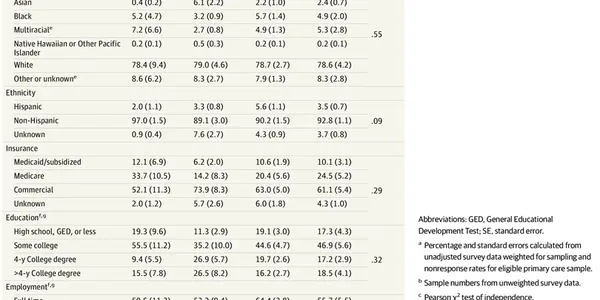
Epidemiologists looked at data from from 1999 to 2020 and noted that death rates due to poisonings, firearms, and all other injuries increased substantially in the U.S., many of them due to suicide attempts.The demography analysis of 3,813,894 deaths collated by the National Center for Health Statistics due to non-natural causes was simplistic - age, sex, race, ethnicity, and belief about intent, then separating out criminal acts for things like gun deaths and if there was no clear intent of suicide, listing drug overdoses as accidental, while parsing motor vehicle injuries and falls as well.

Probing The Brain Gut Connection

Probing The Brain Gut Connection

The brain and the digestive tract are in constant communication, relaying signals that help to control feeding, and the implication that this communication network may also influence our mental state - as if "hangry" is science any more than a child getting hyperactive if they eat a piece of candy is - means it has been linked to everything from autism to Parkinson's disease. Because there is very little science, it is mostly suggestion used to sell supplements and yogurt that makes you poop. A new technology hopes to introduce data to brain-gut mysticism. 

How To Annihilate A Star

How To Annihilate A Star

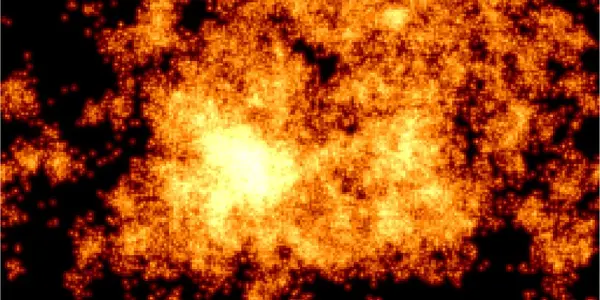
Stars die in lots of ways. Most low-mass stars like our Sun shed their outer layers and eventually fade to white dwarf stars. Larger ones prefer to burn out rather than fade away so they go supernova and create ultradense objects like neutron stars and black holes. When two stellar remnants form a binary system, they also can collide. Yet a new paper shows there may be a fourth way - a collision where non-binary stars in dense regions can be forced together. The work used a long-duration gamma-ray burst with the Gemini South telescope in Chile.