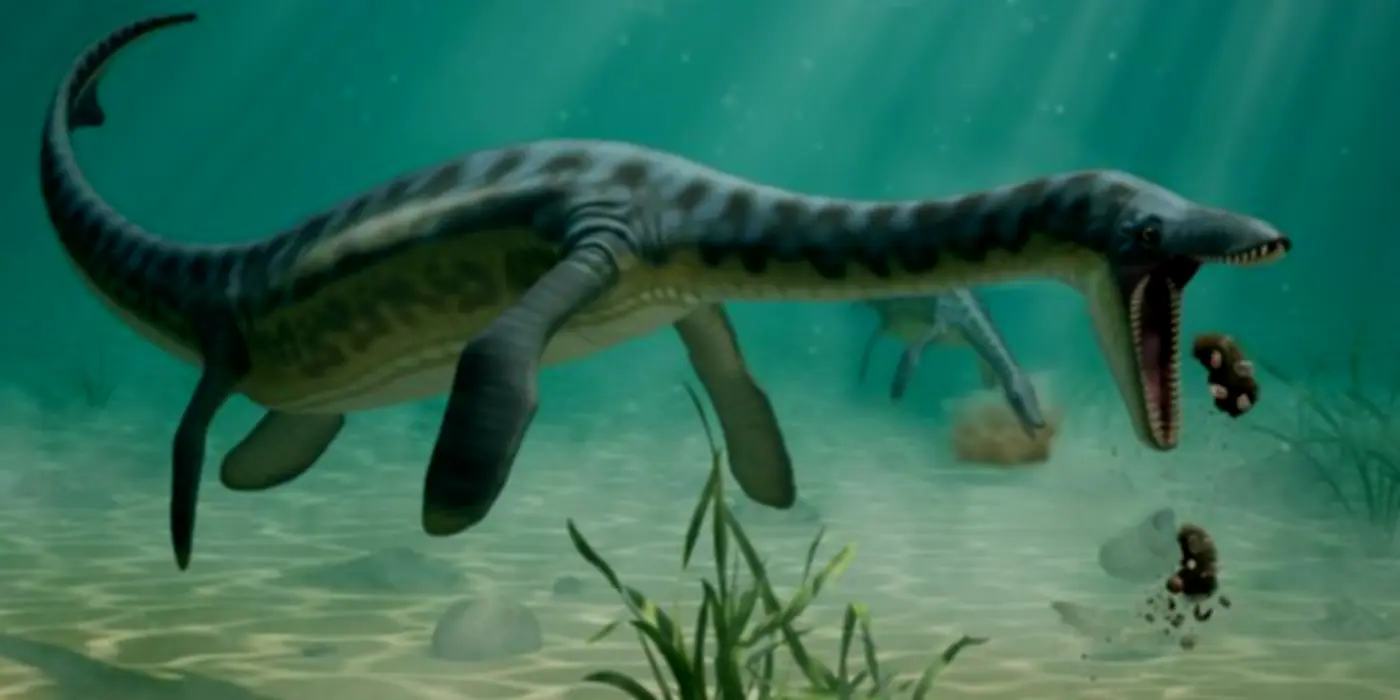
Jurassic Puke: Plesiosaurs Knew Not To Vomit Where They Eat
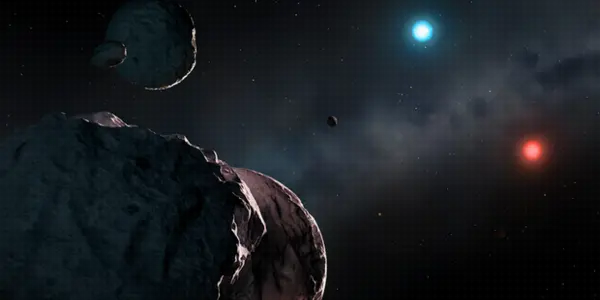
Jurassic monsters sometimes needed to vomit. When they did, they went to shore.
Jurassic monsters sometimes needed to vomit. When they did, they went to shore.


Oil palm (Elaeis guineensis) cultivation has expanded dramatically in recent decades and is frequently cited as a major threat to tropical biodiversity. This is because oil palm is grown in lowland tropical regions and so impacts on the most biodiverse terrestrial habitats: tropical rainforests.
Analysis of the published literature by scientists led by Edgar Turner at the University Museum of Zoology, Cambridge has revealed significant changes in the focus of oil palm research over the last 30 years.

According to the Chinese proverb, a bird sings because it has a song, not because it has an answer. A team of French and Brazilian researchers, however, may have the answer as to how the song of Brazilian white-browed warbler has become so well-adapted to the acoustic properties of the rainforest environment.
Understanding the evolution of acoustic communication systems in animals is a hot topic in evolutionary biology and one of the main challenges is to understand how environmental pressures drive this evolution.
The human journey from Asia to the New World was interrupted by a 20,000-year layover in Beringia, a once-habitable region that today lies submerged under the icy waters of the Bering Strait.
Furthermore, the New World was colonized by approximately 1,000 to 5,000 people — a substantially higher number than the 100 or fewer individuals of previous estimates.
The developments, reported by University of Florida Genetics Institute scientists, help shape understanding of how the Americas came to be populated — not through a single expansion event that is put forth in most theories, but in three distinct stages separated by thousands of generations.
Night-time noise from aircraft or traffic can increase a person’s blood pressure even if it does not wake them, according to a new study published today in the European Heart Journal.
Scientists from Imperial College London and other European institutions monitored 140 sleeping volunteers in their homes near London Heathrow and three other major European airports.
The researchers measured the volunteers’ blood pressure remotely at 15-minute intervals and then analysed how this related to the noise recorded in the volunteers’ bedrooms.

A new species of dinosaur unearthed in Mexico is giving scientists fresh insights into the ancient history of western North America, according to an international research team led by scientists from the Utah Museum of Natural History at the University of Utah.
“To date, the dinosaur record from Mexico has been sparse,” said Terry Gates, a paleontologist with the Utah Museum of Natural History, Utah’s designated natural history museum.
The new creature — aptly dubbed Velafrons coahuilensis — was a massive plant-eater belonging to a group of duck-billed dinosaurs, or hadrosaurs.
Johns Hopkins researchers from the Whiting School of Engineering and the School of Medicine have devised a micro-scale tool - a lab on a chip - designed to mimic the chemical complexities of the brain. The system should help scientists better understand how nerve cells in the brain work together to form the nervous system.
A report on the work appears as the cover story in the February 2008 issue of the British journal Lab on a Chip.
”The chip we’ve developed will make experiments on nerve cells more simple to conduct and to control,” says Andre Levchenko, Ph.D., associate professor of biomedical engineering at the Johns Hopkins Whiting School of Engineering and faculty affiliate of the Institute for NanoBioTechnology.
Singles’ bars, classified personals and dating websites are a reflection, not only of the common human desire to find a mate, but of the sense of scarcity that seems to surround the hunt. Many people participate in dating activities in the hopes of finding that special someone, yet feel as though it is an impossible task.
However, thanks to an international team of psychologists, the solution may be closer than we think — within ourselves, to be exact.
Heterogeneity provides stability, say scientists from the Universities of Fribourg and Bonn, whether this is in a shower, in power grids or even on the stock market.
It's a big reason why the electrical grid does not break. When Al Gore had the brilliant idea to have everyone watching his Live Earth concerts shut off their lights as a symbolic gesture, he had to be reminded that the surge when people turned the lights back on would put a lot of people in danger. The grid could not take it.
In the shower example, showers in youth hostels can be risky when there is not enough hot water for everybody. If only one visitor turns up the hot tap during the early morning shower, everyone else is threatened by an icy gush of water. This unwanted form of hydrotherapy is particularly likely to happen when all the shower taps have the same possible settings, in other words if cold and hot water can be adjusted to exactly the same amount in all showers. But if the water taps in each shower have their individual quirks, the risk of extreme fluctuations is less.
A new approach to the cooling of buildings across the developing world that needs nothing but wind and sun to operate has been devised by engineers in India. Writing in the International Journal of Sustainable Design, the team explains the concept of a combined solar chimney and wind tower system that can reduce the temperature of incoming appear by 5 degrees Celsius.
Jyotirmay Mathur of the Mechanical Engineering Department, at the Malaviya National Institute of Technology, in Jaipur, together with architect and urban designer Rajeev Kathpalia of Vastu Shilpa Consultants, in Ahmedabad, point out that the development of energy-efficient, and even passive, cooling systems for buildings is essential in the light of environmental pressures and costs. In the past, they point out, building designers had to rely on natural ways and means for maximising comfort inside buildings.

An international team of cosmologists, leaded by a researcher from Paris Observatory, has improved the theoretical pertinence of the Poincaré Dodecahedral Space (PDS) topology to explain some observations of the Cosmic Microwave Background (CMB). In parallel, another international team has analyzed with new techniques the last data obtained by the WMAP satellite and found a topological signal characteristic of the PDS geometry.
The last fifteen years have shown considerable growth in attempts to determine the global shape of the universe, i.e. not only the curvature of space but also its topology. The « concordance » cosmological model which now prevails describes the universe as a « flat » (zero-curvature) infinite space in eternal, accelerated expansion.
From medicine to make-up, plastics to paper - hardly a day goes by when we don't use titanium dioxide.
Now researchers at the University of Leeds have developed a simpler, cheaper and greener method of extracting higher yields of one of this most useful and versatile of minerals.
In powder form titanium dioxide (TiO2) is widely used as an intensely white pigment to brighten everyday products such as paint, paper, plastics, food, medicines, ceramics, cosmetics - and even toothpaste. Its excellent UV ray absorption qualities make it perfect for sunscreen lotions too.

As computers become more complex, the demand increases for more connections between computer chips and external circuitry such as a motherboard or wireless card. And as the integrated circuits become more advanced, maximizing their performance requires better connections that operate at higher frequencies with less loss.
Improving these two types of connections will increase the amount and speed of information that can be sent throughout a computer, according to Paul Kohl, Thomas L. Gossage chair and Regents’ professor in Georgia Tech’s School of Chemical and Biomolecular Engineering.