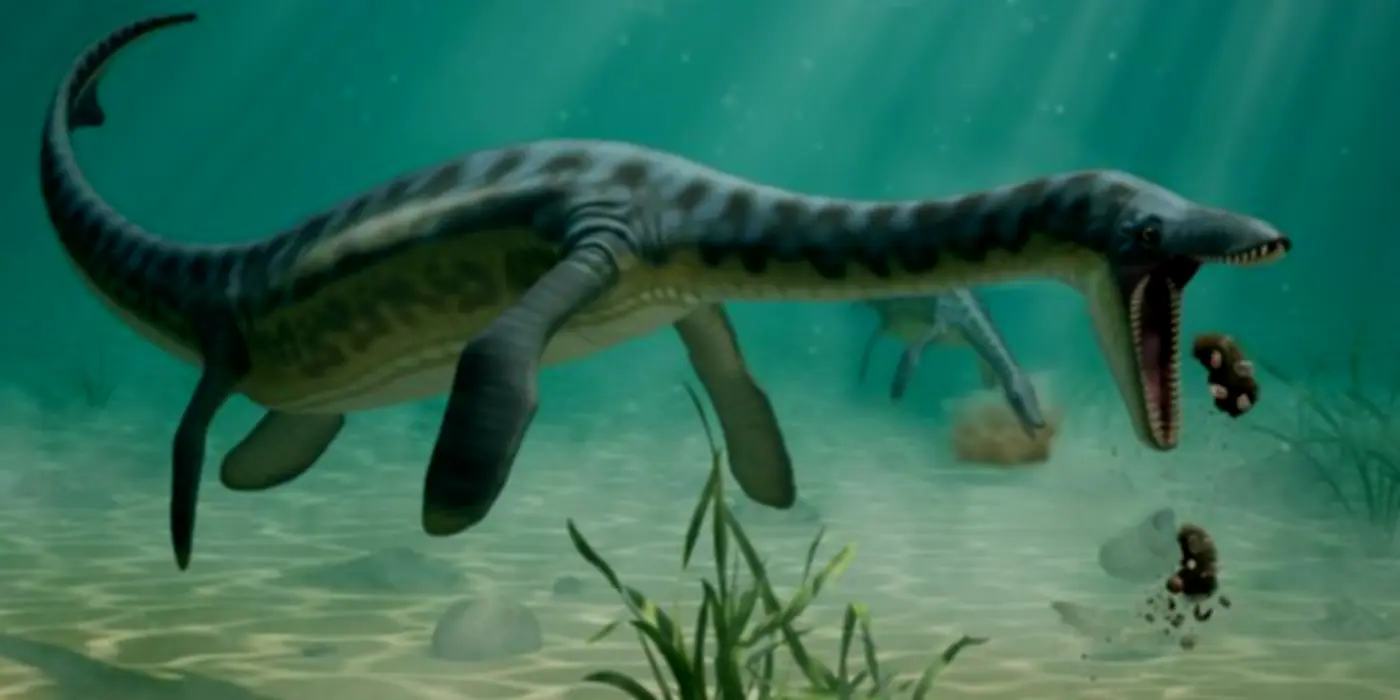
Jurassic Puke: Plesiosaurs Knew Not To Vomit Where They Eat
Jurassic monsters sometimes needed to vomit. When they did, they went to shore.
Jurassic monsters sometimes needed to vomit. When they did, they went to shore.


Research carried out by scientists from Earthwatch, the international environmental charity, has reinforced the urgent need to protect Europe’s remaining peat bogs.
Dubbed the ‘rainforests of Europe’ as they are so diverse in wildlife, peat bogs contain more than 20 per cent of the world’s carbon. However, western Europe has lost most of its natural peat bogs, largely due to peat extraction for horticulture.
Doctors are adjusting their bedside manner as better informed patients make ever-increasing demands and expect to be listened to, and fully involved, in clinical decisions that directly affect their care.
You know, how doctors always said patients should be.
In a study just published in Clinical Orthopaedics and Related Research, Dr. J. Bohannon Mason of the Orthocarolina Hip and Knee Center in Charlotte, NC, USA, says changes in society, the population and technology are influencing the way patients view their orthopaedic surgeons. As patients gain knowledge, their attitude to medicine changes: They no longer show their doctors absolute and unquestionable respect.

A 40,000-year-old tooth has provided scientists with the first direct evidence that Neanderthals moved from place to place during their lifetimes.
In a collaborative project involving researchers from the Germany, the United Kingdom, and Greece, Professor Michael Richards of the Max Planck institute for Evolutionary Anthropology in Leipzig, Germany and Durham University, UK, and his team used laser technology to collect microscopic particles of enamel from the tooth.
Contrary to our previous beliefs, identical twins are not genetically identical. This surprising finding is presented by American, Swedish, and Dutch scientists in a study being published today in the prestigious journal American Journal of Human Genetics. The finding may be of great significance for research on hereditary diseases and for the development of new diagnostic methods.
How can it be that one identical twin might develop Parkinson’s disease, for instance, but not the other" Until now, the reasons have been sought in environmental factors. The current study complicates the picture.
For more than a decade, Peter Zandstra has been working at the University of Toronto to rev up the production of stem cells and their descendants. The raw materials are adult blood stem cells and embryonic stem cells. The end products are blood and heart cells – lots of them. Enough mouse heart cells that they form beating tissue.
Less smoking or less time eating in restaurants because of a ban on smoking? Either way, the number of acute coronary events such as heart attack in adults dropped significantly after a smoking ban in public places in Italy, researchers reported in Circulation: Journal of the American Heart Association.
Researchers in Rome compared acute coronary events in the city for five years preceding a public smoking ban with those occurring one year after the ban. They found an 11.2 percent reduction of acute coronary events in persons 35 to 64 years and a 7.9 percent reduction in those ages 65 to 74.
“Smoking bans in all public and workplaces result in an important reduction of acute coronary events,” said Francesco Forastiere, M.D., Ph.D., co-author of the study and head of the Environmental and Occupational Epidemiology Unit, Department of Epidemiology, Rome E. Health Authority, Italy. “The smoking ban in Italy is working and having a real protective effect on population health.”
A butcher from Mindelheim and Fraunhofer scientists have succeeded in manufacturing tasty sausage varieties containing only two to three percent of fat. The almost fat-free sausage is now making its way onto the refrigerated shelves of German shops.
Master butcher Josef Pointner from Mindelheim hit on the idea of making low-fat sausage. “Low-fat products for varieties such as ham sausage, Leberkäse (a German meat loaf specialty) or salami or Weisswurst (Bavarian veal sausage) have never been available until now. But I was only partially successful in producing these sausage varieties,” Pointner says.
Researchers from the University of Chicago have discovered that many of the genetic variations that have enabled human populations to tolerate colder climates may also affect their susceptibility to metabolic syndrome, a cluster of related abnormalities that include obesity, elevated cholesterol levels, heart disease, and diabetes.
Scientists have long noted that humans inhabiting colder regions were bulkier and had relatively shorter arms and legs. In the 1950s, researchers found correlations between colder climates and increased body mass index (BMI), a measure of body fat, based on height and weight. Now scientists have found a strong correlation between climate and several of the genetic variations that appear to influence the risk of metabolic syndrome, consistent with the idea that these variants played a crucial role in adaptations to the cold. Also, some genes associated with cold tolerance have a protective effect against the disease, while others increase disease risk.
Researchers have provided the first global analysis of human proteins interacting with proteins of viruses and other pathogens. The network of interactions, described in an article published February 15 in the open-access journal PLoS Pathogens, reveals possible key intervention points for the future development of therapeutics against infectious diseases.
“Infectious diseases result in millions of deaths each year,” said co-author Matt Dyer. “Although much effort has been directed towards the study of how infection by a pathogen causes disease in humans, only recently have large data sets for protein interactions become publicly available.”
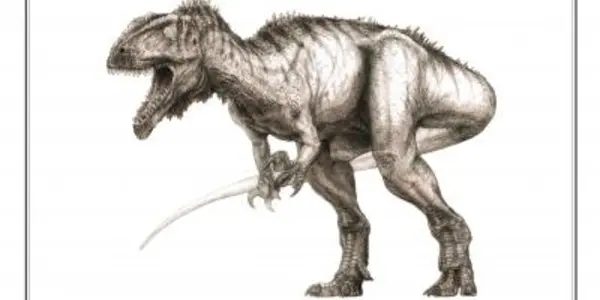
Two new 110 million-year-old dinosaurs unearthed in the Sahara Desert highlight the unusual meat-eaters that prowled southern continents during the Cretaceous Period. Named Kryptops and Eocarcharia in a paper appearing this month in the scientific journal Acta Palaeontologica Polonica, the fossils were discovered in 2000 on an expedition led by University of Chicago paleontologist Paul Sereno.
Sereno and co-author paleontologist Stephen Brusatte of the University of Bristol say the new fossils provide a glimpse of an earlier stage in the evolution of the bizarre meat-eaters of Gondwana, the southern landmass. “T-rex has become such a fixture of Cretaceous lore, most people don’t realize that no tyrannosaur ever set foot on a southern continent,” said Sereno.

Nothing would seem to be stranger than bats flying without their special radar. They would be the Keystone Cops of zoology. But the discovery of a remarkably well-preserved fossil representing the most primitive bat species known to date demonstrates that the animals evolved the ability to fly before they could echolocate.
The new species, named Onychonycteris finneyi, was unearthed in 2003 in southwestern Wyoming and is described in a study in the Feb. 14 issue of the journal Nature, on which University of Michigan paleontologist Gregg Gunnell is a coauthor along with researchers from the American Museum of Natural History (AMNH) in New York, the Royal Ontario Museum in Canada and the Senckenberg Research Institute in Germany.
When it comes to romantic attraction men primarily are motivated by good looks and women by earning power. At least that’s what men and women have been saying for a long time. Based on research that dates back several decades, the widely accepted notion permeates popular culture today.
But those sex differences didn’t hold up in a new in-depth study of romantic attraction undertaken by two Northwestern University psychologists.
In short, the data suggest that whether you’re a man or a woman, being attractive is just as good for your romantic prospects and, to a lesser extent, so is being a good earner.