Jurassic Puke: Plesiosaurs Knew Not To Vomit Where They Eat
Jurassic monsters sometimes needed to vomit. When they did, they went to shore.
Jurassic monsters sometimes needed to vomit. When they did, they went to shore.


Arsenic poisoning did not kill Napoleon in Saint Helena, as affirmed by a new meticulous examination performed at the laboratories of the Italian National Institute of Nuclear Physics (INFN) in Milano-Bicocca and Pavia, together with the University of Milano-Bicocca and the University of Pavia.
The physicists performing the study used a small nuclear reactor used exclusively for research purposes at the University of Pavia, applying techniques that were created for the project known as “Cuore” (“Heart”), which is being developed at the INFN’s national laboratories in Gran Sasso.
The research, published in the journal “Il Nuovo Saggiatore”, was performed on hair samples that had been taken during different periods of Napoleon Bonaparte’s life, from when he was a boy in Corsica, during

Wool skirts and silk ties may avoid those pricey trips to the dry-cleaner in the future and clean themselves, researchers in Australia and China suggest. They are reporting development of a nanoparticle coating that could lead to “self-cleaning” wool and silk fabrics.
Wool and silk, which are composed of natural proteins called keratins, are among the most prized and widely used fabrics in the clothing industry. However, they are difficult fabrics to keep clean and are easily damaged by conventional cleaning agents. A better way to fight stains in these and other protein-based fabrics is needed, scientists say.
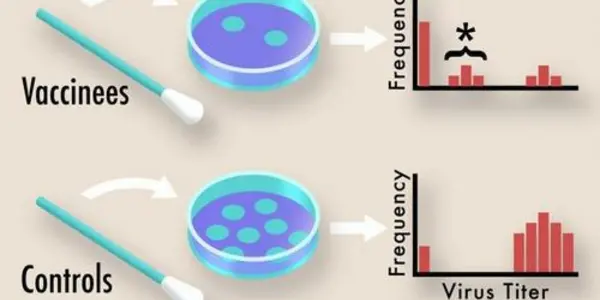
In a recent laboratory study, wool treated with a new nanoparticle coating (bottom row) removed red wine stains more effectively than plain wool (top row) and wool coated with another stain-fighting chemical (middle row), scientists say. Credit: Courtesy of the American Chemical Society

Scientists are reporting new evidence that natural pigments responsible for the beautiful blue/purple/reddish color of certain fruits and vegetables may help prevent obesity. Their animal study, published in the Feb. 13 issue of Journal of Agricultural and Food Chemistry, reports one odd qualification - eating the whole fruit containing these pigments seems to be less effective than eating an extract of the berry.
Ronald L. Prior and colleagues, who did the new study, note that past research has shown that the pigments — called anthocyanins — prevent obesity in laboratory mice fed a high-fat diet. Anthocyanins are found in grape skins, blueberries, blackberries, purple corn, and other foods. The mice also had other healthful changes in disease-related substances found in the blood.
Mmmmm, lose weight. Colorful pigments found in the skin of blueberries, strawberries and other fruits and vegetables may help prevent obesity, according to recent animal studies. Credit: Courtesy of USDA Agricultural Research Service

Can a machine taste coffee? Scientists have been working on it for decades. Researchers in Switzerland published a study on their coffee-tasting machine is scheduled for the March 1 issue of Analytical Chemistry.
For the food industry, “electronic tasters” could prove useful as quality control devices to monitor food production and processing. Christian Lindinger and colleagues at Nestlé Research pointed out that coffee scientists have long been searching for instrumental approaches to complement and eventually replace human sensory profiling.
However, the multisensory experience from drinking a cup of coffee makes it a particular challenge for flavor scientists trying to replicate these sensations on a machine. More than 1,000 substances may contribute to the complex aroma of coffee.
Move over, compact discs, DVDs, and hard drives. Researchers in Japan report progress toward developing a new protein-based memory device that could provide an alternative to conventional magnetic and optical storage systems, which are quickly approaching their memory storage capacities. Their study is scheduled for the March 4 issue Langmuir.
Just as nature chose proteins as the memory storage medium of the brain, scientists have spent years exploring the possibility of similarly using proteins and other biological materials to build memory-based devices with the potential for processing information faster and providing greater storage capacity than existing materials. Although a few protein-based memory materials have shown promise in experimental studies, developing such materials for practical use remains a challenge.
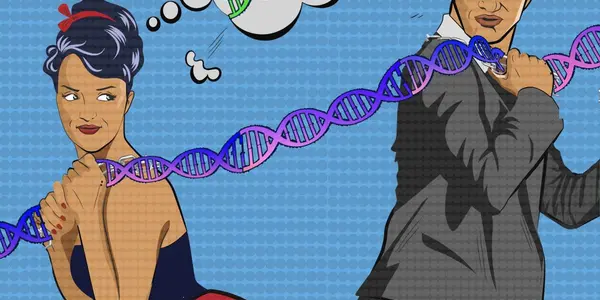
Physical attractiveness is important in choosing whom to date. Good looking people are not only popular targets for romantic pursuits, they themselves also tend to flock together with more attractive others. Does this mean then that more attractive versus less attractive people wear a different pair of lens when evaluating others’ attractiveness?
Columbia University marketing professor, Leonard Lee, and colleagues, George Loewenstein (Carnegie Mellon University), Dan Ariely (MIT) and James Hong and Jim Young (HOTorNOT.com), decided to test this theory in the realm of an online dating site. The site HOTorNOT.com allows members to rate others on their level of physical attractiveness.
A University of Alberta study recommends that workers on pig farms be monitored as part of influenza pandemic preparedness, after a child on a communal farm in Canada was diagnosed with swine flu in 2006.Though the seven-month-old boy made a full recovery, health researchers were concerned because of evidence that the virus spread to other members of the multi-family community, who, fortunately, all demonstrated mild or no apparent illness. It has been known for a long time that avian and swine strains of flu can spread to humans, with avian strains appearing to be more dangerous than swine strains; as of late 2007, the avian flu had killed 194 people in 321 cases reported worldwide.
If you live in Pennsylvania, it's West Virginia. If you live in California, it's every 'red state' in the Union. No matter where you live, some nearby state is the butt of inbreeding jokes.
Well, those places you make fun of for having an evolutionary tree that's a straight line are also having the last laugh, it seems.
In a new paper, deCODE scientists establish 'a substantial and consistent positive correlation between the kinship of couples and the number of children and grandchildren they have.'
Counterintuitive? Sure, from an evolutionary perspective closely-related parents have a higher probability of having offspring homozygous for deleterious recessive mutations, but closer parental kinship can also decrease the likelihood of immunological incompatibility between mother and offspring, for example in rhesus factor blood type.
If you just got done reading our previous article, Digestive Reflex May Mean Artificial Sweeteners End Up Causing Weight Gain, it may seem confusing that we now have an article saying artificial sweeteners help with weight loss. Welcome to the world of neuroscience. We just report the data.
In this case, a recent review of scientific literature concluded that low-calorie (or no-calorie) sweeteners may be of help in resolving the obesity problem. Although they are not magic bullets, low-calorie sweeteners in beverages and foods can help people reduce their calorie (energy) intakes.
“Low-calorie sweeteners reduce the energy of most beverages to zero and lower the energy density of many foods,” said study co-author, Dr. Adam Drewnowski, Director, Center for Public Health Nutrition at the University of Washington. “Every dietary guideline these days tells us to bulk up, hydrate, and consume foods with fewer calories but more volume.”
If you want to lose weight, diet soft drinks are not the answer, according to findings in the February issue of Behavioral Neuroscience.
Psychologists at Purdue University’s Ingestive Behavior Research Center say the widespread use of no-calorie sweeteners may actually make it harder for people to control their intake and body weight.
The researchers reported that, relative to rats that ate yogurt sweetened with glucose (a simple sugar with 15 calories/teaspoon, the same as table sugar), rats given yogurt sweetened with zero-calorie saccharin later consumed more calories, gained more weight, put on more body fat, and didn’t make up for it by cutting back later, all at levels of statistical significance.
Unlike the rest of the cells in your body, your red blood cells lack nuclei. That quirk dates back to the time when mammals began to evolve. Other vertebrates such as fish, reptiles, and birds, have red cells that contain nuclei that are inactive. Losing the nucleus enables the red blood cell to contain more oxygen-carrying hemoglobin, thus enabling more oxygen to be transported in the blood and boosting our metabolism.
Scientists have struggled to understand the mechanism by which maturing red blood cells eject their nuclei. Now, researchers in the lab of Whitehead Member Harvey Lodish have modeled the complete process in vitro in mice, reporting their findings in Nature Cell Biology. The first mechanistic study of how a red blood cell loses its nucleus, the research sheds light on one of the most essential steps in mammalian evolution.
According to a study in Molecular Biology and Evolution, the Vikings never left Northwest England - up to 50 percent of the DNA they found in men had Scandinavian ancestry.
The 100 men in the study were primarily from the Wirral in Merseyside and West Lancashire and their surnames were in existence as far back as medieval times. Results revealed that 50 percent of their DNA have Norse origins.