Brain Circuit Linked To Pregnancy Food Cravings Identified
Pregnant women have experienced exotic food cravings since recorded history began. This may be why.
Pregnant women have experienced exotic food cravings since recorded history began. This may be why.


Using the highest magnetic fields in the world, an international team of researchers has observed the quantum Hall effect – a much studied phenomenon of the quantum world – at room temperature.
The quantum Hall effect was previously believed to only be observable at temperatures close to absolute zero (equal to minus 459 degrees). But when scientists at the National High Magnetic Field Laboratory in the U.S. and at the High Field Magnet Laboratory in the Netherlands put a recently developed new form of carbon called graphene in very high magnetic fields, scientists were surprised by what they saw.
This image is a scanning electron microscope micrograph of a strongly crumpled graphene sheet on a silicon wafer.

A new report on climate over the world's southernmost continent shows that temperatures during the late 20th century did not climb as had been predicted by many global climate models.
This comes soon after the latest report by the Intergovernmental Panel on Climate Change that strongly supports the conclusion that the Earth's climate as a whole is warming, largely due to human activity.
It also follows a similar finding from last summer by the same research group that showed no increase in precipitation over Antarctica in the last 50 years. Most models predict that both precipitation and temperature will increase over Antarctica with a warming of the planet.
When glaciologist Lonnie Thompson returns to Peru's Qori Kalis glacier early this summer, he expects to find that half of the ice he saw during his visit there last year has vanished.
What troubles him the most is his recent observations that suggest that the entire glacier may likely be gone within the next five years, providing possibly the clearest evidence so far of global climate change.
The fact that the Qori Kalis glacier, high in the Andes Mountains , is only one of many ice tongues retreating on the Quelccaya Ice Cap, the largest body of ice in the tropics, provides strong evidence of the warming that appears to be underway worldwide.
Quickly now, which is a higher risk that you will get a disease: 1 in 100; 1 in 1,000; or 1 in 10? Choosing the correct answer depends on a person's numeracy – the ability to grasp and use math and probability concepts, according to a presentation at the annual meeting of the American Association for the Advancement of Science.
The scenario was part of a series of experiments with University of Oregon students. In this case, 96 percent correctly chose 1 in 10, a 10 percent chance. However, that response came from a more-educated, college-going crowd.
Scientists using NASA satellites have discovered an extensive network of waterways beneath a fast-moving Antarctic ice stream that provide clues as to how "leaks" in the system impact sea level and the world's largest ice sheet. Antarctica holds about 90 percent of the world's ice and 70 percent of the world's reservoir of fresh water.
With data from NASA satellites, a team of scientists led by research geophysicist Helen Fricker of the Scripps Institution of Oceanography, La Jolla, Calif., detected for the first time the subtle rise and fall of the surface of fast-moving ice streams as the lakes and channels nearly a half-mile of solid ice below filled and emptied.
Advances in digital electronic circuits have prompted the boost in functions and ever- smaller size of such popular consumer goods as digital cameras, MP3 players and digital televisions. But the same cannot be said of the older analog circuits in the same devices, which process natural sights and sounds in the real world. Because analog circuits haven't enjoyed a similar rate of progress, they are draining power and causing other bottlenecks in improved consumer electronic devices.
Now MIT engineers have devised new analog circuits they hope will change that. Their work was discussed at the International Solid State Circuits Conference (ISSCC) in San Francisco Feb.
Researchers at the University of Pennsylvania School of Veterinary Medicine have derived uniparental embryonic stem cells - created from a single donor's eggs or two sperm - and, for the first time, successfully used them to repopulate a damaged organ with healthy cells in adult mice. Their findings demonstrate that single-parent stem cells can proliferate normally in an adult organ and could provide a less controversial alternative to the therapeutic cloning of embryonic stem cells.
"Creating uniparental embryonic stem cells is actually much more efficient than generating embryonic stem cells by cloning," said K.

In the digital age, organizing a photo collection has gone from bad to worse. The saying used to be that a picture is worth a thousand words. Now the question arises: what are a thousand pictures worth?
"Anyone who has a digital camera has the problem that they have more photos than they can possibly navigate," says Steve Seitz, associate professor of computer science & engineering. "And it's always a problem to find the photo that you're looking for."
Photo Tourism places each photo where the photographer would have been standing. Here, one photo of Trevi Fountain in Rome is enlarged, while other photos appear as pyramids.
With an aging population susceptible to stroke, Parkinson’s disease and other neurological conditions, and military personnel returning from Iraq and Afghanistan with serious limb injuries, the need for strategies that treat complex neurological impairments has never been greater.
One tack being pursued by neuroscientists and engineers is the development of “smart” neural prostheses. These devices are intended to restore function, through electrical stimulation, to damaged motor neural circuits – the long, slender fibers that conduct neurochemical messages between nerve cells in the brain and spinal cord.

A newly designed porous membrane, so thin it's invisible edge-on, may revolutionize the way doctors and scientists manipulate objects as small as a molecule.
The 50-atom thick filter can withstand surprisingly high pressures and may be a key to better separation of blood proteins for dialysis patients, speeding ion exchange in fuel cells, creating a new environment for growing neurological stem cells, and purifying air and water in hospitals and clean-rooms at the nanoscopic level.
Membrane sorts molecules by size. Credit: University of Rochester.
Plants have an immune system that resists infection, yet 10% of the world's agricultural production is lost annually to diseases caused by bacteria, fungi, and viruses. Understanding how disease resistance works may help combat this scourge.
In a new study published online this week in the open-access journal PLoS Biology, Tessa Burch-Smith, Savithramma Dinesh-Kumar, and colleagues show how one aspect of the plant immune system is defined by the gene-for-gene hypothesis: a plant Resistance (R) gene encodes a protein that specifically recognizes and protects against one pathogen or strain of a pathogen carrying a corresponding Avirulence (Avr) gene.
In tobacco and its relatives, the N resistance protein confers resistance to infection by the Tobacco mosaic virus (TMV).
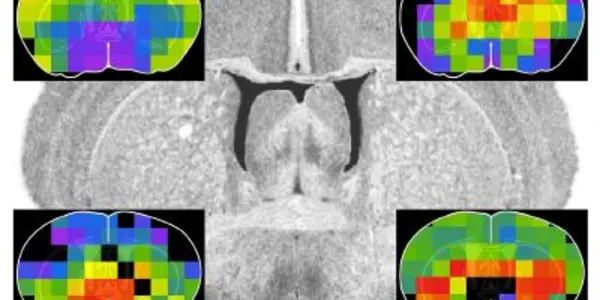
The Allen Brain Atlas, a genome-wide map of the mouse brain on the Internet, has been hailed as “Google of the brain.” The atlas now has a companion or the brain’s working molecules, a sort of pop-up book of the proteins, or proteome map, that those genes express.
The protein map is “the first to apply quantitative proteomics to imaging,” said Richard D. Smith, Battelle Fellow at the Department of Energy’s Pacific Northwest National Laboratory, who led the mapping effort with Desmond Smith of UCLA’s David Geffen School of Medicine.
Caption: Abundance profiles of four different proteins compiled from 1 millimeter cubes (voxels) in a mouse brain.