Kids Helping Kids Is Universal - But Cultures Help Differently
A simple game reveals a universal instinct in kids
A simple game reveals a universal instinct in kids

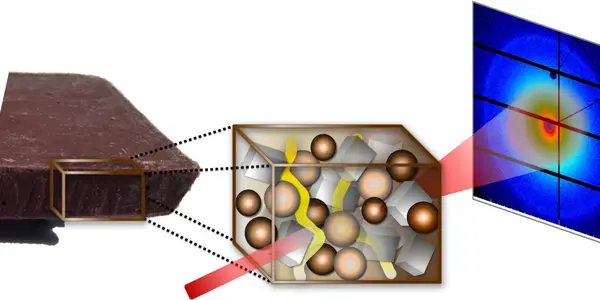
We have all seen "fat bloom", that unwelcome white layer that occasionally forms on chocolate. It is harmless but Europe once banned ugly fruit so cosmetics are clearly important to them and for that reason Nestlé and the Hamburg University of Technology got the DESY synchrotron's high brilliance X-ray source PETRA III on the case.

Common DNA modifications occur through methylation, a chemical process that can dramatically change gene expression, which regulates the eventual production of proteins that carry out the functions of an organism.
DNA encodes genetic information in its chemical bases: adenine, cytosine, guanine, and thymine. Methylated cytosine is the dominant DNA modification found in eukaryotes, a taxonomical classification that includes mammals, insects, worms, plants, and algae, but new papers have identified an adenine DNA methylation that also epigenetically regulates cellular function in green algae, worms, and flies.
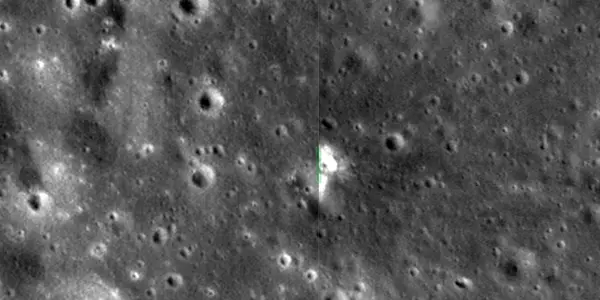
On March 17th, 2013, an object the size of a boulder hit the lunar surface in Mare Imbrium and exploded in a flash of light nearly 10 times as bright as anything ever recorded before - the largest recorded explosion occurred on the surface of the moon.
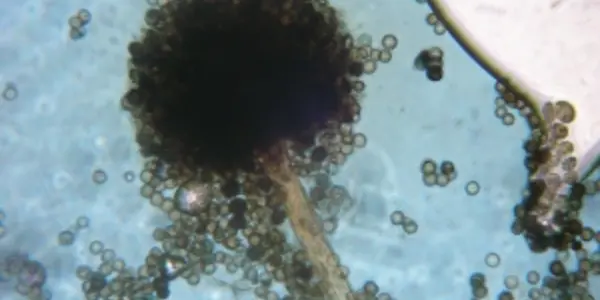
A common black fungus, Aspergillus carbonarius ITEM 5010, found in decaying leaves, soil and rotting fruit has been used to to create hydrocarbons, the chief component of petroleum, similar to those in aviation fuels. The fungus produced the most hydrocarbons on a diet of oatmeal but also created them by eating wheat straw or the non-edible leftovers from corn production.
Fungi have been of interest for about a decade within biofuels production as the key producer of enzymes necessary for converting biomass to sugars. Some researchers showed that fungi could create hydrocarbons, but the research was limited to a specific fungus living within a specific tree in the rainforest, and the actual hydrocarbon concentrations were not reported.

A majority of American adults have tried dieting to lose weight at some point in their lives, and at any given time, about one-third of the adult population say they're currently dieting, which is why diet books are the one consistent think about the New York Times bestseller list. Yet 60 percent of American adults are overweight or even obese and more than 16 percent of deaths nationwide are linked to that.

There are plenty of misunderstandings and sometimes they get regurgitated into new forms, like that sugar is toxic or bread is bad for your brain. It can get a little confusing so Johns Hopkins physicians have shed some light on what is well-worn myth and what is fiction and what is in between.Belief: Eating too much sugar can cause diabetes
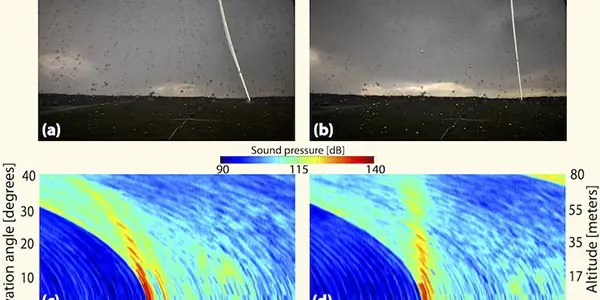
Scientists have successfully imaged thunder for the first time. A team from Southwest Research Institute has visually captured the sound waves created by artificially triggered lightning, they reported at a joint meeting of American and Canadian geophysical societies in Montreal.
Although people see it as a flashing bolt, lightning begins as a complex process of electrostatic charges churning around in storm clouds. These charges initiate step leaders, branching veins of electricity propagating down, which subsequently lead to a main discharge channel. That channel opens a path to nearly instantaneous return strokes, which form the lightning flash as we see it.
A new study has created a cause-and-effect link between chronic high blood sugar and disruption of mitochondria, the energy factories that create the metabolic energy that power most of our cells.
Previous experiments by other research groups had shown that the high blood sugar of untreated diabetes alters the activity of mitochondria, compartments that process nutrients into useable energy for cells. To find out why, postdoctoral fellow Dr. Partha Banerjee compared the enzymes in mitochondria from the hearts of rats with diabetes to those from healthy rat hearts. He looked for differences in levels of two enzymes that add and remove a molecule called O-GlcNAc to proteins.
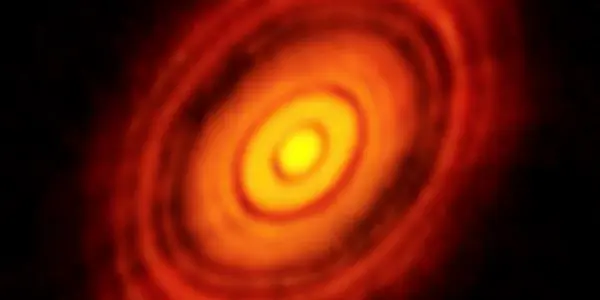
A recent and famous image of HL Tau in deep space marks the first time we've seen a forming planetary system, according to a team of astrophysicists who found that circular gaps in a disk of dust and gas swirling around the young star HL Tau are in fact made by forming planets.
The image of HL Tau, taken in October 2014 by the state-of-the-art Atacama Large Millimeter/submillimeter Array (ALMA) located in Chile's Atacama Desert, sparked a flurry of scientific debate.
The HL Tau system is less than a million years old, about 17.9 billion kilometres in radius and resides 450 light years from Earth in the constellation Taurus.
Our view of what makes us happy has changed since 1938. In the United States of 1938, for example, it was a good thing not to have heat waves and droughts and a Dust Bowl across 75 percent of the country. It would have made people happy to be out of the Great Depression instead of politicians telling them it had long been over.
Heat waves, droughts, and politicians claiming things are great because Wall Street executives are making money? 1938 does sound a lot like 2015.
Transcranial direct current stimulation, using a weak electric current in an attempt to boost brainpower or treat conditions, has become popular among cognitive do-it-yourselfers and the neuroscience equivalent of people selling dietary supplements, but a new University of North Carolina School of Medicine study urges caution that should be common sense.
New work found that electric brain stimulation had a statistically significant detrimental effect on IQ scores. Using less common alternating current stimulation - so-called tACS - could be a better approach. Tesla beats Edison once again.
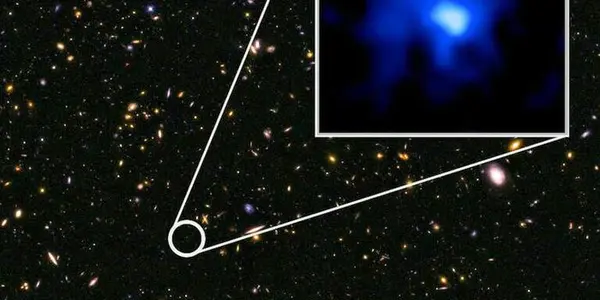
Astronomers have reported an exceptionally luminous galaxy from when the universe was only 5% of its present age - more than 13 billion years in the past.
The galaxy, EGS-zs8-1, was originally identified based on its particular colors in images from NASA's Hubble and Spitzer telescopes and the team determined its exact distance from Earth using the powerful MOSFIRE instrument on the W.M. Keck Observatory's 10-meter telescope in Hawaii. It is the most distant galaxy currently measured and one of the brightest and most massive objects in the early universe.