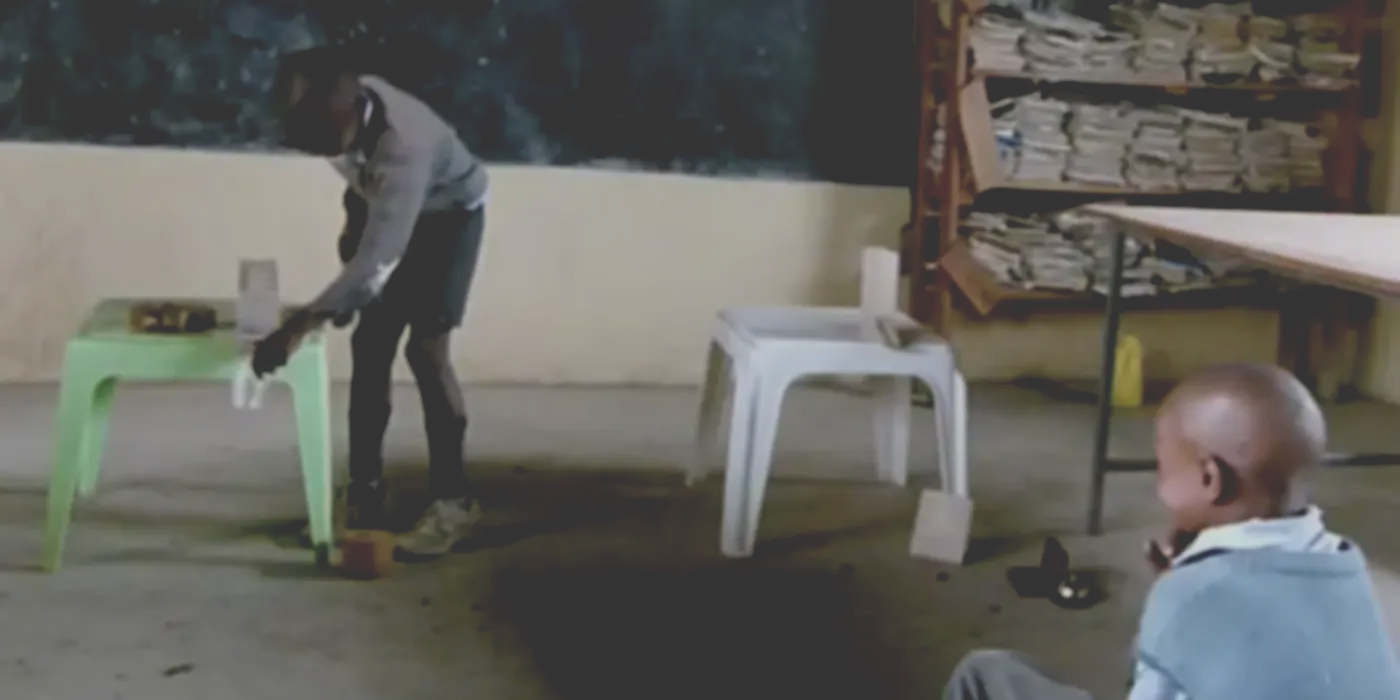
Kids Helping Kids Is Universal - But Cultures Help Differently
A simple game reveals a universal instinct in kids
A simple game reveals a universal instinct in kids


There is a perception that 'the wealthy' are opposed to more taxes and income redistribution in America. But the wealthy already pay an alarming amount in taxes and 47% remain loyal to tax-cutting politicians every election cycle.
People have ideological reasons to oppose government redistribution of their work, of course, but it may also be relative. Someone who is in a poor neighborhood but doing better than others may not like the idea of higher taxes either, according to a paper in Psychological Science.

Bitcoin calls itself the new money and says it can be minted and exchanged on the Internet, faster and cheaper than a bank.
It's gotten a lot of attention but how anonymous is it? Not very, if you have computers and about $1,500.
Several groups worldwide have shown that it is possible to find out which transactions belong together, even if the client uses different pseudonyms but it has only recently become clear that it is also possible to reveal the IP address behind each transaction.
Results presented at the European Organisation for Research and Treatment of Cancer Symposium in Barcelona show "extremely promising" early phase 1 clinical trial results for the investigational drug AG-120 against the subset of patients with acute myeloid leukemia (AML) harboring mutations in the gene IDH1.
The finding builds on phase 1 results of a related drug, AG-221, against IDH2 mutations, presented at the most recent meeting of the American Association for Cancer Research. Results at this stage are preliminary, based on 17 patients.
The IDH1 mutation is found in 15-20 percent of all cases of AML, totaling about 3,500 cases of IDH1 AML per year.
Researchers using a new chemical process have converted the cellulose in sawdust into hydrocarbon chains, building blocks for gasoline.
Cellulose is the main substance in plant matter and is present in all non-edible plant parts of wood, straw, grass, cotton and old paper. These hydrocarbons can be used as an additive in gasoline or as a component in plastics.
"At the molecular level, cellulose contains strong carbon chains. We sought to conserve these chains, but drop the oxygen bonded to them, which is undesirable in high-grade gasoline. Our researcher Beau Op de Beeck developed a new method to derive these hydrocarbon chains from cellulose," explains Professor Bert Sels.
Epidemiologists have linked El Niño, a recurring pattern where every 2-7 years warm waters in the Equatorial Pacific change the weather, to short stature, also known as stunting, which is usually due to chronic malnutrition.
The authors found that children born in coastal Peru during and after the 1997-98 El Niño, the last strong one, have a lower height-for-age than others born before the event.
El Niño
has also been linked to epidemics of malaria, dengue fever, cholera and diarrhea, though the first recorded one was in 1525, so they have been happening a lot longer than that..
How can the weather stunt growth?
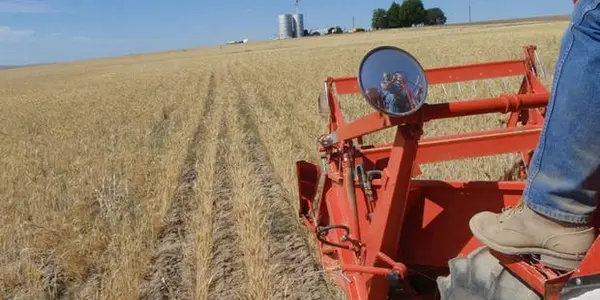
Take a spot that only gets 6 to 8 inches of rain per year, with erosion causing such blinding dust that there is zero visibility, and build a wheat farm.
Wait, why would you do that? Washington State University researchers do it in the Horse Heaven Hills of south-central Washington to understand summer fallow management practices that can mean efficient water and soil conservation and help farmers everywhere.
There has been concern about a lessening of social engagement, mostly created by older people who see young people behaving differently than they did (and do). Last decade it was noted that young people were
less likely to join clubs, had fewer close friends, and were less likely to perceive others as trustworthy.
So young people don't join the Masonic Lodge in their college years. Does that mean they are less social?
No, there has been an increase in extraversion and self-esteem, according to a paper in Personality and Social Psychology Bulletin. In a review, the authors examined past studies that utilized the Revised UCLA loneliness scale (R-UCLA) to analyze changes in loneliness over time, and gender differences in loneliness.
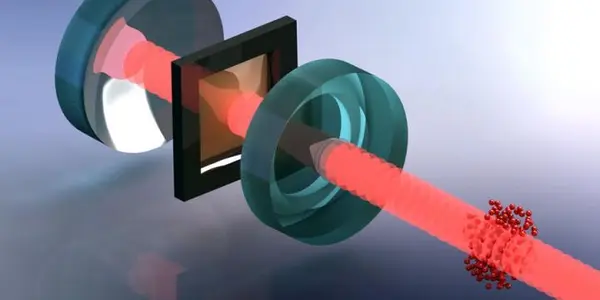
Physicists have developed a new cooling technique for mechanical quantum systems by using an ultracold atomic gas, cooling a membrane down to less than 1 degree above absolute zero.
Ultracold atomic gases are among the coldest objects in existence. Laser beams can be used to trap atoms inside a vacuum chamber and slow down their motion to a crawl, reaching temperatures of less than 1 millionth of a degree above absolute zero - the temperature at which all motion stops.
At such low temperatures, atoms obey the laws of quantum physics: they move around like small wave packets and can be in a superposition of being in several places at once. These features are harnessed in technologies such as atomic clocks and other precision measurement devices.
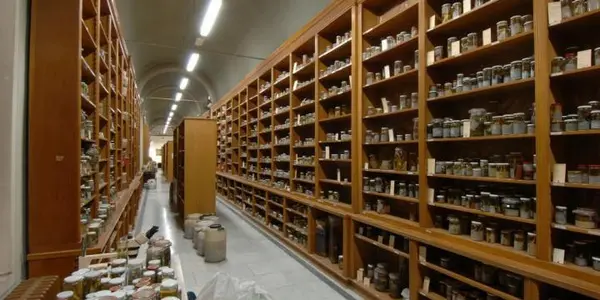
Due to a loss of scientific relevance, which has led to scarcity of personnel
and thus decreasing government funding, Italian natural history museums are on the verge of collapse.
A new paper in Zookeys proposes that the existing museums associate and collaborate to form a diffused structure, able to better manage their scientific collections and share resources and personnel. Basically, they need to be a little more corporate and start consolidating rather than relying on government to some day boost funding.
What will it take to convince skeptics of global warming that the phenomenon is real? Droughts, floods and heat waves will begin to change minds.
Americans may recall the 'threat warning level' system that came into being after the terrorist attacks on the Wall Trade Center on September 9th, 2011.
It was a color coded with 5 levels. But it never once dropped below 3 - yellow, before it was dissolved in 2011. Did anyone pay attention? Another famous example is the "Doomsday Clock", created by anti-nuclear activists to increase anxiety about nuclear weapons. Even after disarmaments and the collapse of the Soviet Union, it barely moved. We are always on the verge of Doom, according to doomsday prophets, today they just say it's because of global warming, and there are still nuclear power plants, they warn.
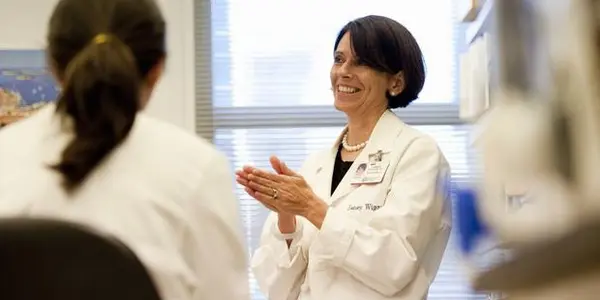
The retina is the neural tissue in the back of the eye that initiates vision. It is responsible for receiving light signals and converting them into neurologic signals, which are then transmitted via the optic nerve to the brain so that we can see.
Mutations that disrupt vision by damaging the retina and optic nerve have been identified in more than 200 genes. This genetic diversity made genetic diagnostic testing difficult until the recent development of high throughput genomic techniques.