Kids Helping Kids Is Universal - But Cultures Help Differently
A simple game reveals a universal instinct in kids
A simple game reveals a universal instinct in kids


In 2005, NASA's Cassini spacecraft sent pictures back to Earth depicting an icy Saturnian moon spewing water vapor and ice from fractures, known as "tiger stripes," in its frozen surface. It was big news that tiny Enceladus—a mere 500 kilometers in diameter—was such an active place. Since then, scientists have hypothesized that a large reservoir of water lies beneath that icy surface, possibly fueling the plumes. Now, using gravity measurements collected by Cassini, scientists have confirmed that Enceladus does in fact harbor a large subsurface ocean near its south pole, beneath those tiger stripes.
Enceladus—one of Saturn's smaller satellites—has joined the ranks of Titan and Europa as a moon that appears to have liquid water splashing around inside of it, researchers say. New gravity data from the Cassini spacecraft, which has been exploring the planet's moons for 10 years, reveal that Enceladus harbors an ocean of water beneath 18 to 24 miles (30 to 40 kilometers) of ice at its surface.
A team of Italian and American scientists led by Luciano Iess at Sapienza Università di Roma in Rome, Italy investigated the moon's gravity field and the notable asymmetry it exhibits between northern and southern hemispheres to reach these conclusions. Their results appear in the 4 April issue of Science.

Cigarette smoking among obese women appears to interfere with their ability to taste fats and sweets, a new study shows. Despite craving high-fat, sugary foods, these women were less likely than others to perceive these tastes, which may drive them to consume more calories.
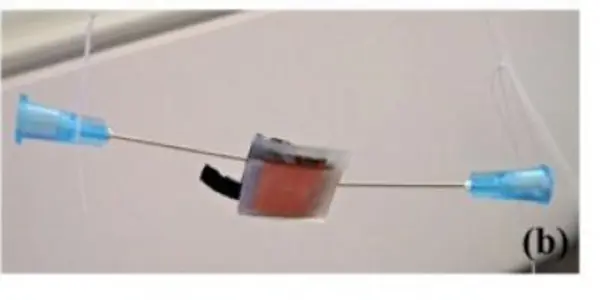
Spit-powered, micro-sized microbial fuel cells produce enough energy to run on-chip applications, according to a paper in
Asia Materials.
Microbial fuel cells create energy when bacteria break down organic material producing a charge that is transferred to the anode. Bruce Logan, Professor Environmental Engineering at Penn State, has studied microbial fuel cells for more than ten years and usually looks to wastewater as a source for both the organic material and the bacteria to create either electricity or hydrogen, but says these tiny machines are a bit different.
MADISON – For Simon Gilroy, sometimes seeing is believing. In this case, it was seeing the wave of calcium sweep root-to-shoot in the plants the University of Wisconsin-Madison professor of botany is studying that made him a believer.
Gilroy and colleagues, in a March 24, 2014 paper in the Proceedings of the National Academy of Sciences, showed what long had been suspected but long had eluded scientists: that calcium is involved in rapid plant cell communication.
It's a finding that has implications for those interested in how plants adapt to and thrive in changing environments. For instance, it may help agricultural scientists understand how to make more salt- or drought-tolerant plants.

Sentinel-1A lifted off on a Soyuz launcher from Europe’s Spaceport in French Guyana at 9:02 PM GMT today.Sentinel-1A has been at the launch site since the end of February and has been through numerous tests to make sure that everything is in perfect condition to provide essential radar imagery for Europe’s Copernicus program, which focuses on providing data to improve the way the environment is managed.Weather satellites have been providing operational data for years, of course, but the family of Sentinel missions is designed for environmental monitoring.

Wildlife fences are constructed for lots of reasons, including having them killed by cars (and people along with them) to prevent the spread of disease and to protect small small populations of threatened species.
Near more populated areas, the concern is different; predatory animals will wantonly kill livestock and ruin crops, a few threaten human lives.
Separating people and wildlife by fencing is a mutually beneficial way to avoid detrimental effects but a paper in Science, clearly written by people who clearly do not live near bears, wolves or mountain lions, argues it is a last resort.
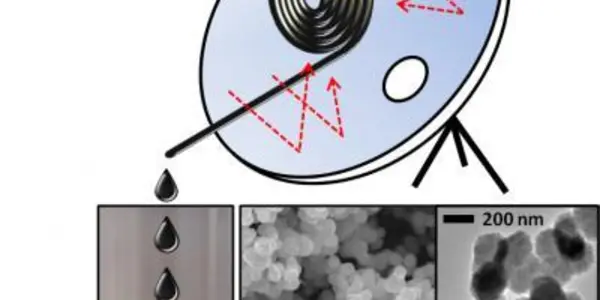
Oregon State University chemists have discovered how to use the sun as more than just a way to harvest passive energy - they can use it to directly produce the solar energy materials that make energy harvesting possible.
This breakthrough by chemical engineers at Oregon State University could soon reduce the cost of solar energy, speed production processes, use environmentally benign materials, and make the sun almost a "one-stop shop" that produces both the materials for solar devices and the eternal energy to power them.
If we describe the feeling of someone drilling an icicle into their temple, throwing up, and light and sound being unbearable, migraine sufferers know just what we mean.
Despite extensive cultivation and testing of GM foods, questions related to whether genetic manipulation causes changes in food quality and composition or if genetically modified foods are somehow less nutritious than their non-GM counterparts linger in the minds of some consumers.
In research led by Owen Hoekenga, a Cornell University adjunct assistant professor, scientists extracted roughly 1,000 biochemicals, or "metabolites," from the fruit of tomatoes. These tomatoes had been genetically engineered to delay fruit ripening, a common technique to help keep fruits fresher longer. The researchers then compared this "metabolic profile" from the GM fruit to the profile of its non-GM variety.
Up to 7% of Americans married between 2005-2012 say they met on social networking sites. This has led to a rash of claims by marketing groups for dating sites that it is the future of romance and that more marriages happen to their technology. Between 3 and 6% of couples say they met that way.
But how much is technology a factor versus other factors? How do couples compare to couples who met through other types of online meetings or the "old-fashioned" way in terms of age, race, frequency of Internet use, and other factors? In an article on the subject, Jeffrey Hall, PhD, a communications scholar at University of Kansas, Lawrence, describes the characteristics that are more common among recently married individuals who met online via social networking sites.
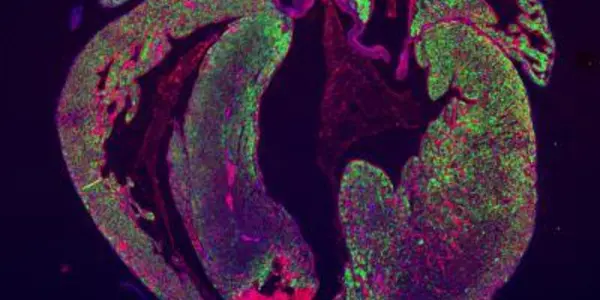
The mammalian heart has generally been considered to lack the ability to repair itself after injury, but a 2011 study in newborn mice challenged this view, providing evidence for complete regeneration after resection of 10% of the apex, the lowest part of the heart. In a study published by Cell Press in Stem Cell Reports on April 3, 2014, researchers attempted to replicate these recent findings but failed to uncover any evidence of complete heart regeneration in newborn mice that underwent apex resection.