Kids Helping Kids Is Universal - But Cultures Help Differently
A simple game reveals a universal instinct in kids
A simple game reveals a universal instinct in kids


A survey conducted by researchers from the University of Chicago's Program on Medicine and Religion delves into the relationship between attitudes toward organ donation and the Islamic faith.
Previous surveys have found that Muslims are less likely than other religious groups to believe in organ donation and that religious values may be the obstacle.
The American Muslims surveyed who interpret negative events in life as punishment from God are less likely to be organ donors than those with a more positive outlook. Overall levels of religiosity among American Muslims did not influence attitudes toward organ donation.
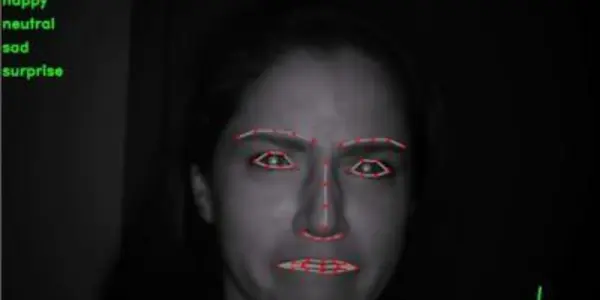
New technology developed by Ecole Polytechnique Fédérale de Lausanne allows them to detect facial expressions and identify which of the seven universal emotions a person is feeling: fear, anger, joy, sadness, disgust, surprise, or suspicion.
This could be useful for marketing and video game development, of course, but obviously in driver safety. Fatigue is a risk factor but so is the emotional state of the driver.
Irritation, in particular, can make drivers more aggressive and less attentive. EPFL researchers, in collaboration with PSA Peugeot Citroën, have developed an on-board emotion detector based on the analysis of facial expressions. Tests carried out using a prototype indicate that the idea could have promising applications.
The modern world has a problem. We are undergoing spontaneous mutations caused by radiation, even at low levels. This radiation can break chromosomes into pieces that reattach randomly and sometimes create genes that didn't previously exist.
Actually, that's happening because of nature. Deep space cosmic rays have been doing that to everything on earth for as long as the planet has existed. Even organic food.
The results of a small clinical trial intervention found that mindfulness-based meditation could lessen some symptoms associated with cancer in teens.
Mindfulness-based meditation sounds fuzzy, because it claims to focus on the 'present moment' and the connection between the mind and body. But whatever works, works.
Adolescents living with cancer face not only the physical symptoms of their condition, but also the anxiety and uncertainty related to the progression of the disease, the anticipation of physical and emotional pain related to illness and treatment, the significant changes implied in living with cancer, as well as the fear of recurrence after remission.

An analysis of 100 million US medical records published in PLOS Computational Biology concludes that autism rates are correlated (at the county level) with incidence of genital malformations in newborn males - and the authors say that may be due to harmful environmental factors such as pesticides. They even say that more regulations can fix it.
The authors found that after adjusting for gender, ethnic, socioeconomic and geopolitical factors, autism rates jumped by 283 percent for every one percent increase in frequency of malformations in a county. Intellectual disability rates increase 94 percent. Slight increases in autism and ID rates are also seen in wealthier and more urban counties.
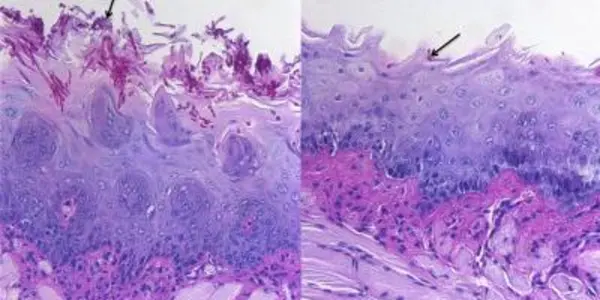
Human mouths contain a balanced mix of microbes which, when disrupted, can lead to oral diseases. A study published on March 13th in PLOS Pathogens compares the bacteria and fungi present in the mouths of healthy individuals with those from patients infected with HIV, and illustrates why oral candidiasis (aka "thrush") is a common complication of HIV infection.
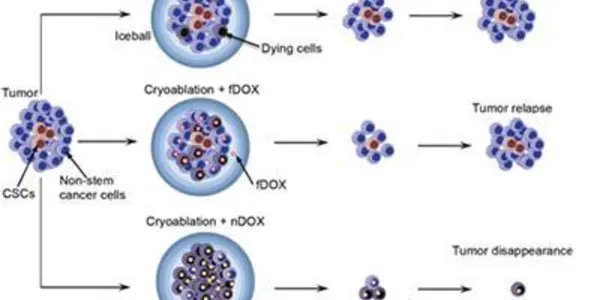
Cryoablation, also called cryosurgery and cryotherapy, is an energy-based, minimally invasive surgical technique that has been investigated to treat a variety of diseases including cancer. It involves freezing the diseased tissue to subzero temperature to induce irreversible damage.
A new paper finds that in combination with free doxorubicin (fDOX) and nanoparticle-encapsulated doxorubicin (nDOX) nanodrug-based chemotherapy, cryoablation provides an effective strategy to eliminate cancer stem-like cells (CSCs) the root of cancer resistance and metastasis.
Populations of endangered salmonids are supported by releasing large quantities of hatchery-reared fish, but the fisheries' catches have continued to decrease. Earlier research has shown that certain behavioural traits explain individual differences in how fish survive in the wild. A new Finnish study conducted on brown trout now shows that there are predictable individual differences in behavioural traits, like activity, tendency to explore new surroundings and stress tolerance. Furthermore, certain individual differences were observed to contain heritable components.
Mutations within the gene FTO have been implicated as a genetic determinant of obesity risk in humans, but the mechanism for any link remains unknown.
A new paper says that the obesity-associated elements within FTO interact with IRX3, a distant gene on the genome that appears to be the functional obesity gene. The FTO gene itself appears to have only a peripheral effect on obesity.

Vibrations in chemical bonds can be used to predict chemical reactions. That means chemists could design better catalysts to speed reactions that make medicines, industrial products and new materials.
Cell metabolism is a crucial biological function for all living organisms but understanding how life may have emerged is difficult. And learning some answers may make it possible to learn whether it is possible for life to have emerged in similar environments on other worlds.
Researchers writing in Astrobiology
detail their new approach to simulating the energetic processes that may have led to the emergence of cell metabolism.
Dr. Terry Kee from the School of Chemistry at the University of Leeds, one of the co-authors of the research paper, said, "What we are trying to do is to bridge the gap between the geological processes of the early Earth and the emergence of biological life on this planet."
While there's no genetic basis for anorexia nervosa, psychiatrists say there may be a chemical treatment - oxytocin, the 'love hormone'.