You Feel Colder As You Age: The Science Reason Why
Older people report feeling colder, enough that it is clearly happening, but why has been a mystery. Until now.
Older people report feeling colder, enough that it is clearly happening, but why has been a mystery. Until now.


A business scholar says that there are fewer product placements in scary movies, and therefore companies are missing a prime marketing moment.
Coca-Cola doesn't want a half-naked sorority girl to be drinking their soda just before she gets stabbed in the eye, that is a much different association than cute polar bears or, in the case of Budweiser, giant affectionate horses. Humor product placements, good, adventure, of course, but not horror.
Yet University of British Columbia PhD student Lea Dunn writes in an upcoming article in the

The Nazis studied everything to gain an advantage. Those stories about mysticism and artifacts aren't wrong, and the advanced weapons projects are well known, that is why US President Harry Truman authorized "Operation Paperclip" to recruit their scientists and engineers, rather than just kidnapping them the way Communist leaders in the USSR did.But they weren't just interested in big weapons, they studied small ones, like bugs, though not to use them for biowarfare or weird experiments. Hitler had a ban on that.

Peregrine falcons are one of the world's fastest birds, reaching up to 200 miles per hour when diving.
Scientists are studying the body shape and wing contour of the bird to better understand how they reach these high diving speeds while maintaining maneuverability - in human planes, flaps slow you down to make the aircraft more maneuverable.
Researchers trained peregrine falcons to dive in front of a 200 foot dam and captured 35 dives with a stereo high-speed camera system and hi-res camera. The images allowed researchers to reconstruct the flight path and body shape of the falcon during certain flight phases, and to build a life size model of the falcons. They then analyzed the aerodynamics of the model bird in a wind tunnel.

Anthropologists have developed mathematical models that they say describe development patterns in both modern urban areas and ancient cities settled thousands of years ago.
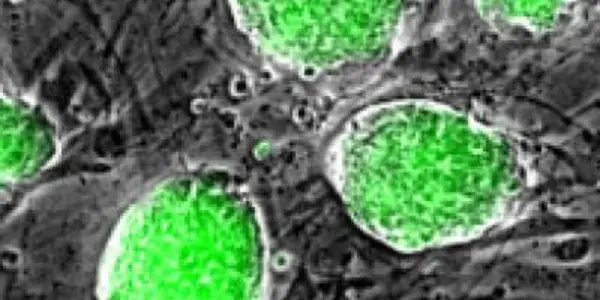
One major challenge in stem cell research has been to reprogram differentiated cells to a totipotent state. Researchers from RIKEN in Japan have identified a duo of histone proteins that dramatically enhance the generation of induced pluripotent stem cells (iPS cells) and may be the key to generating induced totipotent stem cells.
Differentiated cells can be coaxed into returning to a stem-like pluripotent state either by artificially inducing the expression of four factors called the Yamanaka factors, or as recently shown by shocking them with sublethal stress, such as low pH or pressure. However, attempts to create totipotent stem cells capable of giving rise to a fully formed organism, from differentiated cells, have failed.

A University of Texas at Arlington team exploring pigeons as a model for vertebrate evolution has uncovered that mutations and interactions among just three genes create a wide variety of color variations. One of those genes, they also found, may be an example of a "slippery gene" more prone to evolutionary changes.

Tampa, FL (Feb. 6, 2014) – Declines in the underlying brain skills needed to think, remember and learn are normal in aging. In fact, this cognitive decline is a fact of life for most older Americans.
Therapies to improve the cognitive health of older adults are critically important for lessening declines in mental performance as people age. While physical activity and cognitive training are among the efforts aimed at preventing or delaying cognitive decline, dietary modifications and supplements have recently generated considerable interest.
Now a University of South Florida (USF) study reports that a formula of nutrients high in antioxidants and other natural components helped boost the speed at which the brains of older adults processed information.
NEW YORK, NY (February 6, 2014) — In most cases of amyotrophic lateral sclerosis (ALS), or Lou Gehrig's disease, a toxin released by cells that normally nurture neurons in the brain and spinal cord can trigger loss of the nerve cells affected in the disease, Columbia researchers reported today in the online edition of the journal Neuron.
The toxin is produced by star-shaped cells called astrocytes and kills nearby motor neurons. In ALS, the death of motor neurons causes a loss of control over muscles required for movement, breathing, and swallowing. Paralysis and death usually occur within 3 years of the appearance of first symptoms.

Fossilization is rare. It may seem common to find them because there have been billions of years and an entire planet on which to do it, but things really have to go right. An ancient fossil caught in the act of giving birth is bordering on spectacular.
Hospitals use disinfectants but they don't all kill the human papillomavirus (HPV), according to a new paper. Non-sexual transmission of the virus is exceedingly rare but hospitals need to be cautious so changes should be made, say researchers from Penn State College of Medicine and Brigham Young University.
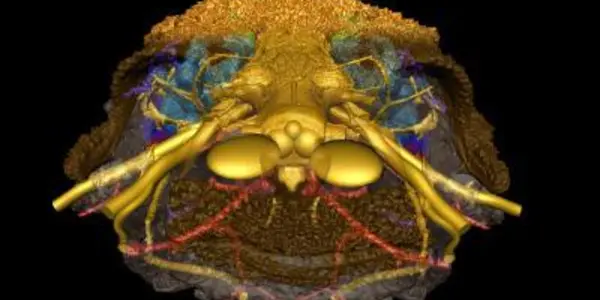
How did we evolve a face?
Vertebrates, backboned animals, come in two basic models: jawless and jawed. Jawed vertebrates, including us, number over 50,000 species but there are two jawless vertebrates in existence today; lampreys and hagfishes. It is known that jawed vertebrates evolved from jawless ones, a dramatic anatomical transformation that effectively turned the face inside out.
A team of researchers used micron resolution X-ray imaging and show how a series of fossils, with a 410 million year old armored fish called Romundina at its center, documents the step-by-step assembly of the face during the evolutionary transition from jawless to jawed vertebrates.

The people generally called Clovis were not the first humans in America but they were the first to accomplish expansion on the North American continent. Then they died out, leaving only speculation.
Starting somewhere around 13,000 years ago, they hunted mammoth, mastodons and giant bison with big spears. Today there exists only one human skeleton - a small boy between 1 and 1.5 years of age that was found in the 12,600 Anzick Site in Wilsall, Montana. It was found in association with Clovis tools, making it among the oldest human skeletons in the Americas.