You Feel Colder As You Age: The Science Reason Why
Older people report feeling colder, enough that it is clearly happening, but why has been a mystery. Until now.
Older people report feeling colder, enough that it is clearly happening, but why has been a mystery. Until now.

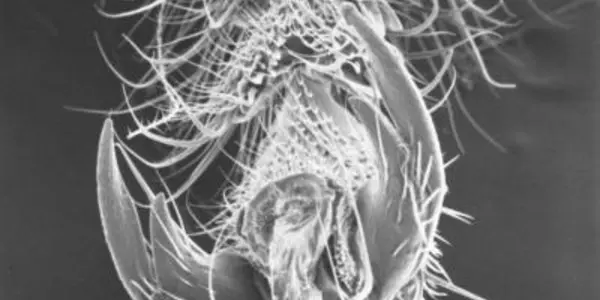
Insects taste through hair-like structures on the body called sensilla. Sensilla contain receptor nerve cells, each of which is sensitive to a particular substance.
In insects like the honeybee, sensilla are found on the mouthparts, antenna and the tarsi – the end part of the legs. Honeybees weigh information from both front tarsi to decide whether to feed, finds a new study on the ability of honeybees to taste with claws on their forelegs, which reveals details on how this information is processed.

A new study found that the ability to follow another's gaze or look in the direction someone is pointing, two examples of receptive joint attention, is significantly heritable.
Determining such communicative cues are significantly heritable means variation in this ability has a genetic basis, the authors say, which has led them to the vasopressin receptor gene, known for its role in social bonding.
They are looking for insight into the biology of disorders in which receptive joint attention is compromised, such as autism spectrum disorders (ASD), which could lead to new diagnosis and treatment strategies.

In 2005,the Japanese spacecraft Hayabusa revealed that the near-Earth asteroid (25143) Itokawa has a strange peanut shape, leading to questions about why. Now, using ground-based observations, a group has measured the speed at which Itokawa spins and how that spin rate is changing over time and combined these observations with theoretical work on how asteroids radiate heat.
'Whole Grain', like 'Natural' and 'Organic', has a lot of definitions. Fortunately for marketing departments, people often read their own positive definitions into those terms.But people invariably pay more for all of those things, so if they pay for organic, they deserve to know if it has any of dozens of synthetic ingredients (it probably does) or the levels of pesticides on it. And the same for other food terms. Toward that end, writers in Food and Nutrition Research have set out to create the most comprehensive definition of "whole grain" to-date, in order to assist in the production and labeling of foods 'rich in whole grains' as part of the HEALTHGRAIN EU project, which focuses on cereals and health.
In the MGM musical "Gigi", Maurice Chevalier and Hermione Gingold perform "I Remember It Well", wherein everything they remember contradicts each other.
It's a charming number, and accurate, according to a new Northwestern Medicine study. Our memory, the authors write, takes fragments of the present and inserts them into past memories. Recollections are updated with current information.
Sometimes it's just public relations. We subsidize nicotine patches but regulators are increasingly interested in banning electronic cigarettes.
Such misguided legislation, not backed by sound data, may have consequences for public health, experts say. With smoking blamed for up to six million premature deaths each year, a lot is at stake in the newest push for regulations.
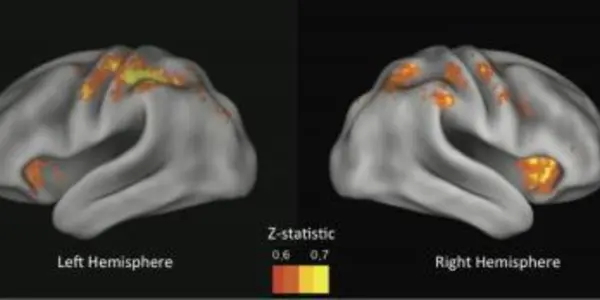
A new paper correlates brain activity with how people make decisions.
Based on these images, the authors suggest that when individuals engage in risky behavior, such as drunk driving or unsafe sex, it's not because their brains' desire systems are too active, but because their self-control systems are not active enough.
Defense lawyers now have a new way to make criminal behavior exculpatory. Unless the judge knows something about the weaknesses of inferring cause and effect based on magnetic resonance imaging (MRI) and read this article about how mainstream media love weak observational studies because they make for catchy headlines.
Most medications prescribed in primary care contain animal derived products.
Are they suitable for vegetarians?
Dietary preferences are common in the general population. Influences such as religion, culture, economic status, environmental concern and personal preferences all play a part in the foods that people choose to consume. Most doctors are unaware that commonly prescribed drugs contain animal products and would be surprised that it matters. But most patients are not aware either and if they have a dietary preference it might impact the medicines they are willing to take also.
The nature of social science is that you will frequently find papers arguing contradictory positions, and nothing shows that like video games. On Science 2.0 alone, you can find dozens of studies arguing both sides.Mirjana Bajovic of Brock University quizzed a group of eighth-graders (aged 13–14) about their playing habits and patterns and determined their stage of moral reasoning using an established scale of one to four. The goal was to determine if there was a link between the types of video games teens played, how long they played them, and the teens’ levels of moral reasoning: their ability to take the perspective of others into account.

Lorena Moscardelli of Statoil North America–Research, Development and Innovation in Austin is not the first to claim evidence to support the existence of a Martian ocean during the late Hesperian–early Amazonian. Viking Orbiter images did that throughout the 1980s and early 1990s.
Others have based their beliefs on alleged paleoshorelines, which has been heavily contested due to large variations in elevation (and some turned out to be of volcanic origin), but Moscardelli uses a new terrestrial, deep-water analogy.
The increasing use of chemical herbicides, both synthetic and organic kinds, is often blamed for the declining plant biodiversity in farms, but it is simplistic to think herbicide exposure is solely to blame.
The science doesn't add up. If herbicides are a key factor in declining diversity, then thriving species would be more tolerant to widely used herbicides than rare or declining species, according to J. Franklin Egan, research ecologist, USDA-Agricultural Research Service. But that isn't the case.
Almost one-third of US adolescents consume high-caffeine energy drinks and the teens who do also report higher rates of alcohol, cigarette, or drug use, according to a paper in the Journal of Addiction Medicine.
The same characteristics that attract young people to consume energy drinks—such as being "sensation-seeking or risk-oriented" — may make them more likely to use other substances as well, suggests the new paper by Yvonne M. Terry-McElrath, MSA, and colleagues of the Institute for Social Research, University of Michigan, Ann Arbor.