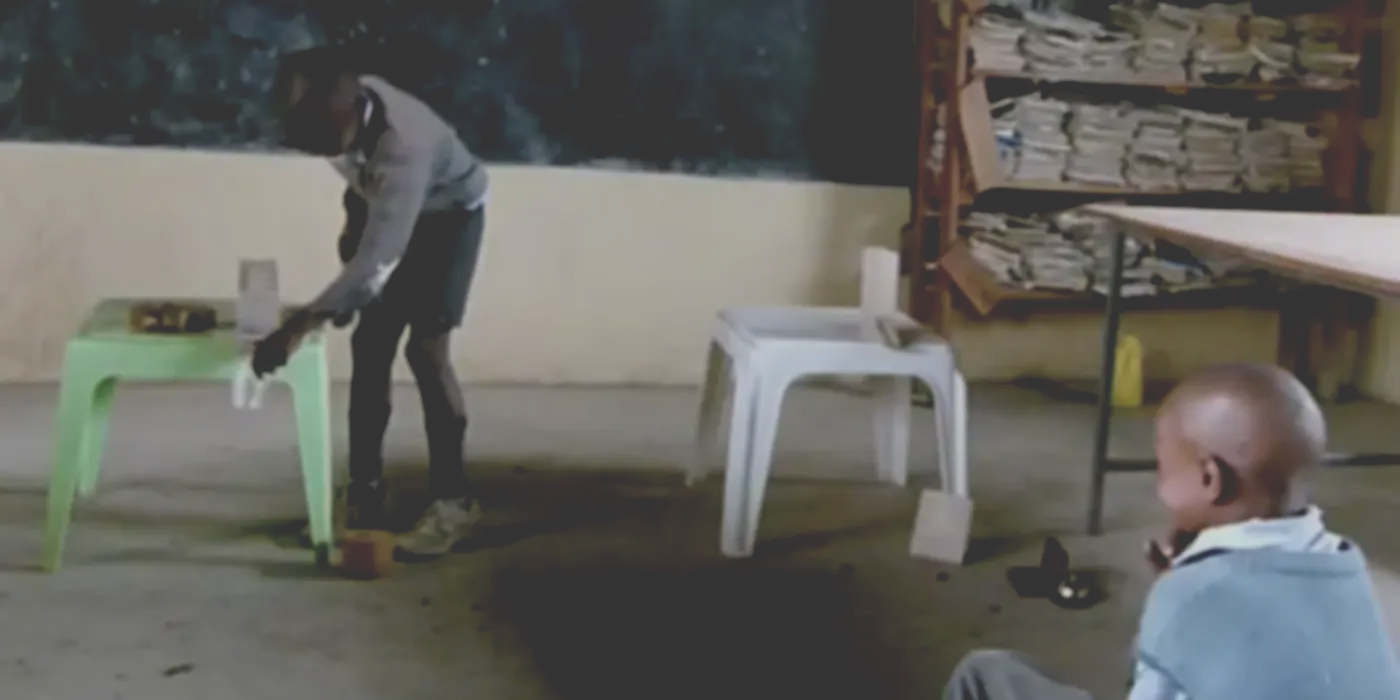
Kids Helping Kids Is Universal - But Cultures Help Differently
A simple game reveals a universal instinct in kids
A simple game reveals a universal instinct in kids


Geologic time is shorthand for slow-paced. But new measurements from steep mountaintops in New Zealand show that rock can transform into soil more than twice as fast as previously believed possible.
The findings were published Jan. 16 in the early online edition of Science.
"Some previous work had argued that there were limits to soil production," said first author Isaac Larsen, who did the work as part of his doctoral research in Earth sciences at the University of Washington. "But no one had made the measurements."

A new study by a team of KU Leuven and international researchers has found that the chemical structure of queen pheromones in wasps, ants and some bees is strikingly similar, even though these insects are separated by millions of years of evolution and each evolved eusociality independently of the other. The results suggest that queen pheromones used by divergent groups of social insects evolved from conserved signals of a common solitary ancestor.
Writing in the 17 January issue of Science, the researchers say the new insights "could contribute greatly to our understanding of the evolution of eusociality" in insects. Eusociality is characterised by cooperative brood care, overlapping adult generations and division of labour between fertile queens and sterile workers.
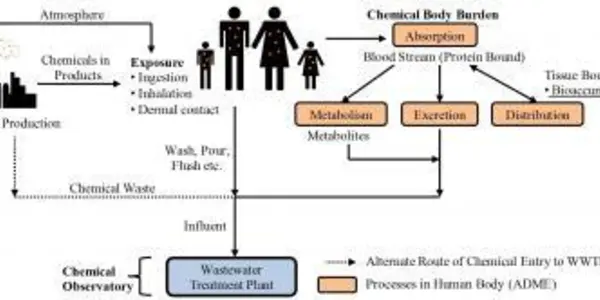
Thousands of chemicals serving a variety of human needs flood into sewage treatment plants once their use life has ended. Many belong to a class of chemicals known as CECs (for chemicals of emerging concern), which may pose risks to both human and environmental health.
Arjun Venkatesan, a recent doctorate and Rolf Halden, professor and director of the Center for Environmental Security at Arizona State University's Biodesign Institute, have carried out meticulous tracking of many of these chemicals.
In a study appearing today in the Nature Publishing Group journal Scientific Reports, both authors outline a new approach to the identification of potentially harmful, mass-produced chemicals, describing the accumulation in sludge of 123 distinct CECs.
From 2000 to 2010, about 1,900 cyclones churned across the top of the world each year, leaving warm water and air in their wakes – and melting sea ice in the Arctic Ocean.
That's about 40 percent more of these Arctic storms than previously thought, according to a new study of vast troves of weather data that previously were synthesized at the Ohio Supercomputer Center (OSC).
A 40 percent difference in the number of cyclones could be important to anyone who lives north of 55 degrees latitude – the area of the study, which includes the northern reaches of Canada, Scandinavia and Russia, along with the state of Alaska.
Philadelphia, January 17, 2014 – Patients with fibromyalgia syndrome (FMS) typically have widespread chronic pain and fatigue. For those with low vitamin D levels, vitamin D supplements can reduce pain and may be a cost-effective alternative or adjunct to other treatment, say researchers in the current issue of PAIN®.

Leipzig: An international team of researchers has made important progress in understanding the distribution of the deadly amphibian chytrid pathogen. In some regions, the deadly impact of the pathogen appears to be hampered by small predators, naturally occurring in freshwater bodies. These micropredators may efficiently reduce the number of free-swimming infectious stages (zoospores) by consuming them. This natural behavior will reduce the infection pressure on potential amphibian hosts and a goes a long way towards explaining the occurrence of chytridiomycosis, at least in temporal climatic regions. These results were published in the renowned scientific journal Current Biology.
A contest for the best technique of intracellular particle tracking (simultaneous tracking of the motions of hundreds and thousands of intracellular organelles, virions and even individual molecules), that is an important issue in cellular biology and has applications in search for appropriate medicines against certain diseases (including Parkinson's and Alzheimer's diseases), has found no undeniable winner. Techniques proposed by all the participants, including the Lomonosov Moscow State University professor Yannis Kalaidzidis, find their own ways for solving the problem.

Normally, a tissue injury causes cells to repair damaged tissue and restore the skin to a normal, homeostatic, state. Errors in this process can give rise to various problems, such as chronic inflammation, which is a known cause of certain cancers.
The role of the hydrological cycle during abrupt temperature changes is of prime importance for the actual impact of climate change on the continents. In a new study published in Nature Geoscience online (January 19, 2014) scientists from the University of Potsdam, Germany and the GFZ German Research Centre for Geosciences show that during the abrupt cooling at the onset of the so-called Younger Dryas period 12680 years ago changes in the water cycle were the main drivers of widespread environmental change in western Europe. The team of scientists analyzed organic remains extracted from Meerfelder maar lake sediments from the Eifel region, western Germany, to reconstruct changes in precipitation patterns in unprecedented detail.
SAN DIEGO — Higher levels of melatonin, a hormone involved in the sleep-wake cycle, may suggest decreased risk for developing advanced prostate cancer, according to results presented here at the AACR-Prostate Cancer Foundation Conference on Advances in Prostate Cancer Research, held Jan. 18-21.
Melatonin is a hormone that is produced exclusively at night in the dark and is an important output of the circadian rhythm, or the body's inherent 24-hour clock. Many biological processes are regulated by the circadian rhythm, including the sleep-wake cycle. Melatonin may play a role in regulating a range of other hormones that influence certain cancers, including breast and prostate cancers.
Exposing skin to sunlight may help to reduce blood pressure and thus cut the risk of heart attack and stroke, a study published in the Journal of Investigative Dermatology suggests.
Research carried out at the Universities of Southampton and Edinburgh shows that sunlight alters levels of the small messenger molecule, nitric oxide (NO) in the skin and blood, reducing blood pressure.
MINNEAPOLIS – Middle-aged men who drink more than 36 grams of alcohol, or two and a half US drinks per day, may speed their memory loss by up to six years later on, according to a study published in the January 15, 2014, online issue of Neurology®, the medical journal of the American Academy of Neurology. On the other hand, the study found no differences in memory and executive function in men who do not drink, former drinkers and light or moderate drinkers. Executive function deals with attention and reasoning skills in achieving a goal.