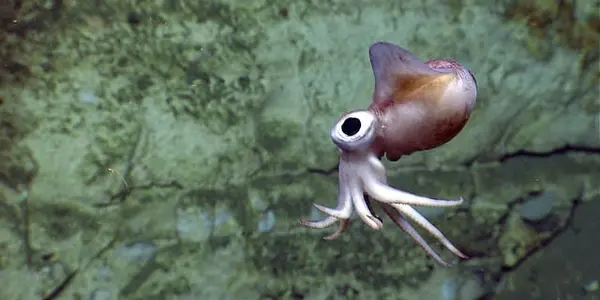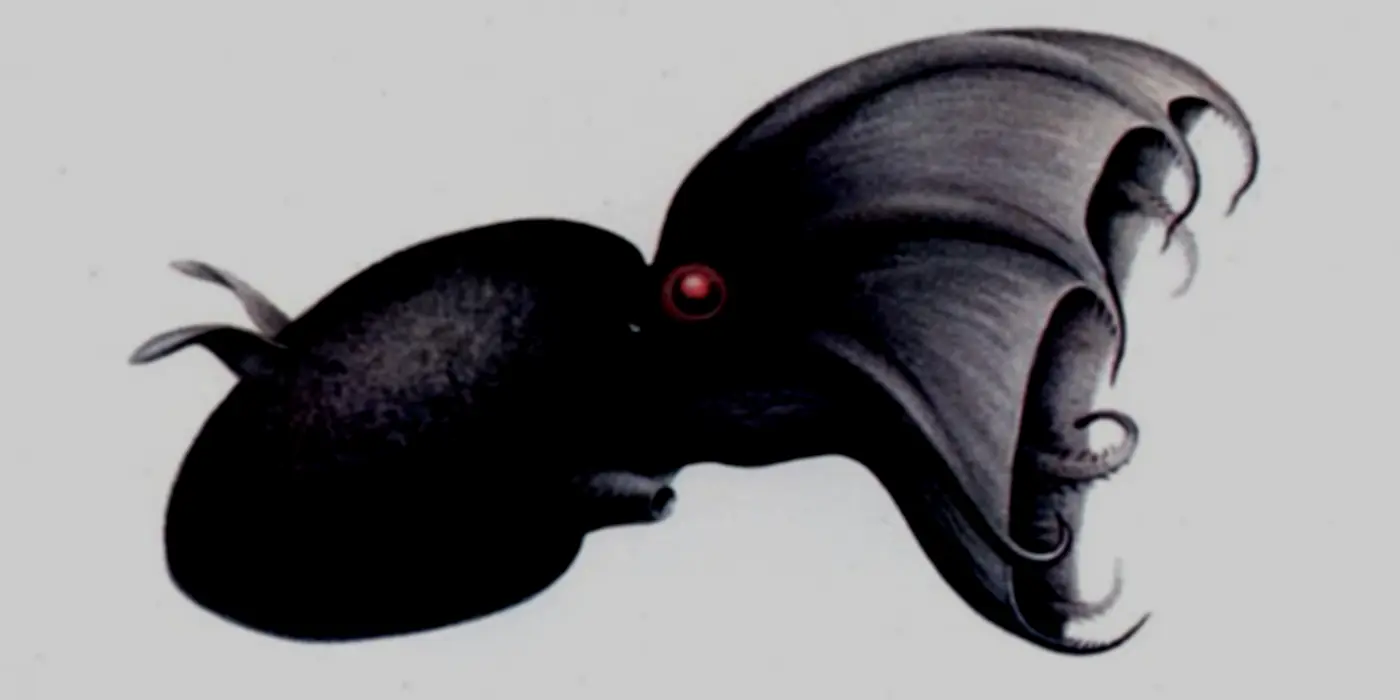
Vampire Squid And The Evolution Of Cephalopod Sex
Everyone loves vampire squid, right? Their monstrous name belies their gentle nature as graceful underwater flyers who eat poop.
Everyone loves vampire squid, right? Their monstrous name belies their gentle nature as graceful underwater flyers who eat poop.

The locavore movement, which was born on the US West Coast, may have convinced more people to shop at their local farmers' markets and participate in community-supported agriculture--but it's been a challenge to make similar progress toward eating local fish.The main commercial catch off our local [Southern California] coast are sardines and squid, but many Americans prefer to stick with the greatest hits (a.k.a. shrimp, salmon, and tuna.) So the primary market for our catch is overseas.
Many people are confident that their dogs and cats can sense impending earthquakes. Could squid provide humans with the same service? Let's examine the "connections" that have been drawn between squid and earthquakes.
In La Jolla in 2009, a small stranding event occurred around the same time as an equally small earthquake. But the squid actually started stranding a few days before the earthquake, deflating the much-hyped idea that the earthquake caused the stranding.
This year in Japan,

I missed a cool paper last year on the effects of squid ink on angiogenesis--the growth of new blood vessels. And therefore I also missed the chance to run the sensationalist headline SQUID INK BLOTS OUT CANCER, or something equally punny and misleading.
Growing new blood vessels seems like a good thing, and indeed it often is. But, as the Angiogenesis Foundation points out:
Abnormal blood vessel growth, either excessive or insufficient, is now recognized as a “common denominator” underlying many deadly and debilitating conditions, including cancer, skin diseases, age-related blindness, diabetic ulcers, cardiovascular disease, stroke, and many others.

Welcome to the month of May! The time of Beltane and Walpurgis Night, flowers and maypoles and springtime dancing.Want a May Basket? Well, um, how about a nice gall instead? Dave Hubble zooms in with some exquisite photos and shows us just what a gift a gall can be to the inquisitive mind.

The last flight of the space shuttle Endeavour will be both manned and squidded.
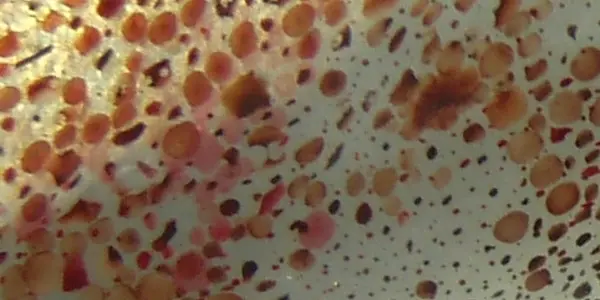
It's not exactly news--the Navy's decision to fund a huge, interdisciplinary research project on squid skin is so last year--but the topic cropped up again and started me wondering: why do squid use different techniques to make different colors?
Here's an explanatory bit from MSNBC:
Hot new squid research has the world of cephalopod reporting all abuzz! The press release came out last Monday, so I'm a bit late to the game, but hey, that means I get to meta-report on the way everyone else reported it.
I've just come across a fabulous tune from Newfoundland that captures perfectly the chaos of jigging (fishing with special lures) for squid:
Holy smoke! What a scuffle! All hands are excited.
'Tis a wonder to me that there's nobody drowned.
There's confusion, a bustle, a wonderful hustle,
They're all jiggin' squids on the squid-jiggin' ground.
Fisherfolk can be tremendous founts of information about marine animals. They know where to find different species, what sort of baits they like best, what sizes to expect, and how all these things change with the seasons. Smart marine biologists spend a lot of time talking with fishers and learning from them.That said, fishers can sometimes draw rather curious conclusions from what they observe. Here's an excerpt from a recent article by well-known angler and fishing writer Charley Soares:
. . . don't exist.But because it's finger squid season in Texas, I've been reading up on the closest approximation to a freshwater squid: the Atlantic brief squid, Lolliguncula brevis. It's a pretty great name for a pretty great squid. The latin name just rolls off the tongue: lolly-gunk-you-lah. And "brief"? Like these? Oh wait, those are squid briefs, not brief squids . . . I think the brief squid was named for its diminutive size.
It's one of the most persistent problems in camouflage: how do you hide your eyes?Skin is not that difficult to disguise. You can change its color, cover it up, match it to your environment. But eyes are tricky. You have to be able to see out of them. And unfortunately, predators are extremely good at looking for eyeballs.I'm not a predator, but I am a marine biologist, which is kind of the same thing. I've done my time searching through plankton soup for squid larvae--and I can tell you the best way to search is to look for the eyes. They're just so recognizable!
This is the best song I have heard all year. (Thanks to i'm a chordata! for the shout out.) I might even go so far as to say it's the best song I will hear all year. What could possibly be more awesome than this beautiful, bluesy explanation of why animals in the ocean undertake vertical migrations?