Vampire Squid And The Evolution Of Cephalopod Sex
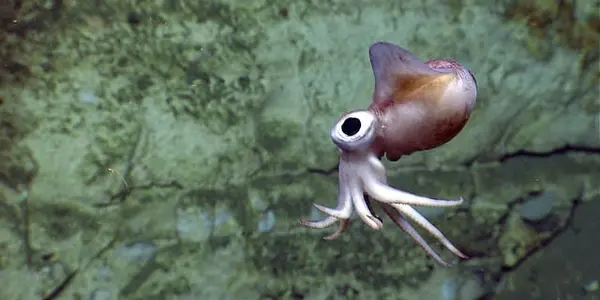
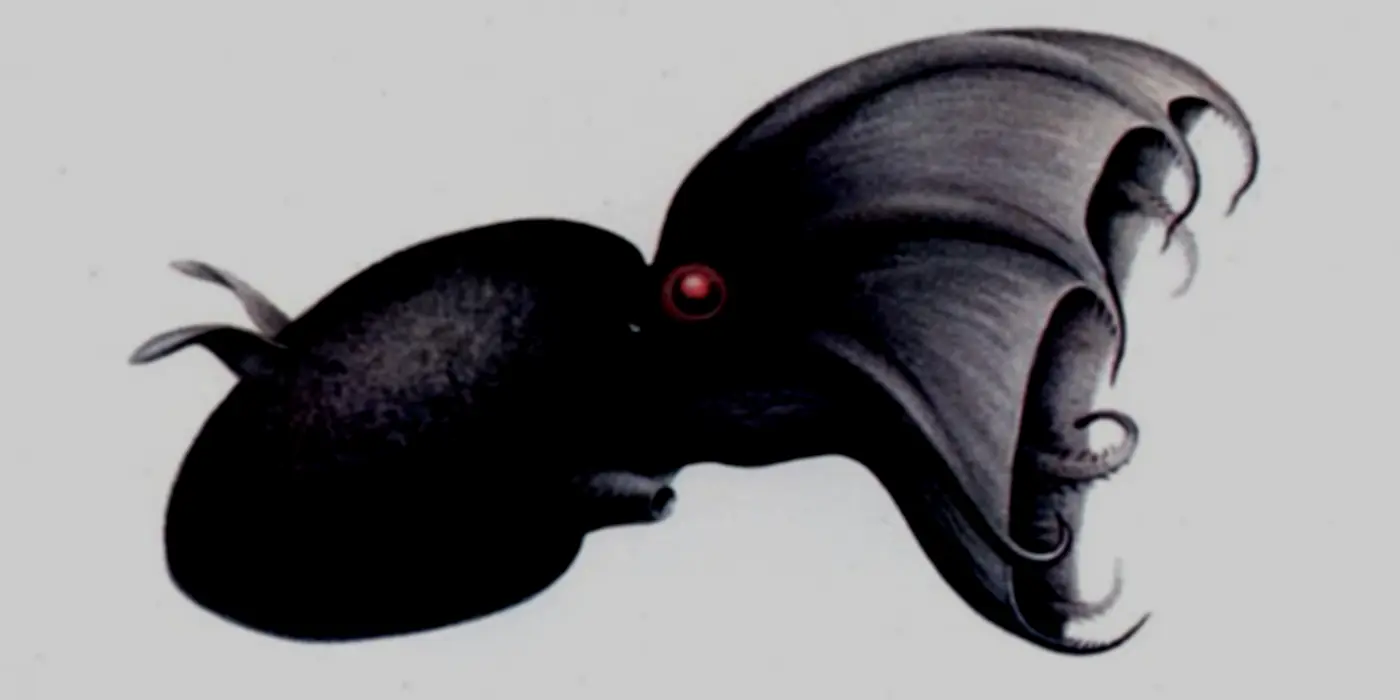
Everyone loves vampire squid, right? Their monstrous name belies their gentle nature as graceful underwater flyers who eat poop.
Everyone loves vampire squid, right? Their monstrous name belies their gentle nature as graceful underwater flyers who eat poop.
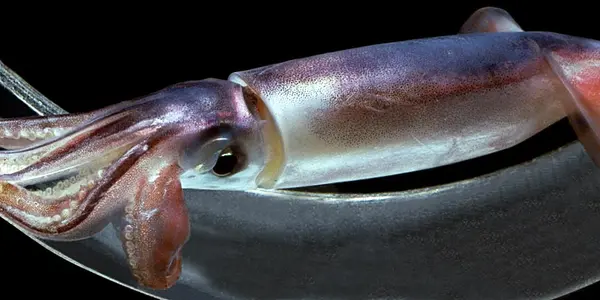
I really enjoy getting squid stories from around the world in my daily google news alert. Keeps me from getting too obsessed with the Humboldt and market squid of California. Here's the latest: ICAR scientists detect deep sea squids in Arabian Sea.ICAR is the Indian Council of Agricultural Research, whose mandate has no doubt been expanded to include fisheries since it was named. And just who is "this largely unexploited deep sea squid which inhabits at depths ranging between 1,000 and 4,000 meters"? The article doesn't specify, but I would lay odds on Sthenoteuthis oualaniensis.
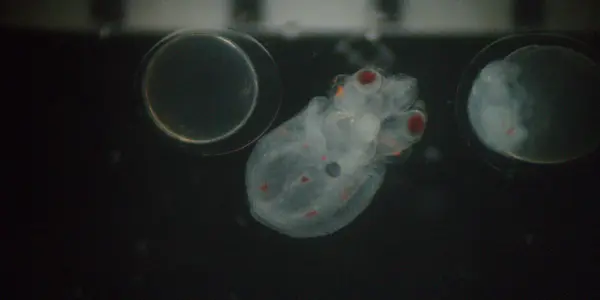
My thesis is now officially half published*! Can we have a party or something?Marine Ecology Progress Series has just put out my paper, "Effects of temperature on the embryonic development of the Humboldt squid Dosidicus gigas." Or, as I said in the title--Baby Squid Like it Warm.Just-hatched baby squid next to unfertilized egg. Ruler increments are millimeters. That's very small.

(That's glue made by squids, not glue made from squids. Don't be mean.)Yesterday I explained that the little pygmy squid Idiosepius' glue gland produces two different oozes, and so it must be either a duo-gland or an epoxy gland. (By the way, "duo-gland" is a very scientific term. "Epoxy gland" I just made up; glue scientists will probably look at you weirdly if you use it.) And then I quoted some data from a paper arguing that it is probably an epoxy gland--that is, the two different oozes mix together to form glue.
I've mentioned the Littlest Squid before: the genus Idiosepius, which contains only a handful of very small, very adorable species. And I commented that they have this habit of gluing themselves to seaweed, to hide from predators.Well, today I'm here to explain how they do it, because a new paper just came out on the topic of itty-bitty squids and their glue organs.
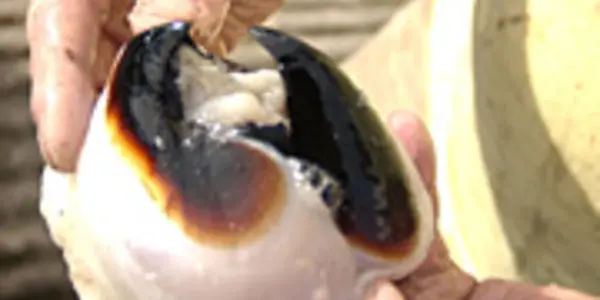
Ambergris is a weird and wonderful thing. It has been tremendously valuable throughout human history, but its creation and functionality have been shrouded in myth and superstition. To this day, no one has ever seen a whale actually excrete the stuff.But we know for sure that ambergris comes from sperm whales, because it's been found in their stomachs as well as floating freely in the sea. And since the waxy blobs are always full of squid beaks, we think they're probably the whale's way of dealing with these uncomfortable hard parts.
Wait, what? Don't we know, like, almost nothing about colossal squid (Mesonychoteuthis hamiltonii)? How could we have any idea whether they need protection or not?On the other hand, the fact that we've seen so few individuals rather suggests that there aren't that many of them to begin with. As with any scarce resource, perhaps caution is the better part of valor . . . or something like that. I might be getting my aphorisms mixed up.
Thou by the Indian Ganges' sideShouldst rubies find. I by the tideOf Humber would complain. I wouldLove you ten years before the Flood . . .
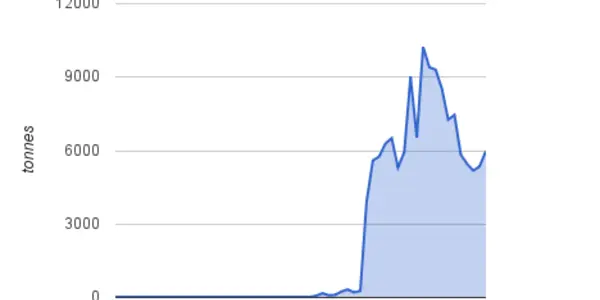
South Korea isn't the only place fishermen are worried about losing their squid. According to a recent article in Pakistan's The News,
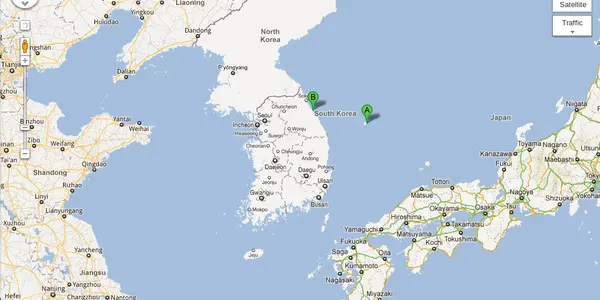
A lot of the ships fishing for squid off the Americas come from China, Korea, and Japan. If they're willing to cross the Pacific to feed their squid habit, you can bet they're not overlooking the resources in their own backyard. Squid fishing is a huge industry in Asia--and, as always, it's a bit tricky to divvy up the catch.
I have a love/hate relationship with advertising. Ads are specifically designed to manipulate people, and I hate being manipulated. On the other hand, I love using free services that are supported by ads.Science 2.0, as you may have noticed, runs ads, and I've got no problem with that. In fact, those ads make me anywhere from $3 to $10 a month--which isn't really enough to feed my ice cream habit, though it's a worthy contribution.But the video ads were getting a little too intrusive, according to both my own experience and comments from you, dear readers. I mentioned this to Mr. Science 2.0 himself, and learned I could opt out of ads on my blog by forfeiting future accumulation of my ice cream allowance. Done and done!
On October 8th, Octopus Day, I wrote about the incredibly strange Seven-arm Octopus, Haliphron atlanticus. I invoked its tremendous size, irregular arms, habitat flexibility, and peculiarly small body as proof positive of its weirdness.But I didn't provide very satisfying pictures. Today I am here to fill that gap with a couple of beautiful photographs taken by Nan Hauser, director of the Cook Islands Whale Research Project.
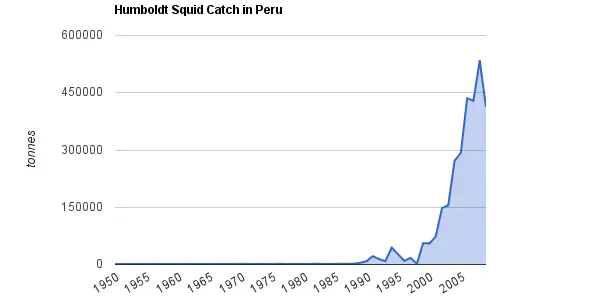
In an obituary for biologist Robert Clarke published recently in Marine Mammal Science, I read a rather curious passage about this scientist's observations of Humboldt squid: