Vampire Squid And The Evolution Of Cephalopod Sex
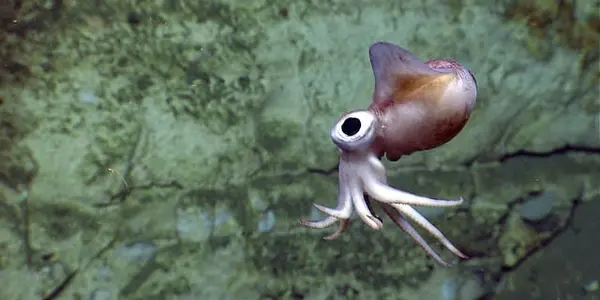
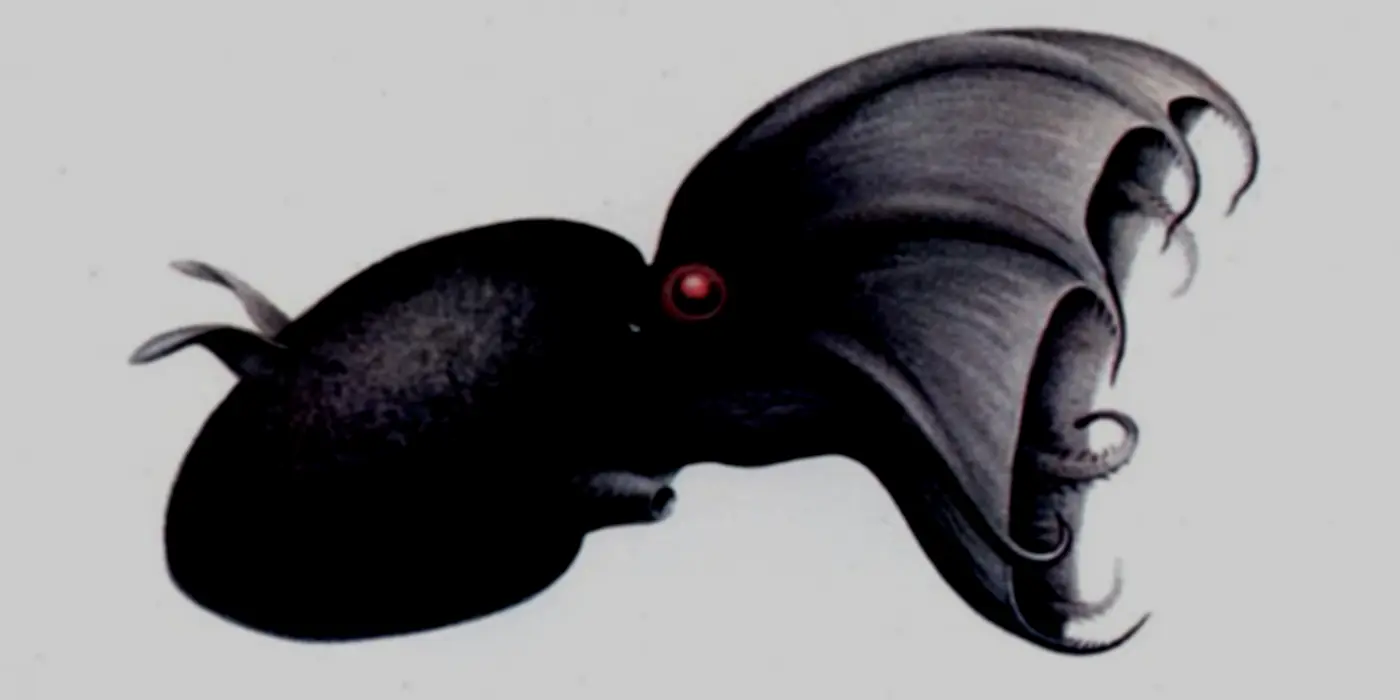
Everyone loves vampire squid, right? Their monstrous name belies their gentle nature as graceful underwater flyers who eat poop.
Everyone loves vampire squid, right? Their monstrous name belies their gentle nature as graceful underwater flyers who eat poop.


If you haven't heard the kerfuffle about flying squid by now, you've been under a rock. A cephalopod-free rock.
The Freeport News--"Grand Bahama's First Newspaper"--ran an article today that was a mix of highly detailed biology and complete bone-headed confusion.Could there be a healthy squid population living in local waters? has a fantastic opening:Is it a possibility that there is a healthy squid population in waters around Grand Bahama?Although, at this point, there is no official answer to the question from the proper authority, this daily will continue to search and keep our readers updated.Mystery! Intrigue! The authorities may be ignoring the situation, but never fear, the journalists will poke and prod until it all comes out.
Peru is at the cutting edge, the forefront--nay, Peru is a veritable trendsetter, trailblazer, and spearheader--because Peru, alone in the world, has decided to set a quota for Humboldt squid.Before you go off in a huff about how ridiculous I'm being*, let me explain why this is kind of a big deal. First, the Humboldt squid fishery is the biggest squid--the biggest invertebrate--fishery in the world. Second, no single country (or group of countries, for that matter) has ever set a quota for Humboldt squid before. That means fishermen have, by and large, been free to catch as many as they can.
Peru is at the cutting edge, the forefront--nay, Peru is a veritable trendsetter, trailblazer, and spearheader--because Peru, alone in the world, has decided to set a quota for Humboldt squid.Before you go off in a huff about how ridiculous I'm being*, let me explain why this is kind of a big deal. First, the Humboldt squid fishery is the biggest squid--the biggest invertebrate--fishery in the world. Second, no single country (or group of countries, for that matter) has ever set a quota for Humboldt squid before. That means fishermen have, by and large, been free to catch as many as they can.
I spend quite a lot of time here at Squid A Day blathering about one fishery or another, and I ought to remember that the word "fishery" isn't exactly common parlance. It's not jargon in the same way as "chromatophore" or, Lord help us, "mesopelagic." Still, it doesn't have an intuitive meaning to a lot of folks.So when I wrote a short essay for the Squids4Kids program about squid fisheries, I opened with a discussion of just what a fishery is, before going on to talk about squid.
Most of the time, fishermen fish for one particular creature--be it tuna, sardines, or shrimp. Unfortunately, species tend to exist in a commingled muddle called ecology, and it's often difficult to separate them with fishing gear.On the east coast of the US, longfin squid are caught with trawl nets. When dragged through the water, trawl nets also collects things which are not squid, called bycatch. And although the population of longfin squid seems to be reasonably healthy, some of these bycatch species are not doing so well.

It seems that certain great ideas have Times. Like, whoever's alive at that time, it doesn't matter--they're going to discover electricity, because the idea's in the ether. Or whatever.So as it turns out, 2009 was the Time of finding neurotoxins in stranded Humboldt squid. I mean, obviously, right? Or, um, maybe not. Let me explain: in 2009, a bunch of Humboldt squid stranded on beaches up and down the Pacific coast of North America. And two entirely independent groups of people had the same brilliant idea of taking samples from these stranded squid and looking for neurotoxins.
Have you heard of biobricks? They're the answer--or at least an answer--to the accusation made here at Science 2.0 and elsewhere that:

A long time ago, in an ocean far, far away . . . I'm sorry, I couldn't resist! I just couldn't resist. But of course it's not really true. Argentina and the British-owned Falkland Islands have been fighting over their squid resources since "a long time ago", but this latest news is hot off the press. And the ocean may feel "far, far away" to those of us in the northern hemisphere, but it's very close to home for all the squid fishermen in the Southern Ocean, and the civilians who depend on the economies they support.

One of the more unusual cephalopods of my acquaintance (and I do not say this lightly) is the ram's horn squid, Spirula spirula. The species is named for its beautifully coiled internal shell, which is all most people (including me) have ever seen of it.by Fritz Geller-Grimm

Squid Drop is an iPhone game* based on the premise that squid are negatively buoyant. Any serious iGamers must ask themselves: is it true? Barring the application of any external forces, would a squid sink to the depths of the sea?Never fear, the cephalopodiatrist is here to answer this pressing concern!Your typical squid is robust and active, packed with dense, heavy muscles. Not to mention the hard parts that are also heavier than water: the chitinous pen and braincase, and the calcified beak. This would all seem to be positive evidence for sinking squid.

Casual games with squid in them are the new hotness. No, I'm totally serious. There was Halloween Squid, Squibble, Squids, and now, Squid Drop:What a delightful excuse to talk about squid science! Now, where can I possibly find science in this app?A-ha! Crabs*!