Vampire Squid And The Evolution Of Cephalopod Sex
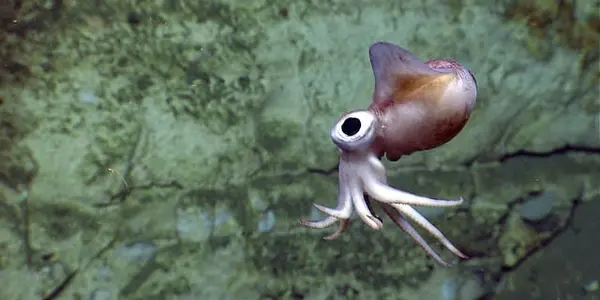
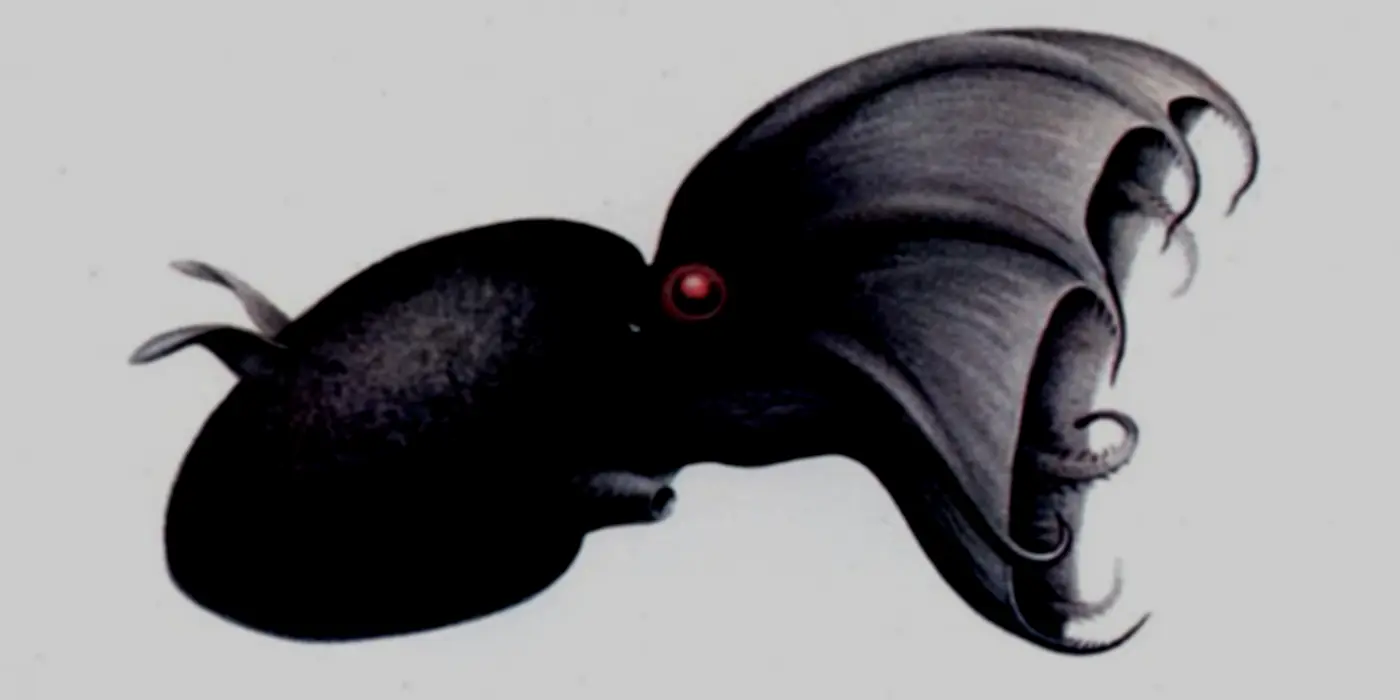
Everyone loves vampire squid, right? Their monstrous name belies their gentle nature as graceful underwater flyers who eat poop.
Everyone loves vampire squid, right? Their monstrous name belies their gentle nature as graceful underwater flyers who eat poop.

There's a giant ceramic squid in a New York art gallery.Walking into the gallery, you encounter the 16-foot-long, beached creature, its opalescent, slick-looking flesh seeming to putrefy, lying in a puddle of its own ink. You expect its tentacles to quiver in a final death-throe.Despite the distraction of seeing the singular form of "throe" for the first time in my life, that's still a pretty striking image.
(I guess this goes in the "Science&Society" Field, or maybe just "Random Thoughts.") Anyway, there's a short film coming out this summer, a promotional thing for the World Wildlife Fund, called "Astonish Me." It popped up in my news feed because the colossal squid is one of the many animals highlighted by the film. The director, Charles Sturridge, commented:

My paper on Squid Babies (which started out as a dissertation chapter) just got accepted!Well, technically it's Accepted with Revisions, which, for the non-academics in the room, means my co-authors and I have to change a few things before it gets published. But still! It's going to get published! This calls for celebration!So, in honor of Squid Babies, have a gorgeous video by pacificcoast101 on the embryonic development of the California market squid:
Check out this photo, taken a few weeks ago in La Jolla, Southern California. What do you think is most striking about it?Some people might be surprised by the sheer number of squid in the photo--but rest assured, that's quite normal. This is the California market squid, a gregarious creature that often travels in large shoals. (Or should I say schools? They certainly seem to be swimming in a coordinated manner.)
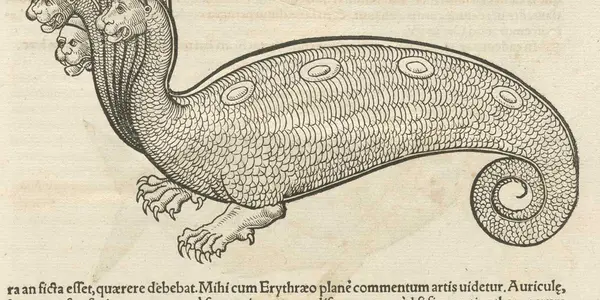
It never fails--I take some time off, and a giant squid shows up!A few years ago, it was a half-eaten carcass found floating in Monterey Bay. Every teuthologist dreams of a giant squid sighting in her backyard, but Fate's wicked sense of humor had me taking a summer course in Friday Harbor when my dream came true. So while I was playing with worms, my labmates back home were eagerly dissecting the largest giant squid ever seen in Monterey Bay.Not that I'm bitter or anything.
One of the nice things about studying a big charismatic animal, like the Humboldt squid, is that you don't have to convince anyone that your science is cool. People are already interested in your science as soon as you tell them what you study. Journalists want to interview you; filmmakers want to video your animal.Unfortunately, that last item can turn into one of the not-so-nice things. Filmmakers tend to be on a pretty tight schedule, so sometimes you'll get a call like, "We're going out on a boat on October 12th--can you find squid for us?"
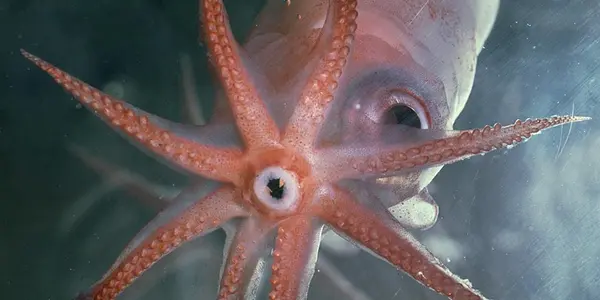
Whenever friends or family learn that there exists in the depths of the sea a particular species known as the Dana Octopus Squid, they draw the obvious conclusion that I must have been named after this squid, or (even more flattering) the squid was named after me. Alas, neither is the case. Wikipedia reveals all:Taningia danae is named after Danish fisheries biologist Aage Vedel Taaning (1890–1958), who often traveled on the research vessel Dana.Of course, the truly perceptive will note that since my name has two n's, there can be no possible connection between the squid and me.
My pal Julie Stewart tags Humboldt squid. She catches squid, attaches little recording devices to them, then drops them back in the ocean and waits for the tag to pop off a few days later. When it pops off, it's supposed to chirp out a satellite signal. That's Julie's cue to hop in a boat, pick up the tag and (hopefully) decode all the tag data to learn about the day-to-day lives of the squid.That's the ideal model, and it doesn't always work out. Tags malfunction and the ocean is unpredictable, and a certain number are lost at sea. It happens.
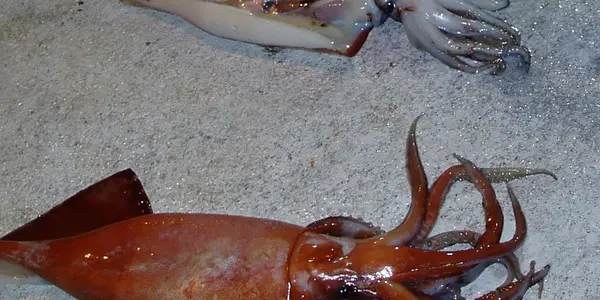
Back in April, a well-known fisheries biologist named Ray Hillborn published an op-ed in the New York Times that was titled (by the editors, not Hillborn) "Let Us Eat Fish." The gist of it was: our fisheries are doing great, so chow down on seafood with a clear conscience!
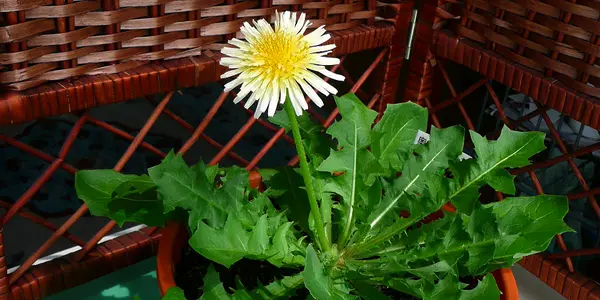
Squid are often considered to be one of the more sustainable seafood choices. Squid grow like weeds, right? They have short life cycles, make tons of babies, and adapt easily to changing environments. It's like eating dandelions.Only not.
Probably not. Unless you're a squid, octopus, or cuttlefish, in which case the answer is a definite maybe.
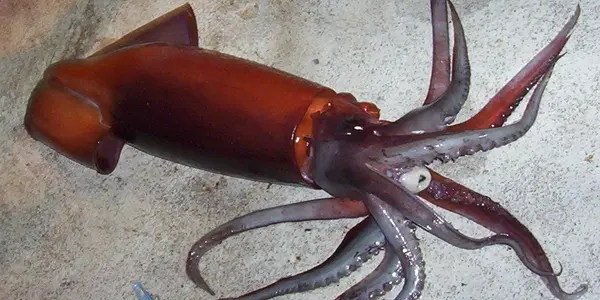
I've got nothing at all against chefs. I'm just suggesting that when a restauranteur and TV personality says something like“Squid is now the dominant species in the Pacific,” Cosentino says. “The waters have changed.”. . . then you might want to fact-check with an actual oceanographer. Or, say, a squid biologist.The quote is from a piece in Men's Journal called Save the Ocean, Eat A Squid--a title guaranteed to raise my hackles. The article documents chef Chris Cosentino's fishing trip to collect Humboldt squid, which he then cooks up for patrons of his San Francisco restaurant.