More on Radiacode 110
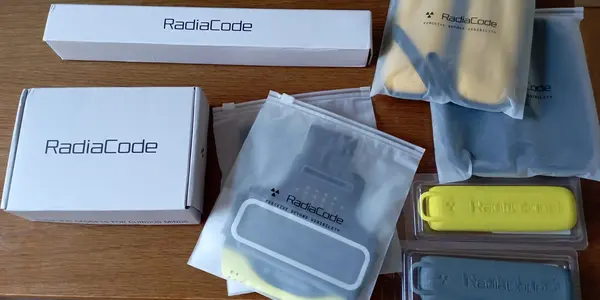
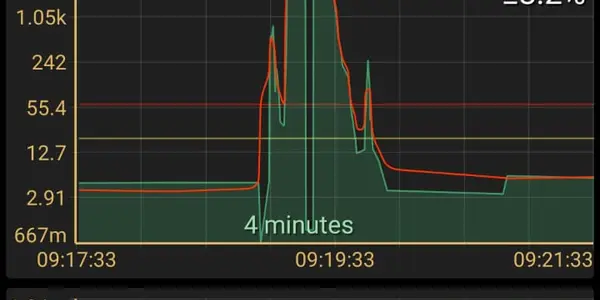
This is the second post reporting a few tests of the Radiacode 110 spectrometer, an extra-cool pocket dosimeter/radiation counter/spectrograph sold by RadiaCode.
This is the second post reporting a few tests of the Radiacode 110 spectrometer, an extra-cool pocket dosimeter/radiation counter/spectrograph sold by RadiaCode.


Less than three weeks separate us from the XVI Neutrino Telescopes, a very interesting conference held in Venice every two years. The physics of neutrinos is a very special niche in the realm of particle physics, one not devoid of cunning experimental techniques, brilliant theoretical ideas, and offering possible avenues to discover new physics. Hence I am quite happy to be attending the event, from where I will also be blogging (hopefully with the help of a few students in Padova).(NB this article, as others with neutrinos as a subject for the next month or so, appears also in the conference blog).

A preprint article by the IceCube collaboration captured my attention today in the Cornell Arxiv, and even more interesting was the main result of the analysis it reports, which can be shown as a "temperature plot" on an equilateral triangle. We will get to that, but let me first explain what is the experiment, what are the goals, and what it is that was measured.

The sixteenth edition of the internationally known Neutrino Telescopes conference will take place on March 2nd-6th 2015 in the usual venue of Palazzo Franchetti in Venice. This is a conference which gathers from around the world researchers who study neutrino physics and related topics.
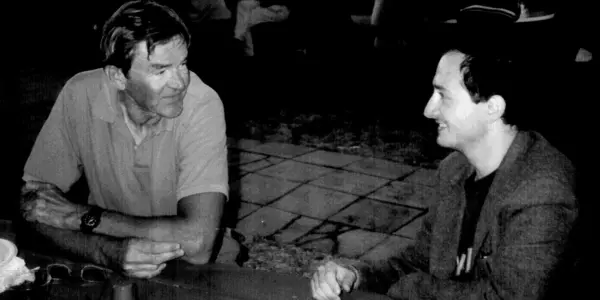
James D. Bjorken, also known as "BJ" by colleagues and physicists around the world, has been awarded the prestigious 2015 Wolf prize in Physics together with cosmologist Robert Kirshner. Bjorken deserves a lot of credit for his contribution to subnuclear physics: the official motivation is "For predicting scaling in deep inelastic scattering, leading to identification of nucleon's pointlike constituents "
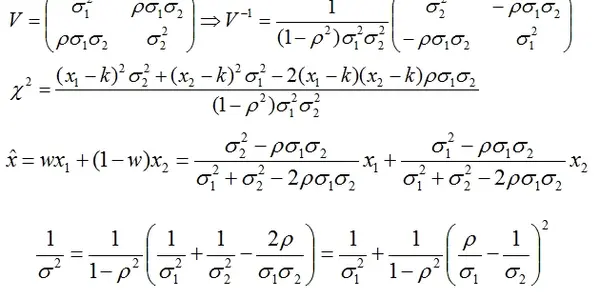
ATLAS sent today to the Cornell arxiv and to the journal JHEP their latest measurement of the top-antitop production asymmetry, and having five free minutes this afternoon I gave a look at the paper, as the measurement is of some interest. The analysis is done generally quite well, but I found out there is one things I do not particularly like in it... It does not affect the result in this case, but the used procedure is error-prone. But let's go in order. First I owe you a quick-and-dirty explanation of what is the top asymmetry and why you might care about it.
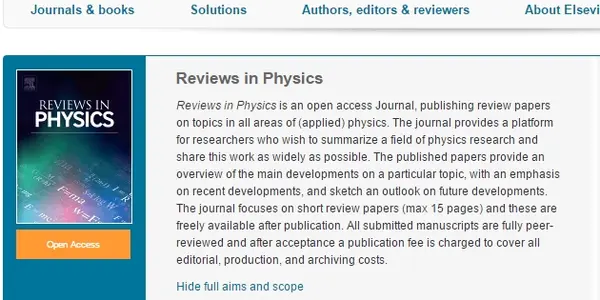
The publishing giant Elsevier is about to launch a new journal, Reviews in Physics. This will be a fully open-access, peer-reviewed journal which aims at providing short reviews (15 pages maximum) on physics topics at the forefront of research. The web page of the journal is here, and a screenshot is shown below.

The CMS collaboration has released yesterday results of a search for Majorana neutrinos in dimuon data collected by the CMS detector in 8 TeV proton-proton collisions delivered by the LHC in 2012. If you are short of time and just need an executive summary, here it is: no such thing is seen, unfortunately, and limits are set on the production rate of heavy neutrinos N as a function of their mass. If you have five spare minutes, however, you might be interested in some more detail of the search and its results.
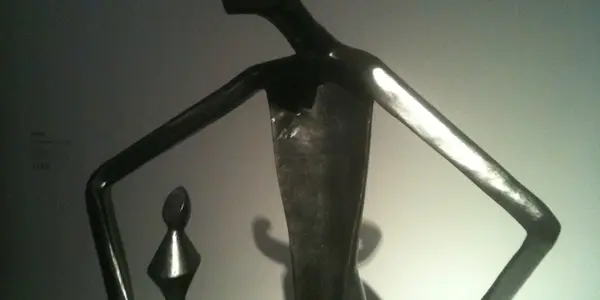
A periodic backup of my mobile phone yesterday - mainly pictures and videos - was the occasion to give a look back at things I did and places I visited in 2014, for business and leisure. I thought it would be fun to share some of those pictures with you, with sparse comments. I know, Facebook does this for you automatically, but what does Facebook know of what is meaningful and what isn't ? So here we go.The first pic was taken at Beaubourg, in Paris - it is a sculpture I absolutely love: "The king plays with the queen" by Max Ernst.Still in Paris (for a vacation at the beginning of January), the grandiose interior of the Opera de Paris...
This morning I woke up at 6AM, had a shower and breakfast, dressed up, and rushed out in the cold of the fading night to catch a train to Mestre, where my car was parked. From there I drove due north for two hours, to a place in the mountains called Pieve di Cadore. A comfortable ride in normal weather, but this morning the weather was horrible, with an insisting water bombing from above which slowly turned to heavy sleet as I gained altitude. The drive was very unnerving as my car is old and not well equipped for these winter conditions - hydroplaning was frequent. But I made it.
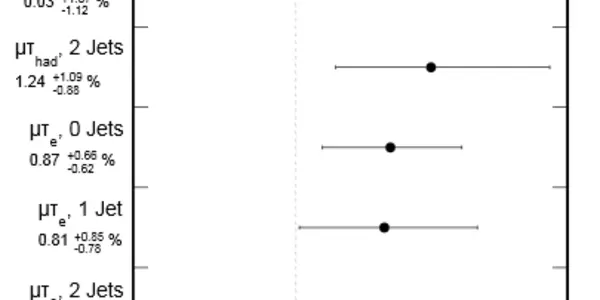
The CMS Collaboration at the LHC collider has recently measured a non-negligible rate for the fraction of Higgs boson decays into muon-tau pairs, as I reported in this article last summer. The observation is not statistically significant enough to cause an earthquake in the world of high-energy physics, and sceptics like myself just raised a gram of eyebrows at the announcement - oh yeah, just another 2-sigma effect. However, the matter becomes more interesting if there is a theoretical model which allows for the observed effect, AND if the model is not entirely crazy.
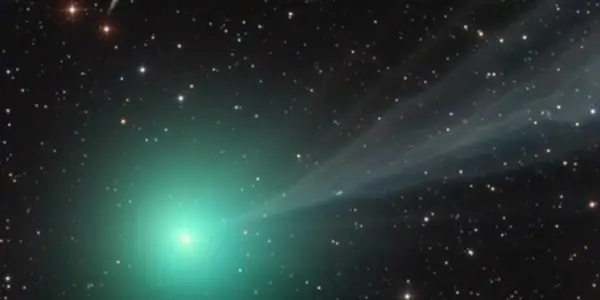
A comet is a magical sight in the heavens. Comets visible to the naked eye are a uncommon event, and sometimes they put up very suggestive shows in our skies. Those of us who have witnessed the apparition of a bright comet do not forget that experience easily. The recent landing on comet Churyumov-Gerasimenko of the Rosetta spacecraft has made even more fascinating the observation of comets from the ground, as we got treated by close-ups of the comet surface that resemble mountainous terrains on Earth. Imagining a rock streaming in the sky, coming nearby after a long trip from the Oort cloud, and maybe returning sometimes in the future, or maybe getting lost forever, is truly remarkable.

The following is a guest post by David Orban, CEO at Dotsub, faculty and advisor at Singularity University, and trustee of Network Society Research.When I implanted an NFC chip in my left hand about two months ago at the Singularity University Summit Europe in Amsterdam, I followed the tradition of our species that a hundred thousand years or more ago decided to become a cyborg.