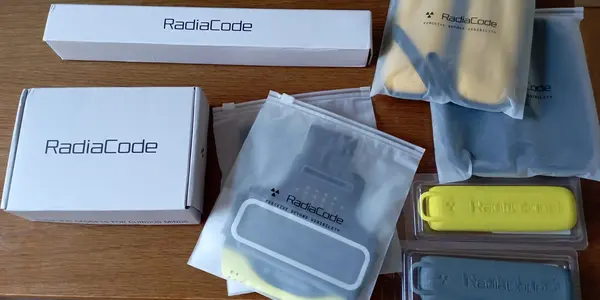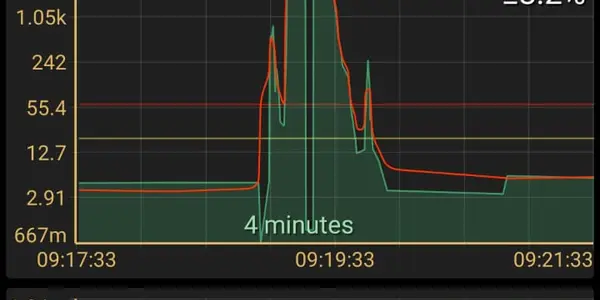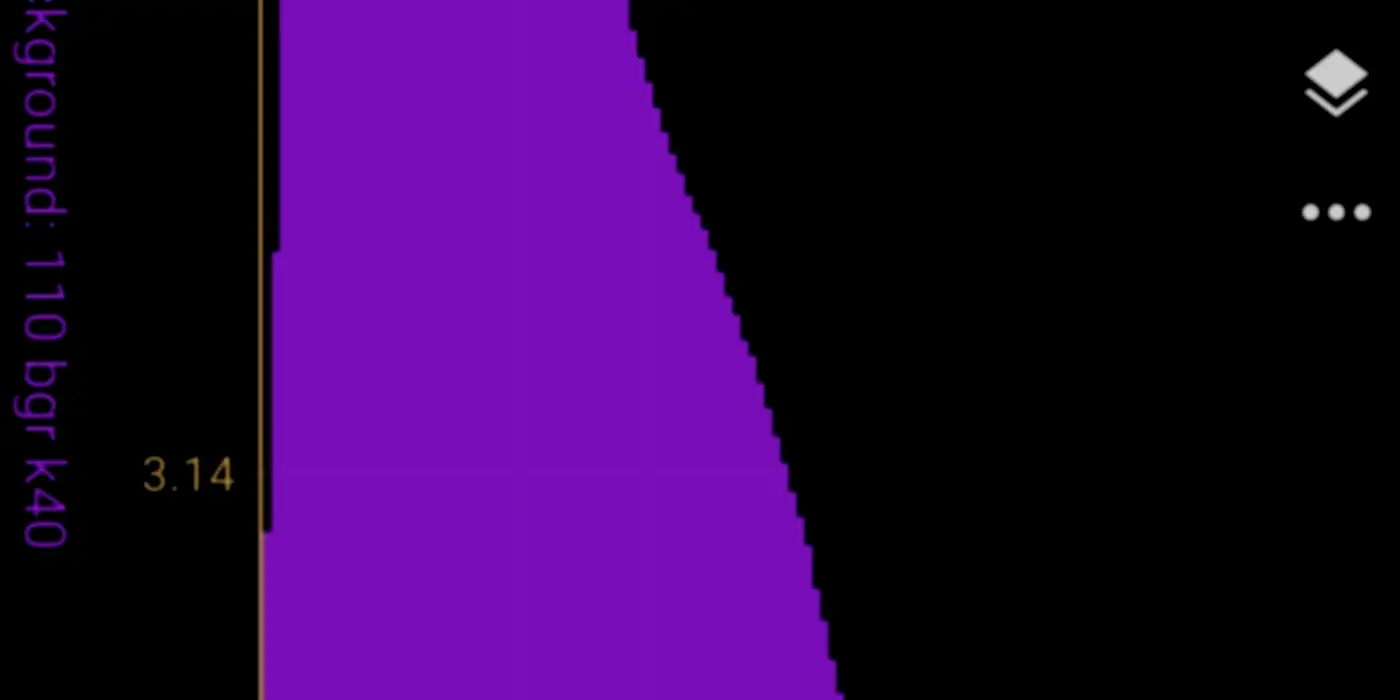
More on Radiacode 110
This is the second post reporting a few tests of the Radiacode 110 spectrometer, an extra-cool pocket dosimeter/radiation counter/spectrograph sold by RadiaCode.
This is the second post reporting a few tests of the Radiacode 110 spectrometer, an extra-cool pocket dosimeter/radiation counter/spectrograph sold by RadiaCode.


Taking inspiration from Resonaances, who this year offers much more than an April's Fool in his blog (I am also flattered to see that I am featured there, and with a character of my liking), I am going to offer some predictions for the next run that the LHC is going to start, at the unprecedented energy of 13 TeV, in the next few weeks. The unconventional thing is that I will force the natural scepticism out of my brain, and try to be over-optimistic.The prediction for 2015-2016
Plagiarism is the most sincere form of flattery, they say (or rather, this is said of imitation). In arts - literature, music, painting - it can at times be tolerated, as an artist might want to take inspiration from others, elaborate on an idea, or give it a different twist. In art it is the realization of the idea which matters.
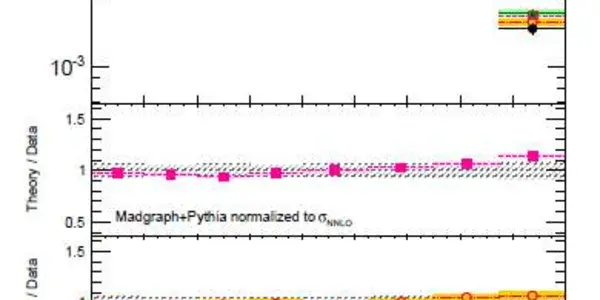
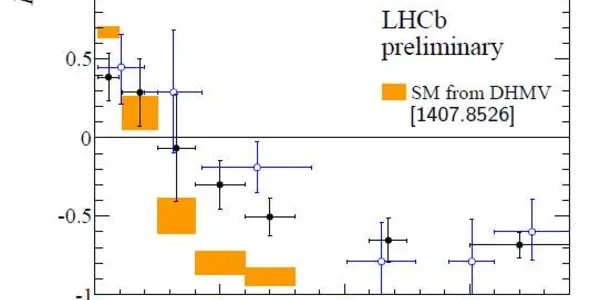
Sometimes I think I am really lucky to have grown convinced that the Standard Model will not be broken by LHC results. It gives me peace of mind, detachment, and the opportunity to look at every new result found in disagreement with predictions with the right spirit - the "what's wrong with it ?" attitude that every physicist should have in his or her genes.
Spring is finally in, and with it the great expectations for a new run of the Large Hadron Collider, which will restart in a month or so with a 62.5% increase in center of mass energy of the proton-proton collisions it produces: 13 TeV. At 13 TeV, the production of a 2-TeV Z' boson, say, would not be so terribly rare, making a signal soon visible in the data that ATLAS and CMS are eager to collect.
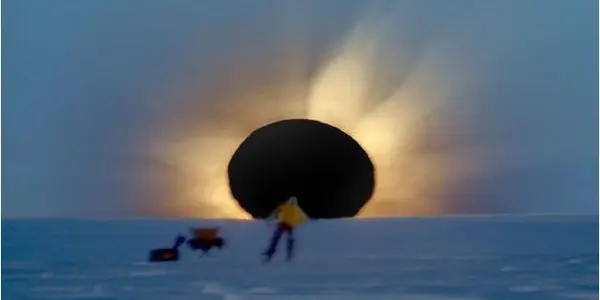
In the morning of March 20th Europeans will be treated with the amazing show of a total solar eclipse. The path of totality is unfortunately confined to the northern Atlantic ocean, and will miss Iceland and England, passing only over the Faroer islands - no wonder there's no hotel room available there since last September! Curiously, the totality will end on the north pole, which on March 20th has the sun exactly at the horizon. Hence the conditions for a great shot like the one below are perfect - I only hope somebody will be at the north pole with a camera...(Image credit: Fred Bruenjes; apod.nasa.gov)
The top quark is the heaviest known elementary particle. It was discovered in 1995 by the CDF and DZERO experiments at the Fermilab Tevatron collider after a long hunt that had started almost two decades earlier: it took long because the top weighs as much as a whole silver atom, and producing this much matter in single particle-particle collisions is difficult: it requires collision energies that started to be available only in 1985, and the rarity of the production processes dictate collision rates that were delivered only in the early nineties.
The XVI edition of Neutrino Telescopes is over and it is the time for some summing up – which I feel completely unsuited to do, as I was just an observer there. As you know, my field is high-energy collider physics, and neutrino physics has become a very different thing since the discovery of neutral currents 42 years ago. Anyway, I decided I would collect here a few random thoughts on the status of the field, as seen from my very skewed viewpoint...
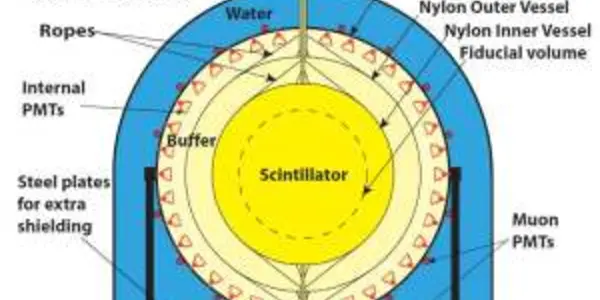
At the XVI Neutrino Telescopes conference going on this week in Venice there was a nice presentation on the results of the Borexino experiment. The text below is a writeup of the highlights from the talk, given by Cristiano Galbiati from Princeton University.
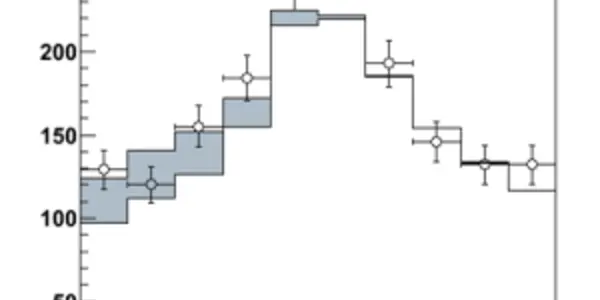
(The XVIth edition of "Neutrino Telescopes" is going on in Venice this week. The writeup below is from a talk by M.Nakahata at the morning session today. For more on the conference and the results shown and discussed there, see the conference blog.)
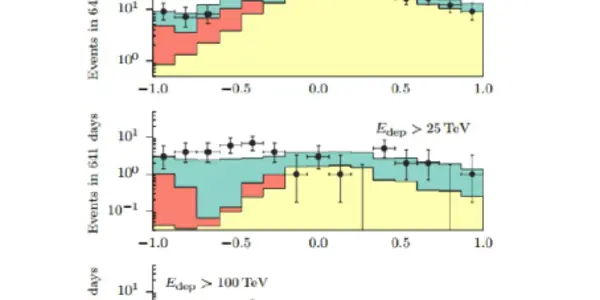
During the first afternoon session of the XVI Neutrino Telescopes conference (here is the conference blog, which contains a report of most of the lectures and posters as they are presented) Francis Halzen gave a very nice account of the discovery of cosmogenic neutrinos by the IceCube experiment, and its implications. Below I offer a writeup - apologizing to Halzen if I misinterpreted anything.
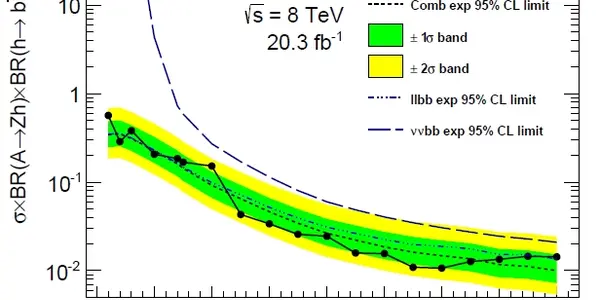
The paper to read today is one from the ATLAS collaboration at the CERN Large Hadron Collider -my competitors, as I work for the other experiment across the ring, CMS. ATLAS has just produced a new article which describes the search for the CP-odd A boson, a particle which arises in Supersymmetry as well as in more generic extensions of the Standard Model called "two-higgs doublet models". What are these ?
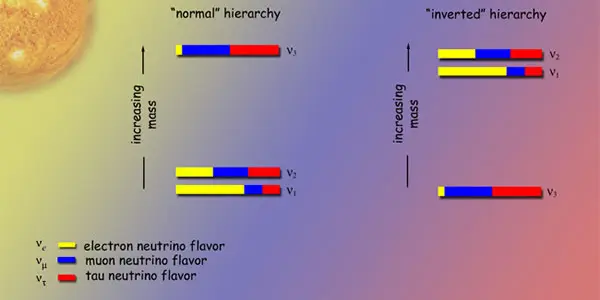
"1. Interaction with matter changes the neutrino mixing and effective mass splitting in a way that depends on the mass hierarchy. Consequently, results of oscillations and flavor conversion are different for the two hierarchies.2. Sensitivity to the mass hierarchy appears whenever the matter effect on the 1-3 mixing and mass splitting becomes substantial. This happens in supernovae in large energy range, and in the matter of the Earth.[...] 4. Multi-megaton scale under ice (water) atmospheric neutrino detectors with low energy threshold (2-3 GeV) may establish mass hierarchy with (3-10)σ confidence level in few years. [...]