More on Radiacode 110
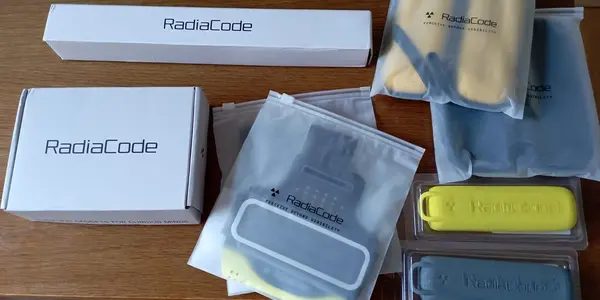
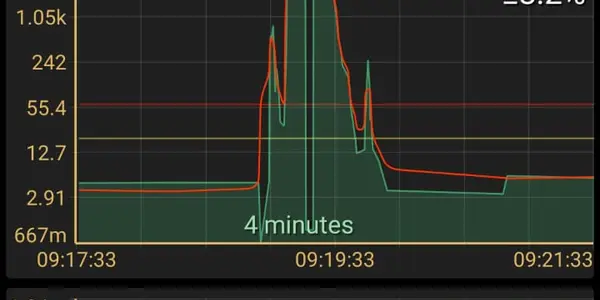
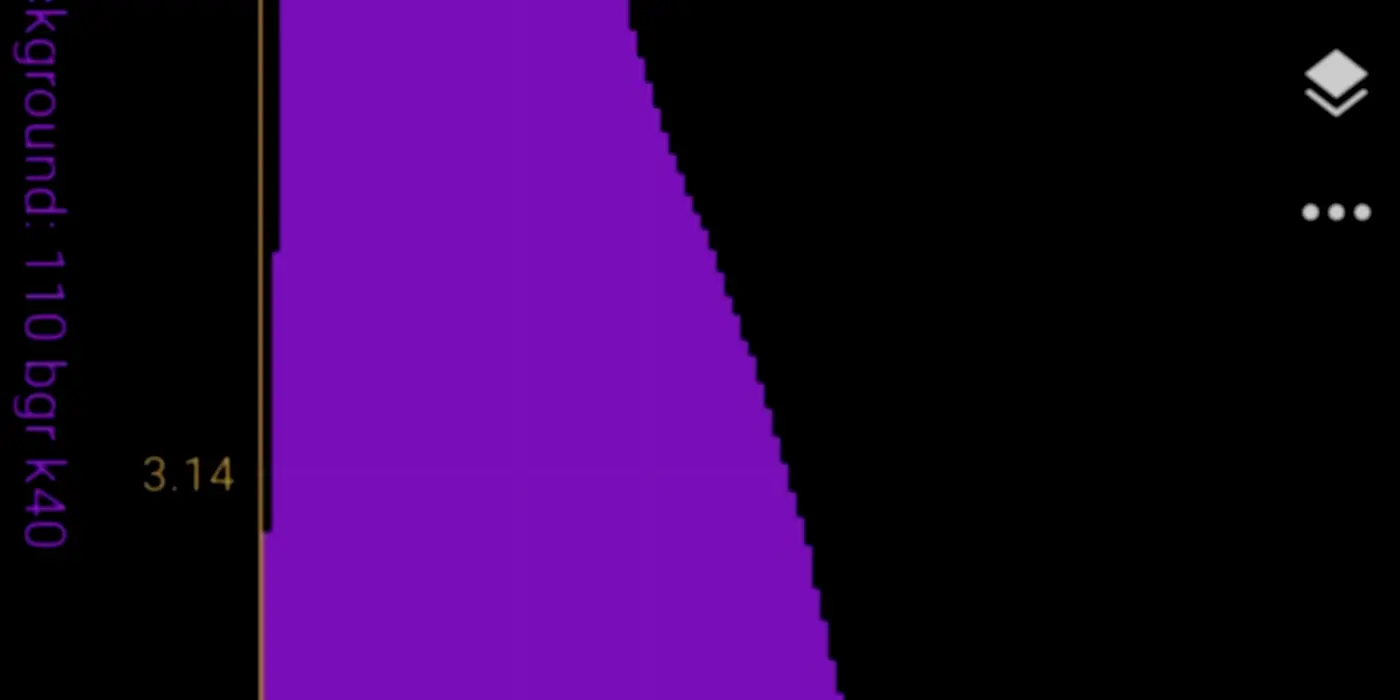
This is the second post reporting a few tests of the Radiacode 110 spectrometer, an extra-cool pocket dosimeter/radiation counter/spectrograph sold by RadiaCode.
This is the second post reporting a few tests of the Radiacode 110 spectrometer, an extra-cool pocket dosimeter/radiation counter/spectrograph sold by RadiaCode.


Until the second half of the nineties, when the LEP collider started to be upgraded to investigate higher centre-of-mass energies of electron-positron collisions than those until then produced at the Z mass, the Higgs boson was not the main focus of experiments exploring the high-energy frontier. The reason is that the expected cross section of that particle was prohibitively small for the comparatively low luminosities provided by the facilities available at the time. Of course, one could still look for anomalously high-rate production of final states possessing the characteristics of a Higgs boson decay; but those searches had a limited appeal.
Preparing the documents needed for an exam for a career advancement, to a scientist like me, is something like putting order in a messy garage. Leave alone my desk, which is indeed in a horrific messy state - papers stratified and thrown around with absolutely no ordering criterion, mixed with books I forgot I own and important documents I'd rather have reissued rather than searching for them myself. No, I am rather talking about my own scientific production - pubished articles that need to be put in ordered lists, conference talks that I forgot I have given and need to be cited in the curriculum vitae, refereeing work I also long forgot I'd done, internal documents of the collaborations I worked in, students I tutored, courses I gave.

Although now widely accepted as the most natural explanation of the observed features of the universe around us, dark matter remains a highly mysterious entity to this day. There are literally dozens of possible candidates to explain its nature, wide-ranging in size from subnuclear particles all the way to primordial black holes and beyond. To particle physicists, it is of course natural to assume that dark matter IS a particle, which we have not detected yet. We have a hammer, and that looks like a nail.

It is a well-known fact that given the availability of food, we eat far more than what would be healthy for our body. Obesity has become a plague in many countries, and the fact that it correlates very tightly with a decreased life expectancy is not a random chance but the demonstrated result of increased risk of life-threatening conditions connected with excess body fat.Yet we eat, and drink, and eat. We look like self-pleasing monkeys trained to press a button to self-administer a drug. To make matters worse, many of the foods and drinks we consume contain substances purposely added to increase our addiction. So it takes a strong will to control our body weight.

Today the Cornell arxiv features a paper by J. Aguilar Saavedra and F. Jouaquim, titled "A closer look at the possible CMS signal of a new gauge boson". As I read the title I initially felt somewhat lost, as being a CMS member I usually know about the possible new physics signals that my experiment produces, and the fact that we had a possible signal of a new gauge boson had entirely escaped my attention. Hence I downloaded the paper and started reading it, hoping to discover I had discovered something new.

The other day I wrote a post reporting of the lowered expectations of SUSY enthusiasts, who now apparently look forward to seeing 2-sigma effects in the next Run data of the CMS and ATLAS collaborations. That would keep their hope going, apparently.I would have no problem letting them wait for late 2015, when the first inverse femtobarns of 13 TeV collisions will have been given a look at. But another thing happened today which made me change my mind - a colleague noted in the comments thread of that article that the LHC experiments appear to not publish their 2- and 3-sigma excesses when they see them, waiting for more data that "wipes out" the fluctuation. This is a strong (and probably unsupported) claim!

Yesterday I gave a lecture at the 3rd International Conference on New Frontiers in Physics, which is going on in kolympari (Crete). I spoke critically about the five-sigma criterion that is nowadays the accepted standard in particle physics and astrophysics for discovery claims.
My slides, as usual, are quite heavily written, which is a nuisance if you are sitting at the conference trying to follow my speech, but it becomes an asset if you are reading them by yourself post-mortem. You can find them here (pdf) and here (ppt) .
This is just a short update on the saga of the anomalous excess of W-boson-pair production that the ATLAS and CMS collaborations have reported in their 7-TeV and 8-TeV proton-proton collision data. A small bit of information which I was unaware of, and which can be added to the picture.

This is just a short post to report about a useful paper I found by preparing for a talk I will be giving next week at the 3rd International Conference on New Frontiers in Physics, in the pleasant setting of the Orthodox Academy of Crete, near Kolympari.My talk will be titled "Extraordinary Claims: the 0.000029% Solution", making reference to the 5-sigma "discovery threshold" that has become a well-known standard for reporting the observation of new effects or particles in high-energy physics and astrophysics.

Many new particles and other new physics signals claimed in the last twenty years were later proven to be spurious effects, due to background fluctuations or unknown sources of systematic error. The list is long, unfortunately - and longer than the list of particles and effects that were confirmed to be true by subsequent more detailed or more statistically-rich analysis.

A timely article discussing the hot topic of the production rate of pairs of vector bosons in proton-proton collisions has appeared on the Cornell arxiv yesterday. As you might know, both the ATLAS and CMS collaborations, who study the 8-TeV (and soon 13-TeV) proton-proton collisions delivered by the Large Hadron Collider at CERN, have recently reported an excess of events with two W bosons. The matter is discussed in a recent article here.
In the process of revising a chapter of my book, I found a clip I would like to share here, as it contains an analogy I cooked up and which I find nice enough to be proud of. Well, two analogies, as you'll soon find out; here I am speaking of the cat weighing trouble at the end of the piece - the other is quite trivial. The topic is the widely different masses of fermions, the building blocks of our universe, and the trouble in making sense of it and of measuring precisely their values. Comments welcome!