More on Radiacode 110
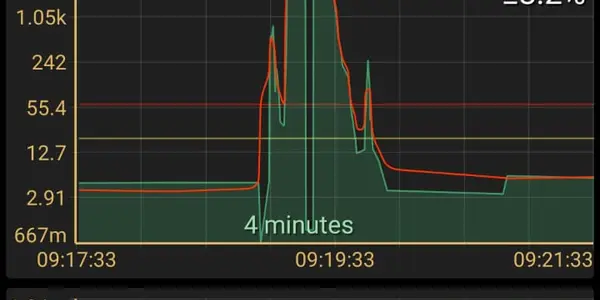
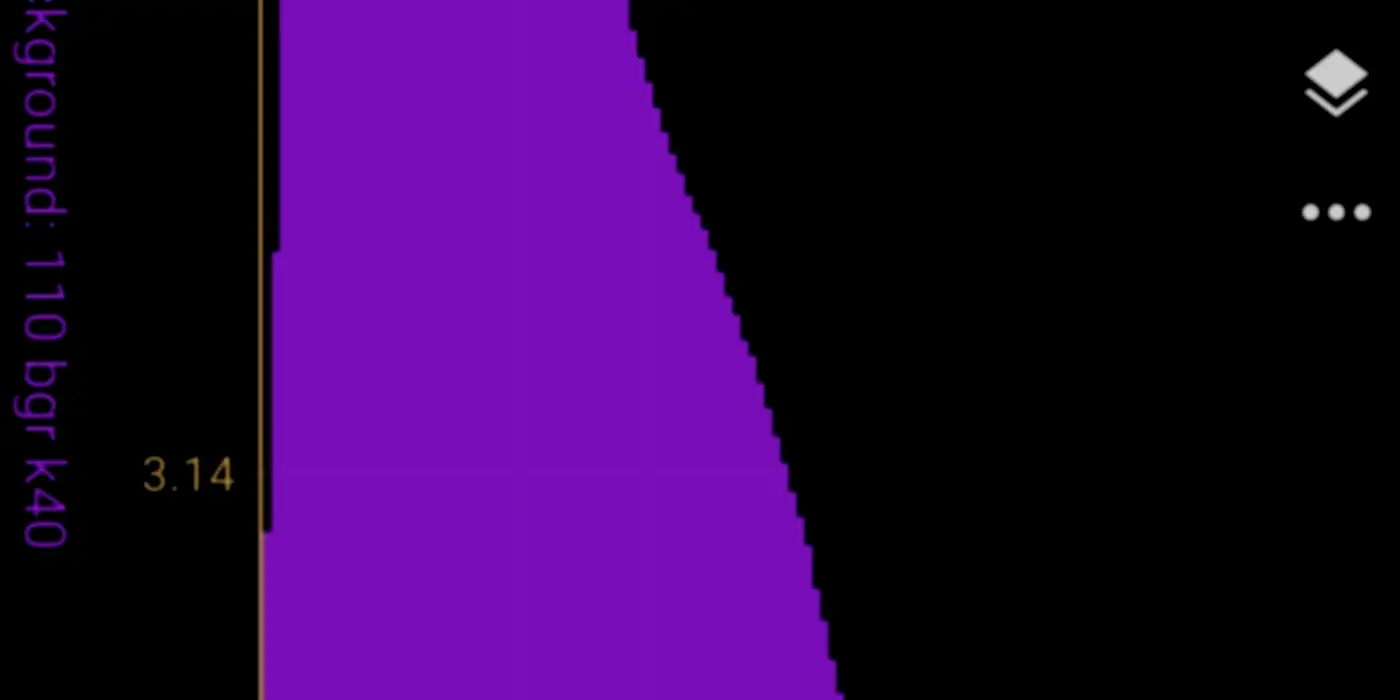
This is the second post reporting a few tests of the Radiacode 110 spectrometer, an extra-cool pocket dosimeter/radiation counter/spectrograph sold by RadiaCode.
This is the second post reporting a few tests of the Radiacode 110 spectrometer, an extra-cool pocket dosimeter/radiation counter/spectrograph sold by RadiaCode.

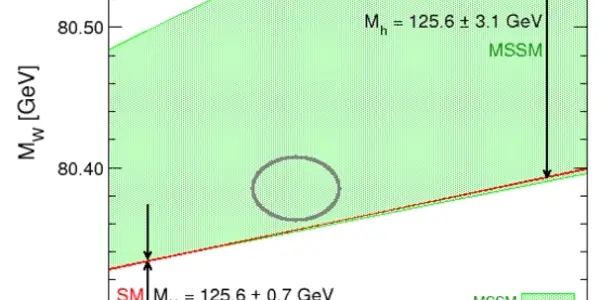
If I look back at the first times I discussed the important graph of the top quark versus W boson mass, nine years ago, I am amazed at observing how much progress we have made since then. The top quark mass in 2005 was known with 2-3 GeV precision, the W boson mass with 35 MeV precision, and we did not know where the Higgs boson was, or if there was one.
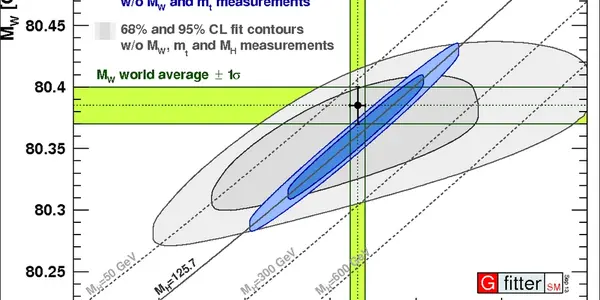
The mass of the top quark is a very important parameter of the standard model: using its value together with other no less fundamental ones (the W boson mass, the Higgs mass, and many parameters describing the properties of Z bosons) it is possible to study in great detail the predictions of the theory. In particular, due to the way heavy particles influence the Higgs field, one may verify the consistence of the standard model by looking at a graph where the top quark mass is in the x axis and the W boson on the y axis: different hypotheses for the Higgs boson mass then lie on different parallel curves. One example of such a graph is shown below. It is too complex to discuss it in detail here, but if you are curious I can supply more information in the comments thread.
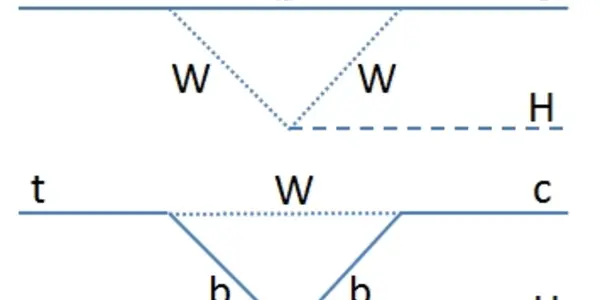
Now that we know that the Higgs boson has a mass of 125 GeV and displays all the properties that a regular standard model Higgs boson should have, one question you could ask is, is it possible that a top quark decays into a Higgs boson ? The question is a legitimate one since the top quark has a mass 40% larger than the Higgs, so in principle a decay could be allowed. For instance, one could imagine that the top "fluctuates" into a bottom quark - W boson combination, then that the W boson emits a Higgs particle, and finally the bottom quark and W boson fuse themselves into a charm quark. Or, once the top fluctuates into a Wb pair, it is the bottom quark which emits the Higgs boson before rejoining with the W creating a charm quark. The diagrams are shown below.

I received the following comment from Bo Thide', one of the authors of
the paper where Fabrizio Tamburini and collaborators explain their novel
method to multiply the transmission of information via EM waves (see here). I think his points are of interest to many so I decided to elect his comment to a independent posting here.By the way, Bo Thide' is a Swedish professor at the Uppsala department of Physics and Astronomy. For his CV see here.Comments welcome...----From Bo Thide':
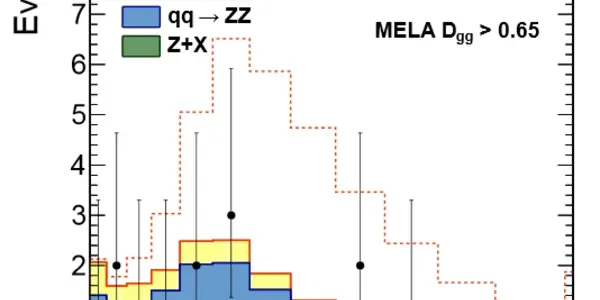
At 125 GeV of mass, the Higgs boson is a very heavy particle; yet its natural width is predicted to be of just 4.15 MeV in the standard model, a value much smaller than that of particles of similar mass. The top quark, for instance, has a width of 1.5 GeV; and the Z boson has a width of 2.5 GeV: three orders of magnitude larger.
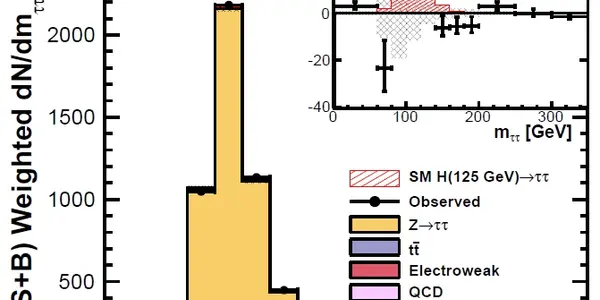
The tau lepton is a particle of very complex phenomenology. Although point-like as its lighter counterparts - the electron and the muon - the tau has a quite respectable mass, 1.77 GeV, which makes all the difference from the other charged leptons.The tau was discovered in 1975 by Martin Perl at the SPEAR electron-positron collider. The acceptance of that observation was quite slow: the events found by Perl and his team were complicated because of the peculiar properties of the newfound particle. Perl had found an excess of events featuring an electron and a muon and an energy imbalance, which were hard to explain unless hypothesizing the creation of a pair of short-lived, heavy leptons.

Fabrizio Tamburini, the Italian researcher who has discovered an innovative way to multiply the transmission of electromagnetic signals by exploiting the vorticity of photons, has received last Saturday the "San Valentino prize" at Palazzo Gazzolli in Terni, Italy.The annual prize was founded in 1969 by Agostino Pensa and is meant to recognize the professional devotion of scientist and artists to their work. In the past years the prize has gone, among others, to several distinguished physicists: Ugo Amaldi, Carlo Rubbia, Emilio Segre', Tullio Regge.
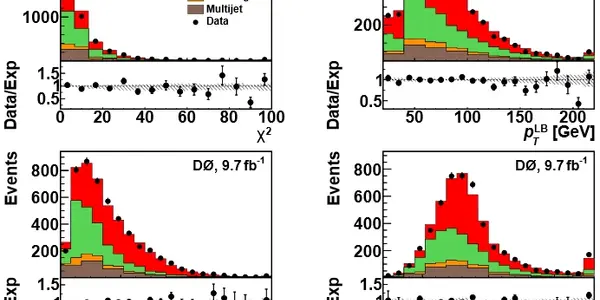
It is nice to see that the Tevatron experiments are continuing to produce excellent scientific measurements well after the demise of the detectors. Of course the CDF and DZERO collaborations have shrunk in size and in available man-years for data analysis since the end of data taking, as most researchers have increased and gradually maxed their participations to other experiments - typically the ones at the Large Hadro Collider; but a hard core of dedicated physicists remains actively involved in the analysis of the 10 inverse femtobarns of proton-antiproton collisions acquired in Run 2, in the conviction that the Tevatron data still provides a basis for scientific results that cannot be obtained elsewhere.
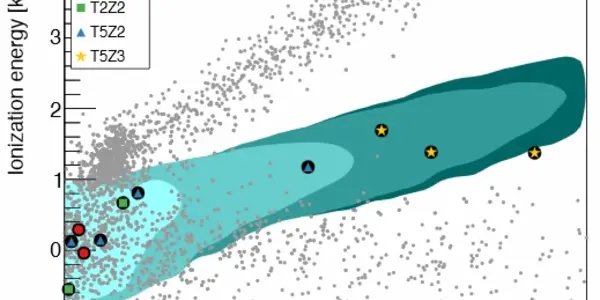
The Super-CDMS dark-matter search has released two days ago the results from the analysis of nine months of data taking. The experiment has excellent sensitivity to weak interacting massive particles producing inelastic scattering with the Germanium in the detector.The detector is composed of fifteen cylindrical 0.6 kg crystals stacked in groups of three, equipped with ionization and phonon detectors that are capable of measuring the energy of the signals. From that the recoil energy can be derived, and a rough estimate of WIMP candidates mass. The towers are kept at close to absolute zero temperature in the Soudan mine, where backgrounds from cosmic rays and other sources are very small.
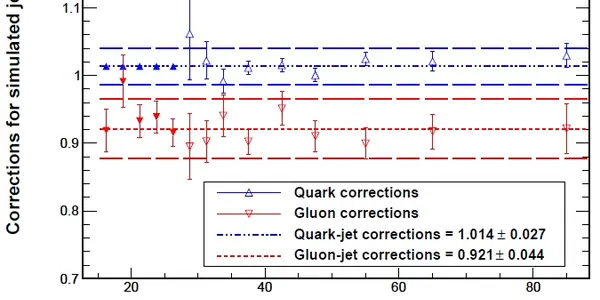
Do you remember the CDF Dijet bump at 145 GeV? In 2010, CDF published a paper that showed how the same data sample of W + jet events where they had previously isolated the "single-lepton" WW+WZ signal also presented an intriguing excess of events in the dijet mass distribution, in a region where the background -dominated by QCD radiation produced in association with a W- fell smoothly. That signal generated some controversy within the collaboration, and a lot of interest outside of it. It could be interpreted as some signal of a new technicolor resonance !
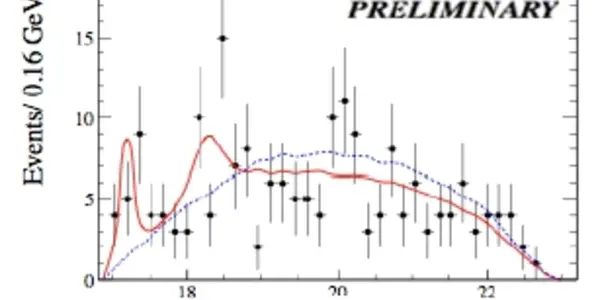
The Y(4140) state, a resonance found in decays of the B meson to J/ψ φ K final states, is the protagonist of a long saga. Originally it was obseved by CDF in 4 inverse femtobarns of Run 2 data by Kai Yi, a very active "bump hunter" in the experiment - and I want to add, a successful one! Kai had to withstand a very long review process within the collaboration before the evidence for the new particle could finally be published; and the addition of more data to the analysis, one year afterwards, left many in CDF with the suspect that the particle was maybe there only in the eye of the beholder: the new data did not seem to show a clear hint of the peak seen in the first part.

I believe I am not alone in being fascinated by the ongoing debates about this or that physics experiment being on the verge of destroying the Earth. Microscopic black holes produced by mistake in particle physics experiments sinking down to the center of the Earth and slowly eating us out, small black holes used as "clean" bombs, antimatter weapons, strange-matter bits gradually engulfing everything around. It is quite entertaining and it would be even good for physics outreach if spun the right way, but unfortunately we should not trust too much the sense of humour of our political leaders.