Antonio Rosino, a Life for Chess
It is with quite a bit of sadness that I received this evening the news of the passing of Antonio Rosino.
It is with quite a bit of sadness that I received this evening the news of the passing of Antonio Rosino.


I read with interest and excitement a very lightweight preprint on the Cornell preprint arxiv this afternoon. Although I usually skip reading papers on subjects I know little about (Cosmology), the title startled me enough to plunge into it:"Solution to the Dark Energy Problem".Single author, Paul Howard Frampton. Hmmm. A thought crossed my mind at the very start. Was this the work of a crackpot, sneaked into the arxiv while nobody was looking ?

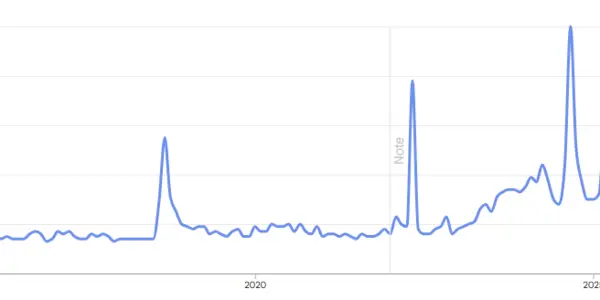
Have a look at the figure on the left. It shows the number of visits to this site broken down in hours of the day -the time of the server used by the visitor. The statistics of each bar is sufficient that the uncertainty on their height is of the order of 2%, so almost indistinguishable by eye. What you can see, therefore, are real variations with time of the traffic to this site, and not random fluctuations up and down.
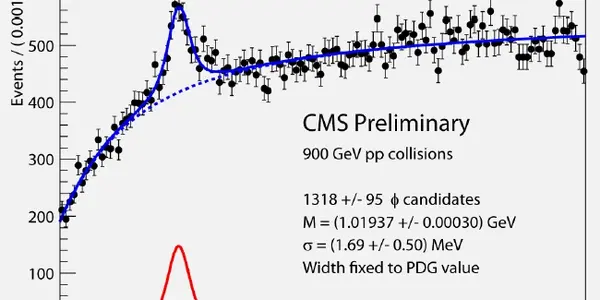
I am quite proud today to announce the publication of a new physics result from the CMS experiment: maybe not a groundbreaking result, yet one to which I contributed directly, and the first full-fledged analysis of CMS collider data brought to public domain by the group of Padova researchers to which I belong.Two words on the CMS-Padova group

In two years the Higgs boson will be close to discovery, and its mass already known, or the particle will be already in the trash bin. That is the single line which best summarizes the scenarios I depicted yesterday, in the concluding slides of a seminar I gave at IFIC, in beautiful Valencia (below, placa de la Virgen on a pleasant evening, taken with my iphone).

A video on youtube documents a remarkable feat -the Australian motorbyker Robbie Maddison jumping the Korynth channel in Greece. A 85-meter jump!

The CDF Collaboration blessed yesterday afternoon the results of a search for massive Gravitons decaying into pairs of Z bosons. And it is a startling new result!Usually after a blessing (which is the result of a collaboration-wide presentation when the analysis is given a final scrutiny) the results are not immediately made public: this non-written rule has the purpose of allowing the analysis authors to be the first to present the results at a conference or other public event. But the rule written in the CDF bylaws, on the other hand, say that after a blessing the result is public, so for this time I will stick to the written one, and fair play be darned this time... The chances to announce what might be the first evidence of gravitons is too appealing!

We are on. This afternoon just after 1PM the LHC beams have started to produce proton-proton collisions in the heart of the experiments, at the never-before achieved energy of 7 TeV.It was a long journey to get here -the project is twenty years old- but this is just the start of a new, more exciting one: In the course of the next two years, the Large Hadron Collider will gradually increase its power, allowing the CMS and ATLAS detectors to collect enough data to significantly extend into discovery territory.

Marco Silva (right) is an amateur astronomer since the 1997 Hale-Bopp comet passage. He is also an amateur scientist. His studies can be found in his web site. When I knew of his interesting measurements of cataclysmic variable stars, I invited him to write about the matter for us here.... Cataclysmic Variables

The number in the title, interpreted in units per square centimeters per second, is a flux rate, and it is a new world record set by the Tevatron collider last night on the number of protons and antiprotons forced to cross each other within a tiny interaction region in the core of the CDF and DZERO experiments.
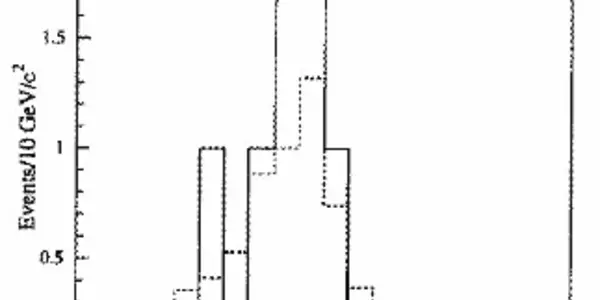
It makes me very happy when I see new precise results on the mass of the top quark being produced by the CDF collaboration (to which I still proudly belong). CDF, one of the two hadron collider experiments operating at the 2-TeV Tevatron proton-antiproton synchrotron in Batavia, IL, has been measuring the top quark mass since 1994, one year prior to its discovery. The figure with the top candidates (histogram) from which the mass measurement of 174+-12 GeV was obtained in 1994 is shown on the right below; backgrounds and top expectation are shown by hatched lines.

A brand new result in Higgs boson physics has been presented by my old-time CDF colleague Wei-Ming Yao at the Moriond QCD conference two days ago. It is the combination of CDF and DZERO limits on the Higgs boson, and it constitutes a significant advancement in our knowledge of the standard model.The result is simple to state in a single sentence, although it will take me several pages to explain it acceptably. The Higgs boson is excluded at 95% confidence level in the 130-210 GeV mass range, if there are four generations of matter fields.

Have you ever seen a galaxy ?I mean, not a picture of one. The real thing. A picture is a representation of reality, and as such it conveys to our senses only a pale suggestion of the stimulation that experiencing the real thing provides. In a world where images, still and in motion, have a dominant role in our lives, we tend to forget how different are some things when we experience them directly.