More on Radiacode 110
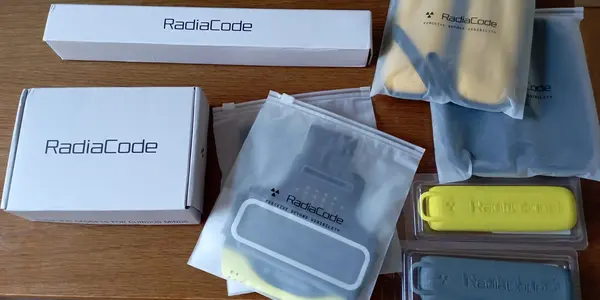
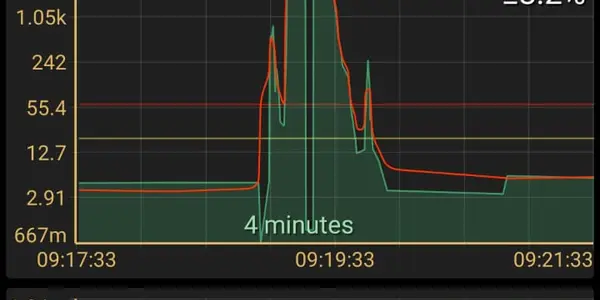
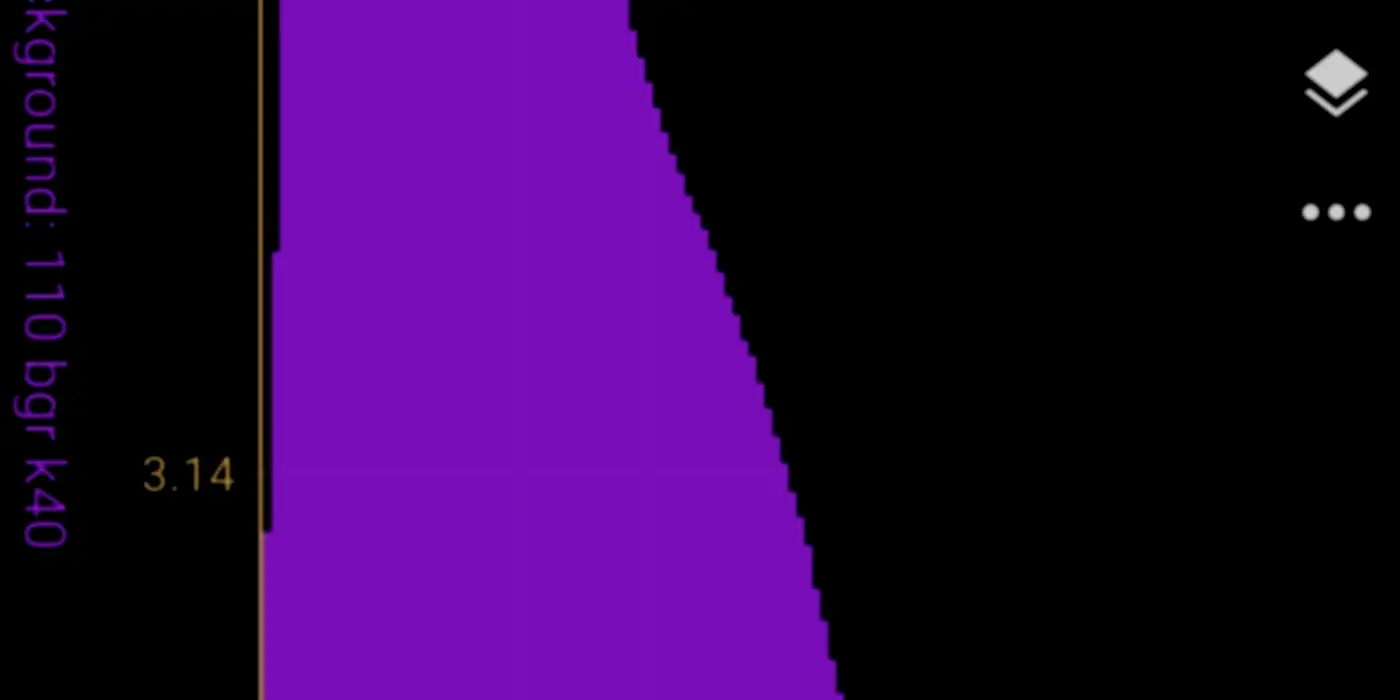
This is the second post reporting a few tests of the Radiacode 110 spectrometer, an extra-cool pocket dosimeter/radiation counter/spectrograph sold by RadiaCode.
This is the second post reporting a few tests of the Radiacode 110 spectrometer, an extra-cool pocket dosimeter/radiation counter/spectrograph sold by RadiaCode.


One of the few physics measurements that the LHC experiments are already in the position of producing, with the week-worth of proton-proton collision data they have collected last December, is that of the Bose-Einstein intereference between identical bosons.

There are twenty-four elementary fermions in the standard model. Sure, they are arranged in a very tidy, symmetrical structure of three families of eight fermions (two leptons and six quarks), which is not too unpleasant to behold. And of course, if one is willing to forget the fact that the quantum-chromodynamical charge of quarks does make them different, then the picture is even tidier: 12 fermions, six of them quarks and six of them leptons, arranged in three families of four.

One of the positive side-effects of preparing a seminar is being forced to get up-to-date with the latest experimental and theoretical developments on the topic. And this is of particular benefit to lazy bums like myself, who prefer to spend their time playing online chess than reading arxiv preprints.It happened last week, in the course of putting together a meaningful discussion of the state of the art in global electroweak fits to standard model observables, and their implications for the unknown mass of the Higgs boson: by skimming the hep-ph folder I found a very recent paper by a colleague in Padova, which I had shamefully failed to notice in the last couple of careless visits.

This morning, upon leaving Brussels to go back home after my seminar in Louvain-la-Neuve, my attention was caught by a big green banner hanging from a tall building at Place Schuman. It said "Safe Internet Day" and below, in smaller fonts, "think before you blog". I found it inspiring.A blog, if used correctly, is a very nice tool which enhances one's possibility to express one's ideas, or to do scientific outreach, as in my case. It may also be used for self-promotion at times (and the opportunity does not escape me, although I try to self-contain these outbursts). But a blog, if it attracts traffic, may become also a dangerous instrument, which must be handled with care.
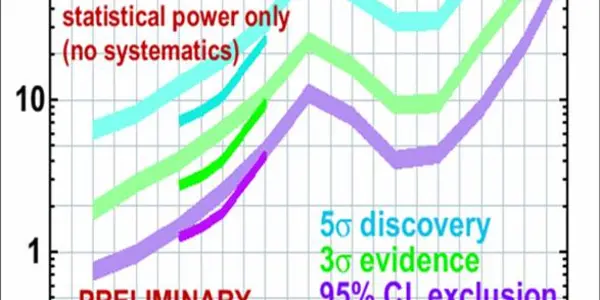
To see the future, you must know the past: these nine words nicely summarize a syllogism which knows few exceptions. Turning to known data to check the power of one's extrapolations is a quite well-founded scientific approach. So if we are to try and guesstimate how much will the CDF and DZERO experiments manage to deliver in the next few years, we must check how well they delivered this far, by comparing results with early expectations. But why bother ? Well, of course because there is a real challenge on: bookmakers need to tune the odds they offer!Fermilab versus CERN
Last Friday I was in Pisa, at the Scuola Normale Superiore (see picture), where italian members of the CMS Collaboration gathered for two days to discuss the status of their studies, exchange ideas, and try to coalesce common analysis efforts.

W bosons are amazingly interesting objects. Almost thirty years after their discovery -by Carlo Rubbia and his collaborators of the UA1 experiment at CERN- they continue to provide critical information on the theory of electroweak interactions. The front of particle physics has moved quite a bit further from 1983, and yet the weapons we use todat to try and conquer unexplored land have not changed much. Today I wish to summarize one particular search that has been done by the CDF experiment at the Tevatron proton-antiproton collider, one which tries to catch W bosons as they decay in a very uncommon way.
A weekly visit to the Cornell Arxiv is more than enough for a physicist like me, since my daily work is not affected too much by whatever happens to be published there. Oftentimes, when I browse the contents of hep-ph (the folder containing preprints on particle phenomenology) I do not end up actually reading any papers, and limit myself to "sniffing" what is going on, by looking at the titles and author names. But at times I venture to browse through the pages, with mixed results.
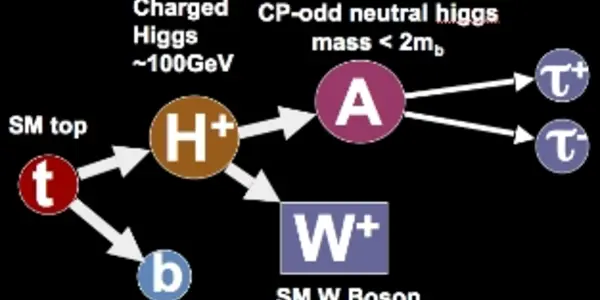
I have no energy today to put together a detailed discussion of a brand new, exciting search for supersymmetric Higgs boson performed in data collected by the CDF experiment at the Tevatron proton-antiproton collider. All I can do for you is to show the interesting result of the search, and give you some very general ideas of what this is and why it is interesting. Maybe tomorrow or Saturday I will be able to pay more justice to the analysis.
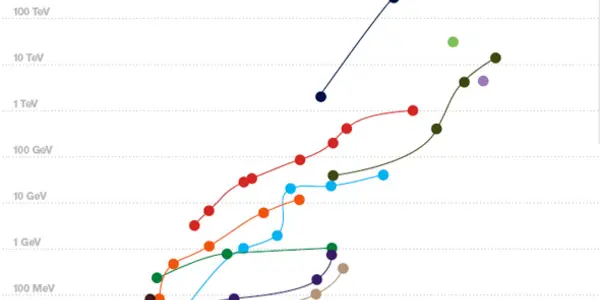
2010 has just started with the best auspices to bring us exciting new science, and there comes a pledge to forecast what will happen in 2020. Oh, well - rest is not what I became a scientist for.Making non-trivial predictions today for how will basic research be in subnuclear physics ten years down the line is highly non-trivial. For exactly the opposite reason that it is equally hard in several other fields of research.
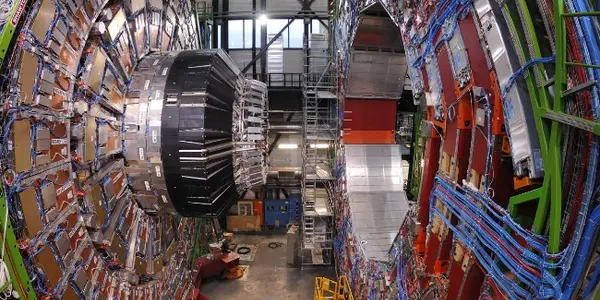
The success of today's particle physics experiments relies to a surprisingly large extent on a seldom told functionality of the giant apparata that detect the faint echoes of subatomic particles hitting or punching through their sensitive regions: the capability of triggering.

The CDF Collaboration has recently produced a new analysis of proton-antiproton collisions at the now second-world-best collision energy of 1.96 TeV. They searched for very rare decays of the B mesons, particles composed of, would you guess, a b-quark and a lighter partner orbiting around each other.