More on Radiacode 110
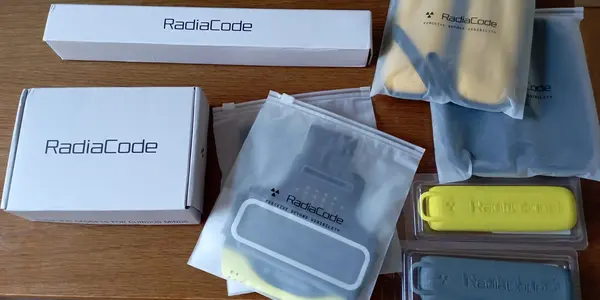
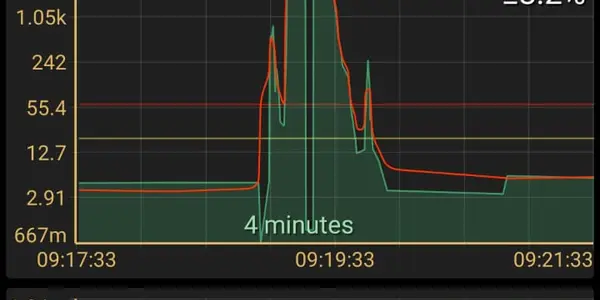
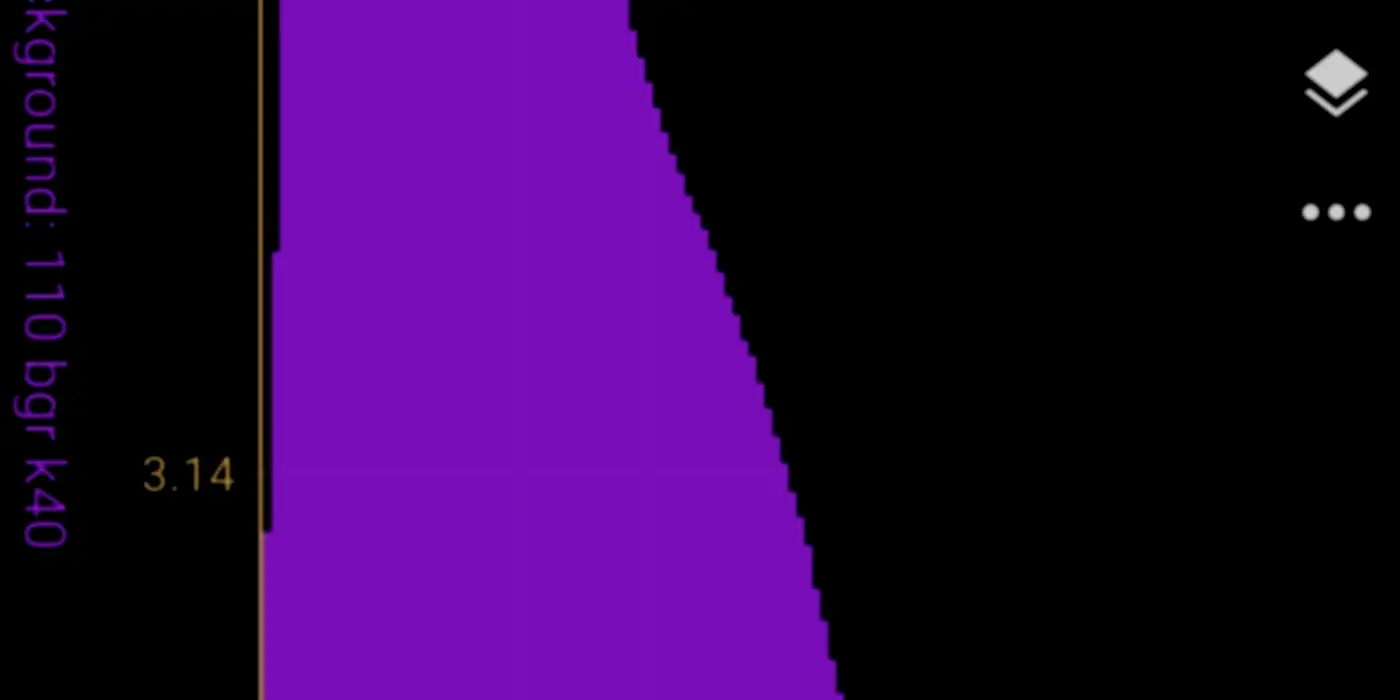
This is the second post reporting a few tests of the Radiacode 110 spectrometer, an extra-cool pocket dosimeter/radiation counter/spectrograph sold by RadiaCode.
This is the second post reporting a few tests of the Radiacode 110 spectrometer, an extra-cool pocket dosimeter/radiation counter/spectrograph sold by RadiaCode.


Do you really care about the human race ? I do, and probably I do more than you do. Well, not more than you, maybe -I do not know you personally!-; but I know where you come from: the class of human beings presently alive. And I think that most of the people on this planet just believe they care about mankind, but they actually care just about themselves.
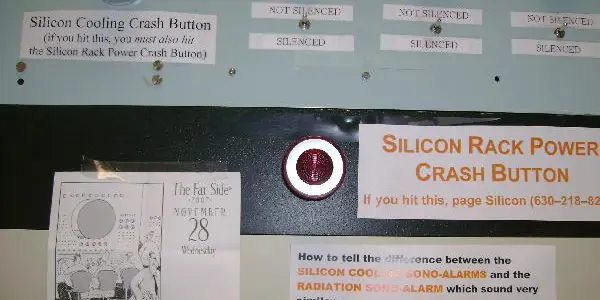
Most of us like to be in control: of what happens around us, of our own feelings, of our actions, of the actions and well-being of our beloved ones. Being in control means feeling secure, unthreatened. It is the prevalence of order on chaos. And chaos, I have grown to realize, is one of the things that scares me most. Yes, I am a true control freak.

The question of what will the next discovery at Fermilab be was asked in the thread of a recent article, and I initially answered it there, but then thought that expanding my answer makes excellent material for an independent article. Therefore, below I have tried to put together my own personal list of the places from where a unexpected new Tevatron discovery may come and hit us, in the near future.

I am spending my time in the CDF Control Room this week (seven days, from 4PM to midnight), as a Scientific Coordinator. My job is to work with my crew to ensure that the experiment collects good data as efficiently as possible. The data I am talking about is, of course, provided by our glorious accelerator, the Tevatron collider. Today I will tell you how the Tevatron is doing these days, and doing that will prepare the ground to my suggestion that you should become a fan of this wonderful machine.A short introduction
I was notified today that within three weeks I am due to write a proceedings article for the "Physics in Collision" conference I attended in Kobe two weeks ago. The task is not too stimulating for me, given that the material it has to cover just consists in projections of the discovery reach of the Higgs boson, based on simulated data; but to add unexcitement to the whole thing, I found out that I am bound to stay within the limit of two pages of text.

Today I wish to bring to your attention a figure recently obtained by the CDF collaboration, one which really tells a thousand words. Before I describe it to you, however, I would like to discuss at an elementary level a few basic concepts of particle theory which the figure well summarizes.A Crash Course on Feynman GraphsLet us start with a few elements on Feynman graphs -the diagrams that physicists use to draw on their blackboards to picture what really happens when particles react, and that actually enable the computation of the probability of those processes.

New beautiful images from the Hubble Space Telescope (HST) have been released recently, and they are, as always, a pleasure to behold. The HST was serviced in a mission by the Space Shuttle Atlantis crew last May, to replace some broken gyroscopes and drained batteries, and perform a number of additional important tasks that will allow operation to continue for many years to come.Among the new installed instruments the new HST sports an improved wide field camera, WFC3, which promises a significant improvement of the quality of telescope's imaging capabilities.

The slide below was shown yesterday at an invited talk that Antonio Masiero gave in the University of Bologna, during an open session of the CMS Physics week (see, I am careful to note I am not breaking any rules by showing material relevant to internal CMS business: the session was open!).

The CDF collaboration has recently released a study of the production of pairs of W bosons in a large bounty of proton-antiproton collisions produced by the Tevatron collider -3.6 inverse femtobarns of them, or roughly 300 trillions, give or take 6%.The measurement of the production cross section of this clean and rare electroweak process (its absolute rate, that is) is the most precise ever obtained so far, and reaches down to a level of uncertainty which cannot be improved further significantly at the Tevatron, because it is now limited by the uncertainty in the overall integrated luminosity mentioned above.
I received an interesting question today from an Alex Ziller in the comments thread of a recent post. Here it is:Do you think blogging actually improves Science? (I know, one should first define what "improving Science" actually means).I think this matter has been debated elsewhere not too long ago -where by "elsewhere" I mean "some site I sometimes visit, can't recall where". Nevertheless, I consider it a crucial question to ask, and one with several facets. Here is my short answer to Alex -of the kind of depth a comments thread is worth:

A few days ago I produced a summary of a poster I presented at Physics in Collisions this week, which dealt with the searches for the Standard Model Higgs boson that CMS will undertake, and the results it can obtain in a scenario when a certain amount of data is collected at the full design energy of the LHC.Here, instead, I wish to summarize the other poster I presented at the same venue, which concerned the combination of the most sensitive search channels, the sensitivity of CMS with a given amount of data, and the derating of its significance reach or observation power entailed by the running of LHC at a smaller-than-design beam energy. But I will do this only as a way of introducing a more interesting discussion, as you will see below.
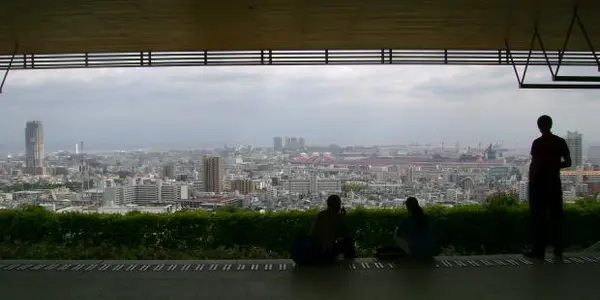
This morning I attended the first session of the Physics in Collisions conference in Kobe, which dealt with Electroweak Physics. The four talks I could listen to were all of very good quality, and I am not ashamed to say that I did learn a thing or two, despite this is a field of investigations on which I have focused for over a decade. Also, I decided that conferences featuring few, long talks are definitely better than ones which try to cram dozens of small contributions in tight schedules: at least, the session conveners are not required to play the watchdog and struggle to keep people within their allotted time, and post-talk questions and comments are actually encouraged rather than suppressed.