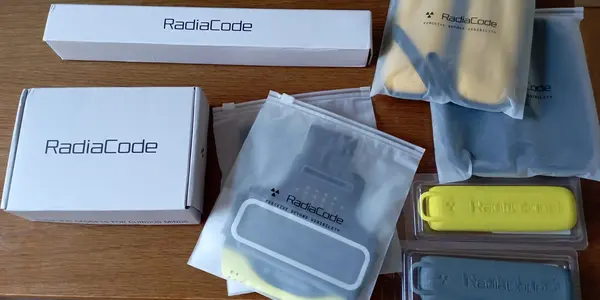
More on Radiacode 110
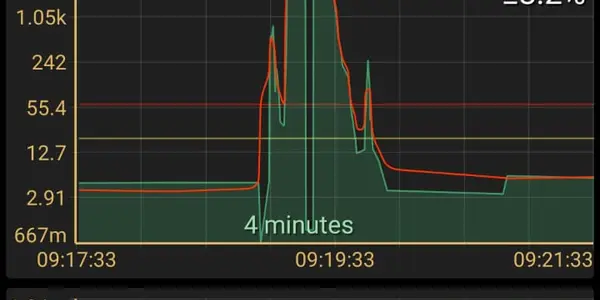
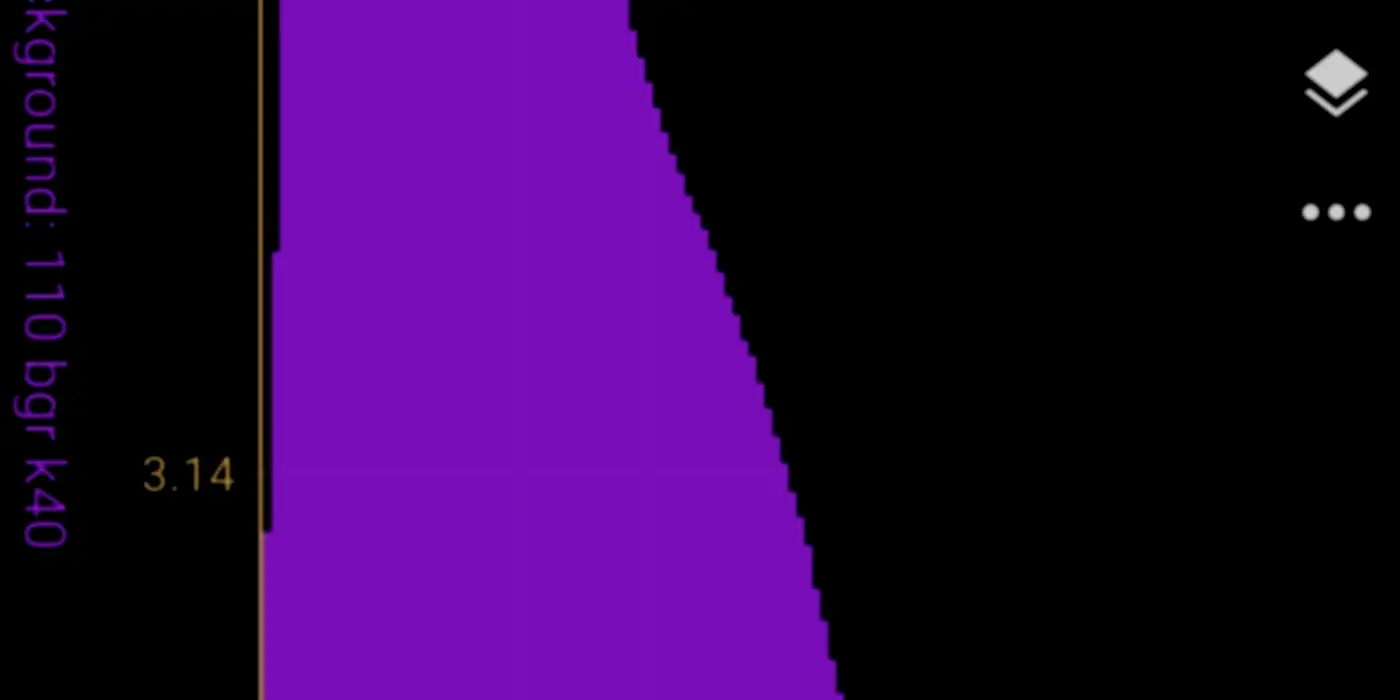
This is the second post reporting a few tests of the Radiacode 110 spectrometer, an extra-cool pocket dosimeter/radiation counter/spectrograph sold by RadiaCode.
This is the second post reporting a few tests of the Radiacode 110 spectrometer, an extra-cool pocket dosimeter/radiation counter/spectrograph sold by RadiaCode.


In a few days italian post-docs working in high-energy physics will be asked to gather for a nasty exam, held by the INFN -the italian institute for nuclear physics- to qualify valiant researchers for future hiring in the institute.The exam generated a wave of outrage among the very pool of people at which it is aimed: the scores of "precari" (temporary workers) who are spending the best years of their life to try and make a career in particle physics. Let me explain why that is so.

Below I offer a preview of the slides I will show tomorrow at an invited seminar on the rather technical topic of "The b-jet energy calibration with Z-->bb decays", which I have come to CERN to give at a meeting of the LHCb collaboration. As I mentioned already in the first part of this two-part article, the topic is rather technical, and I do not expect a large audience -but I will nonetheless make an attempt at explaining the meaning of the slides pasted below. Then, of course, I am available to provide some additional light on any specific issue among those dealt below which you may want to understand more about.
Tomorrow I am traveling to CERN, where I have been invited to give a seminar at a meeting of the LHCb experiment. My talk will discuss the issue of the energy calibration of b-quark jets, a topic to which I have devoted a good part of my research time for the last thirteen years. The talk will of course be centred on the explanation of the analysis Julien Donini and I, together with a few colleagues, performed in CDF a few years ago, the search for Z boson decays to b-quark jet pairs.
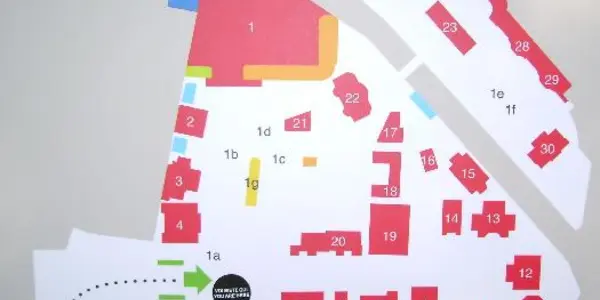
Today I visited the 53rd international art exposition at the Biennale di Venezia, which this year is titled "Fare Mondi" (making worlds). I am posting below a few pictures I took of the installations I saw there, for those of you who are not insensitive to contemporary arts. But before I do, let me add a personal note.

From 1958 to 1970 Wladimiro Dorigo, my father, directed a political and cultural magazine called "Questitalia" ("This italy"), where emerging political issues were discussed, and the ongoing transformations of Italian society were dissected by a distinguished group of intellectuals. I own a copy of all the 150 issues of that publication, and every once in a while I pick one of them out of the lot at random, and learn what Italy was 40 or 50 years ago.

It is a well-known fact that it is much easier to measure a physical quantity than to correctly assess the magnitude of the uncertainty on the measurement: the uncertainty is everything! A trivial demonstration of the above fact is the following. Consider you are measuring the mass of the top quark (why, I know you do it at least once a week, just to keep mentally fit). You could say you have no idea whatsoever of what the top mass is, but you are capable of guessing, and your best guess is that the top mass is twice the mass of the W boson: after all, you have read somewhere that the top quark decays into a W boson plus other stuff, so a good first-order estimate is 2x80.4= 160.8 GeV.

It feels good, for a die-hard sceptic like I am, to live and let unexplained phenomena die. The phenomena in question are measured deviations from the predictions of the Standard Model (SM), our wonderful theory of subnuclear interactions, which has been condemned to fail by theorists soon after its construction, but continues, disappointingly for many, to succeed in explaining experimental results.
This is going to be a rather long piece, so for the lazy and the absent-minded among you I decided to put together an executive summary at the top, and not at the bottom of the article as I usually do. It is a bit of a spoiler, but those of you who can invest some time reading about particle physics will not be deterred by the first few lines of text. Besides, an executive summary is needed because we are discussing real news here: so here it is.

This afternoon Lisa Randall, one of the most famous theoretical physicists of our time, received from the hands of Flavio Zanonato, mayor of Padova, the keys of the city.

A new paper in the Arxiv attracted my attention this morning. It is titled "Perturbative QCD effects and the search for a signal at the Tevatron", and is authored by a set of quite distinguished theorists: C.Anastasiou, G.Dissertori, M.Grazzini, F.Stockli, and B.Webber.
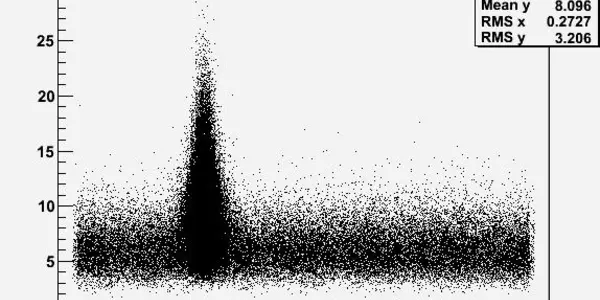
Last Tuesday CDF announced their own discovery of the Omega_b baryon, a measurement which creates a controversy with the competing experiment at the Tevatron collider, DZERO. That is because DZERO had already claimed discovery for that particle, almost one year ago, and because the two measurements disagree wildly with each other. Just browse through my past few posts in this column and you will find all the information you need (how lazy can one be with links?).