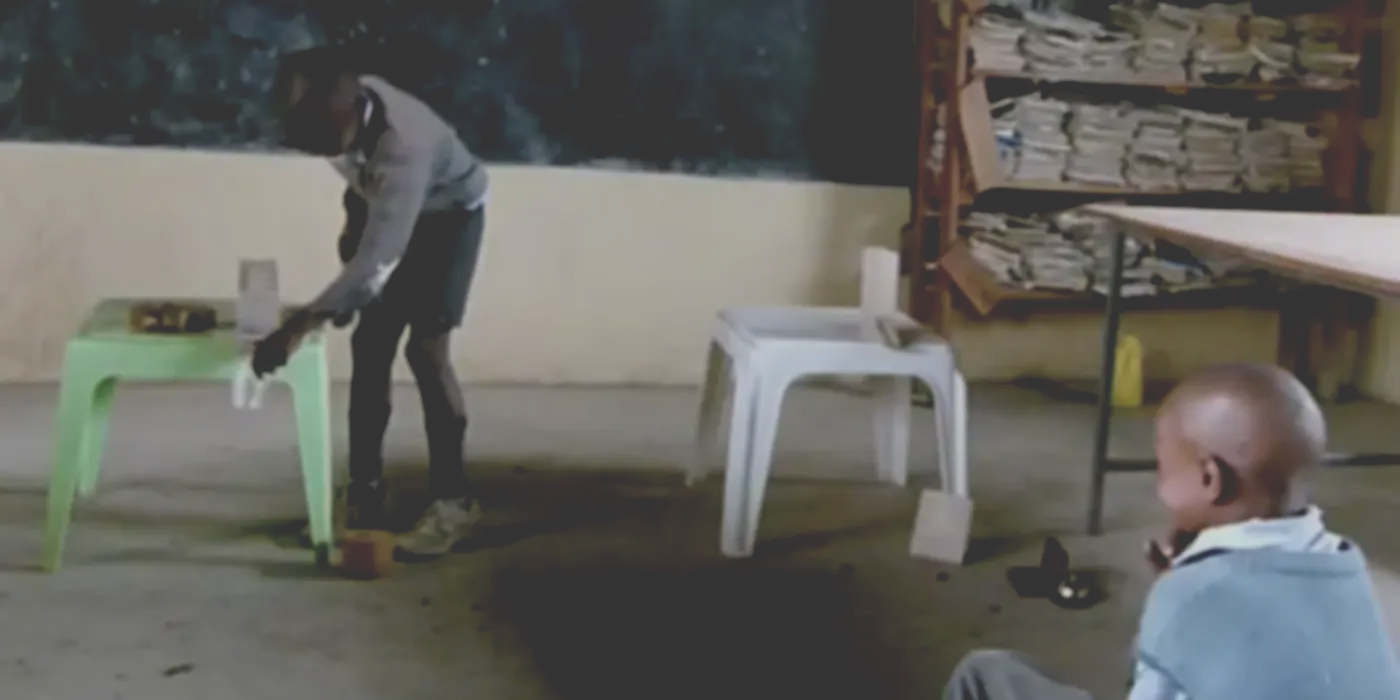
Kids Helping Kids Is Universal - But Cultures Help Differently
A simple game reveals a universal instinct in kids
A simple game reveals a universal instinct in kids


Instead of letting them mess around on the Wii or, worse, watching a "Baby Einstein" video, the way to make kids of all ages and incomes smarter could be as simple as handing them a few blocks.
Playing with blocks may help preschoolers develop the kinds of skills that support later learning in science, technology, engineering, and math (STEM), according to a new study.
More than a hundred 3-year-olds of various socioeconomic levels took part in the study. Children who were better at copying block structures were also better at early math, the study found. Among the skills tested were whether children could figure out that a block belongs above or below another block and whether they aligned the pieces.

Streamers may be great for decorating a child's party, but in dielectrics they are the primary origin of electric breakdown and can cause catastrophic damage to electrical equipment, harm the surrounding environment, and lead to large-scale power outages.
Understanding streamers and the mechanisms behind their initiation, acceleration and branching is necessary to devise better solutions to avoid them. A team of researchers at MIT have developed an accurate 3-D model of streamer propagation that qualitatively and quantitatively describes the streamer development, an advance that may impact applications such as medical imaging, aerospace engineering, power transmission, atmospheric sensing, natural sciences, sensing technologies and large-scale industry.

After 12 weeks of strength training, people over the age of 90 improved not only their strength, power and muscle mass, but also showed an improvement in their balance, their walking speed and developed a greater capacity to get out of their chairs, according to new study.
A little-used class of FDA-approved antidepressants appears potentially effective in combating a particularly deadly form of lung cancer, according to a new study from researchers at the Stanford University School of Medicine.
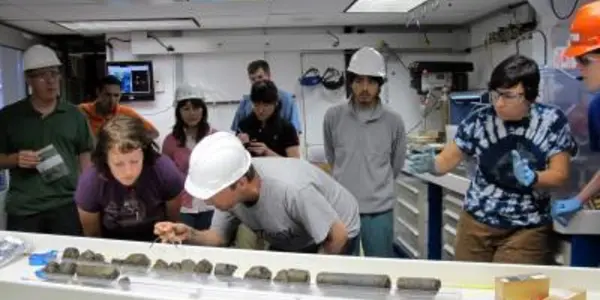
The bottom of the deep ocean is not the most hospitable place in the world, but it is not devoid of life either.
Scientists have recently documented that oxygen is disappearing from seawater circulating through deep oceanic crust, a possible step in understanding the way life in the "deep biosphere" beneath the sea floor is able to survive and thrive.

Previous research into genetic variants has shown that dancers really are different than most people and a new neuroscience study sheds some light on ballet brains as well.
Differences in the brain structure of ballet dancers may help them avoid feeling dizzy when they perform pirouettes - and that ability to suppress signals from the balance organs in the inner ear can happen as a result of training, which could help to improve treatment for patients with chronic dizziness.
Native small mammals on forest islands created by a large hydroelectric reservoir in Thailand faced extinction and a new paper says species living in rainforest fragments could be far more likely to disappear than was previously thought.
The authors draw parallels between logging and the islands created by hydroelectric power and say they were motivated by a desire to understand how long species can live in forest fragments. If they persist for many decades, this gives conservationists a window of time to create wildlife corridors or restore surrounding forests to reduce the harmful effects of forest isolation.
The first rock that scientists analyzed on Mars with a pair of chemical instruments aboard the Curiosity rover turned out to be a doozy – a pyramid-shaped volcanic rock called a "mugearite" that is unlike any other Martian igneous rock ever found.
Dubbed "Jake_M" – after Jet Propulsion Laboratory engineer Jake Matijevic – the rock is similar to mugearites found on Earth, typically on ocean islands and in continental rifts. The process through which these rocks form often suggests the presence of water deep below the surface, according to Martin Fisk, an Oregon State University marine geologist and member of the Mars Science Laboratory team.
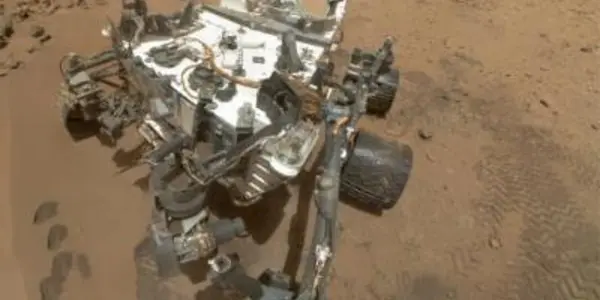
The first scoop of soil analyzed by the analytical suite in the belly of NASA's Curiosity rover reveals that fine materials on the surface of the planet contain several percent water by weight.
The quest for evidence of life on Mars could be more complicated than previously thought due to perchlorate,, a salt comprised of chlorine and oxygen, that interferes with the techniques used by the Curiosity rover to test for traces of life. The chemical causes the evidence to burn away during the tests.
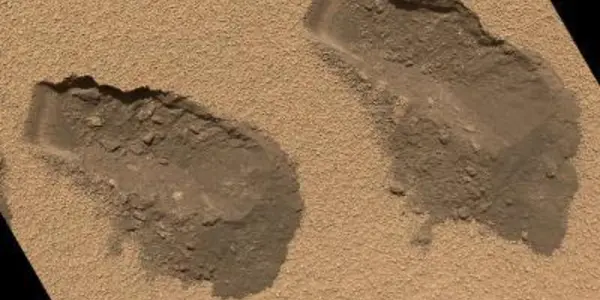
NASA's Curiosity Rover has sampled a surprising diversity of soils and sediments along a half-kilometer route during its first few months on Mars. And what it has found tells a complex story about the gradual desiccation of the Red Planet.
Perhaps most notable among findings from the ChemCam team is that all of the dust and fine soil contains small amounts of water.
In a series of papers covering the rover's top discoveries during its first three months on Mars, the rover's ChemCam instrument team up with an international cadre of scientists affiliated with the CheMin, APXS, and SAM instruments to describe the planet's seemingly once-volcanic and aquatic history.

Reports of a new hepatitis virus earlier this year were a false alarm, according to U.C. San Francisco researchers who correctly identified the virus as a contaminant present in a type of glassware used in many research labs.
The finding highlights both the promise and peril of today’s powerful “next-generation” lab techniques that are used to track down new agents of disease.