Enzyme USP15 Limits Ovarian Cancer Cells And Boosts Chemotherapy
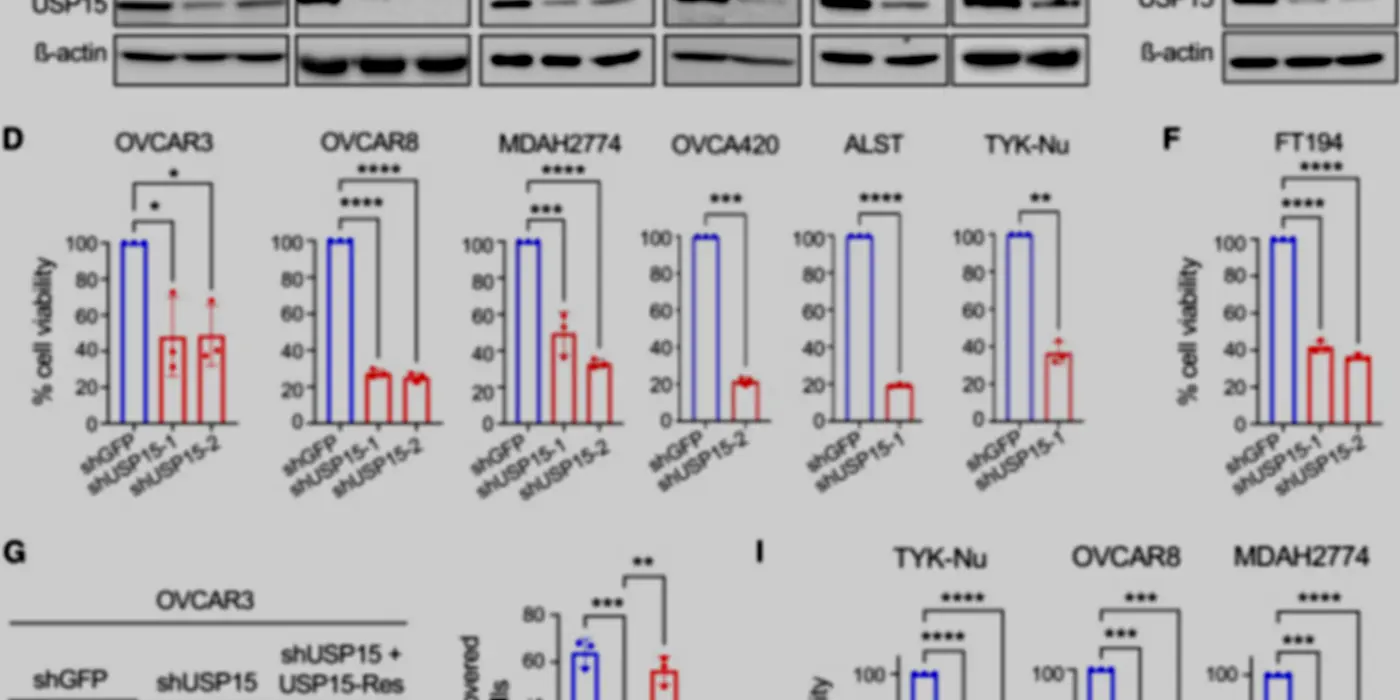
Ovarian cancer is devastating, five-year survival rate under 30%, when detected after it has spread. New basic research may improve that.
Ovarian cancer is devastating, five-year survival rate under 30%, when detected after it has spread. New basic research may improve that.


Older people who suffer "mental lapses," or episodes when their thinking seems disorganized or illogical, may be more likely to develop Alzheimer's disease than people who do not have these lapses, according to a study published in the January 19, 2010, issue of Neurology.These cognitive fluctuations, are common in a type of dementia called dementia with Lewy bodies, but researchers previously did not know how frequently they occurred in people with Alzheimer's disease and, equally important, what effect fluctuations might have on their thinking abilities or assessment scores.
Though it's commonly thought that most opioid overdoses occur among drug abusers and people who obtain the drugs illegally, a new study published in the Annals of Internal Medicine links the risk of fatal and nonfatal opioid overdose to prescription use—strongly associating the risk with the prescribed dose.
People who experience trauma in childhood are more likely to pick up dangerous habits like smoking and contract lung cancer later in life as a result, say the authors of a new study in BMC Public Health. The researchers note, however, that the link is only partly explained by raised rates of cigarette smoking in victims of childhood trauma, suggesting that other factors may also be to blame.Adverse event information was collected from 17,337 people between 1995 and 1997. Brown and his colleagues followed up on the medical records of these same people to study lung cancer rates in 2005.
Using proteosome inhibitors to trick cells into producing a chaperone protein called Hsp70 may be one way of enhancing the natural ability of cells to restore their own mutant proteins. Researchers at the Fox Chase Cancer Center say the discovery may help treat certain debilitating – or even fatal – genetic diseases.
New technology developed by researchers at the Fraunhofer Institute in Sankt Augustin, Germany may soon help consumers save energy by allowing them to track which devices in their homes are using the most energy. The basis for the technology is the "Hydra" middleware,which is extended by an energy protocol. A middleware reduces the workload of programmers: in Hydra's case, by administering the communication between devices.Each device in the home is given a power plogg, which is a small adapter located between the power plug and the power outlet. It reports the power consumption at any given time to a PC via a radio signal. People can tell which device is guzzling the most energy by taking a look at the computer monitor.
A new study conducted by Loyola University researchers could lead to new treatments for skin cancer that would shrink the tumors with a class of drugs called protein kinase inhibitors. The drugs would work by turning on a gene called protein kinase C (PKC), which prevents skin cells from becoming cancerous, said senior author Mitchell Denning, Ph.D. The study was published today in the Journal of Biological Chemistry.More than 1 million people in the United States are diagnosed with skin cancer each year. In the new study, researchers examined a type of skin cancer, called squamous cell carcinoma, which accounts for between 200,000 and 300,000 new cases per year.
What we learn from our siblings when we grow up has a considerable influence on our social and emotional development as adults, according to researchers from the the University of Illinois and the University of California, Davis. The team says that a clearer understanding of how siblings function as "agents of socialization" will help answer critical societal questions such as why some children pursue antisocial behavior. Their volume on the subject appears in a recent issue of New Directions for Child and Adolescent Development.
Cancer-initiating stem cells that launch glioblastoma multiforme, the most lethal type of brain tumor, also suppress an immune system attack on the disease, say scientists from The University of Texas M. D. Anderson Cancer Center. In a paper featured in the Jan. 15 issue of Clinical Cancer Research, the researchers demonstrate that this subset of tumor cells stifles the immune response in a variety of ways, but that the effect can be greatly diminished by encouraging the stem cells to differentiate into other types of brain cell.
Writing in Psychological Sciences, researchers from New York University and Cornell University say they've demonstrated that our desires influence how we see our environments. According to the new research, we view things we want as being physically closer to us than they actually are. The authors say this bias exists to encourage us to pursue things that we want by making them appear close. When we see a goal as being close to us (literally within our reach), it motivates us to keep on going to successfully attain it.
People's tendency to match their risk perceptions about policy issues with their cultural values may explain the intense disagreement over proposals to vaccinate young girls against human-papillomavirus (HPV), according to a new study in Law and Human Behavior. The study also indicates people's values shape their perceptions of expert opinion on the vaccine.
Children have a reputation for driving their parents crazy, so chances are that most people don't become parents for the health benefits. But maybe they should. According to a study conducted by researchers at Brigham Young University, raising children is associated with lower blood pressure, particularly so among women.

Air flows in one direction as it loops through the lungs of alligators, just as it does in birds, and this breathing method may have helped the dinosaurs' ancestors dominate Earth after the planet's worst mass extinction 251 million years ago, according to scientists from the University of Utah.