Enzyme USP15 Limits Ovarian Cancer Cells And Boosts Chemotherapy
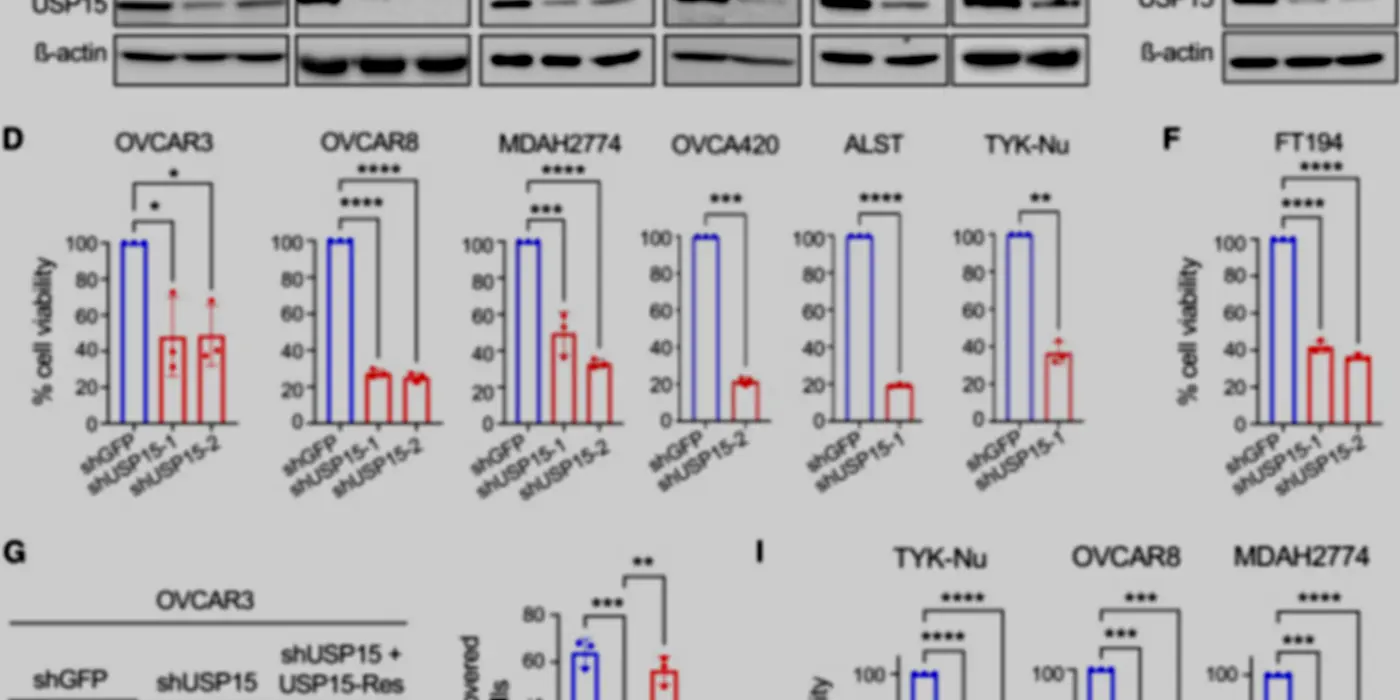
Ovarian cancer is devastating, five-year survival rate under 30%, when detected after it has spread. New basic research may improve that.
Ovarian cancer is devastating, five-year survival rate under 30%, when detected after it has spread. New basic research may improve that.


Citizen scientists working through an online project called Galaxy Zoo have discovered a group of rare galaxies called the "Green Peas" which could lend unique insights into how galaxies form stars in the early universe.Galaxy Zoo users volunteer their spare time to help classify galaxies in an online image bank. When they came across a number of objects that stuck out because of their small size and bright green color, they dubbed them the Green Peas. Employing the help of the volunteers to further analyze these strange new objects, the astronomers discovered that the Green Peas are small, compact galaxies forming stars at an incredibly high rate.

Millions of children, as many as 2% of all births in the U.S. and Europe, have been born to couples with fertility problems through assisted reproductive techniques such as in vitro fertilization (IVF). Because it is a newer field, relatively little research has been conducted to evaluate the long term effects of assisted reproductive techniques. Research presented at the Annual Meeting of the Society for the Study of Ingestive Behavior (SSIB) says that assisted reproductive techniques alter the expression of genes that are important for metabolism and the transport of nutrients in the placenta of mice.
Abandoned mine shafts could be used to provide geothermal energy to local towns, say two engineers from the University of Oviedo in the journal Renewable Energy. They say the method they have developed makes it possible to estimate the amount of heat that a tunnel could potentially provide.Rafael Rodríguez, from the Oviedo Higher Technical School of Mining Engineering and colleague María Belarmina Díaz have developed a "semi-empirical" method (part mathematical and part experimental) to calculate the amount of heat that could be produced by a mine tunnel that is due to be abandoned, based on studies carried out while it is still in use.
Switching off a key DNA repair system, Xrcc1 , in the developing nervous system was linked to smaller brain size as well as problems in brain structures vital to movement, memory and emotion in new research.The study in Nature Neuroscience also provided the first evidence that cells known as cerebellar interneurons are targeted for DNA damage and are a likely source of neurological problems in humans. The cerebellum coordinates movement and balance. The cerebellar interneurons fine tune motor control.

We know how oil and natural gas deposits were created; living organisms died, were compressed, and heated under heavy layers of sediments in the Earth's crust.Scientists have debated for years whether some of these hydrocarbons could also have been created deeper in the Earth and formed without organic matter. Now scientists say they have found that ethane and heavier hydrocarbons can be synthesized under the pressure-temperature conditions of the upper mantle; the layer of Earth under the crust and on top of the core.

Researchers at TU Delft have succeeded in measuring the influence of a single electron on a vibrating carbon nanotube. That can be a real milestone on the road to ultra-small measuring instruments.Researchers in the Kavli Institute for Nanoscience at TU Delft basically suspended a carbon nanotube, comparable in size to an ultra-small violin string, and then applied an alternating electric field to the nanotube using an antenna.
Metabolic conditions and immunologic conditions rarely coincide but a group of papers appearing in Nature Medicine have linked type 2 diabetes with immunology in an intriguing way. In the first study, researchers used two common over-the-counter allergy medications, Zaditor and cromolyn, to reduce both obesity and type 2 diabetes in mice. Zaditor and cromolyn stabilize a population of inflammatory immune cells called mast cells.
In America, there is a debate over 'high risk, high reward' independent research versus Big Science - largescale science projects usually being done by taxpayer funded grants to large universities and basic research primarily being done in the private sector. Germany tries to have government funding for both and prof. Manfred Bayer from TU Dortmund recently got a $2 million grant to do work in ultrafast acoustics.Ultrafast acoustics first began to get serious research over 20 years ago at General Motors(1). The basic concept is that sub-picosecond optical pulses generate longitudinal acoustic pulses with frequencies of 100 GHz and up. As a thin metal film is hit with alaser pulse, it reacts with a “breathing movement”: it expands and then it contracts.

If you were a linguist, how would you accurately describe 'click' sounds distinct to certain African languages? It's no easy task but in order to accurately preserve a language like N|uu, which has fewer than 10 remaining speakers (and all over age 60) linguists have to be able to document.Cornell University professor Amanda Miller and colleagues recently used high-speed, ultrasound imaging of the human tongue to precisely categorize sounds produced by the N|uu language speakers of southern Africa's Kalahari Desert, a step toward understanding the physics of speech production.

Think University of Nottingham students enjoy a pint on occasion? It's a safe bet, since the school is putting in a fully-functioning brewery, and brewing must be a key contributor to the East Midlands economy since it boasts some 78 small or medium sized micro-breweries.
Everyone is concerned about dwindling fossil fuel resources and current levels of petroleum consumption but pressure to shift to more sustainable energy sources has led to lobbyists and bigger government programs, not a better environment.The best approach may be suited to regional conditions - some areas may use solar, some wind or geothermal, some nuclear. There won't be a knockout technology that is a good fit for everyone. What wind, solar, and geothermal power need to be useful to the masses is conversion into appropriate forms for distributing electricity. Electric power can already be distributed efficiently but conversion is necessary for use in automobiles and large-scale storage is problematic.
As antibiotic resistances continue evolve in a smaller world they become a more difficult problem to eradicate.Acquisition of mutations is one of the ways by which bacteria become resistant to antibiotics. But this comes with a cost: although crucial for bacteria survival in a medium with antibiotics, in its absence bacteria growth rate is reduced. Although it is not possible to impaired bacteria to evolve and adapt to the environment, it is possible to choose the type of selective pressure (antibiotics) to administrate and, in this way, alter the course of evolution to our favor.A new study shows the importance of knowing the costs of multi-resistance to find the best antibiotic combinations - the ones that carry more costs to the bacteria.