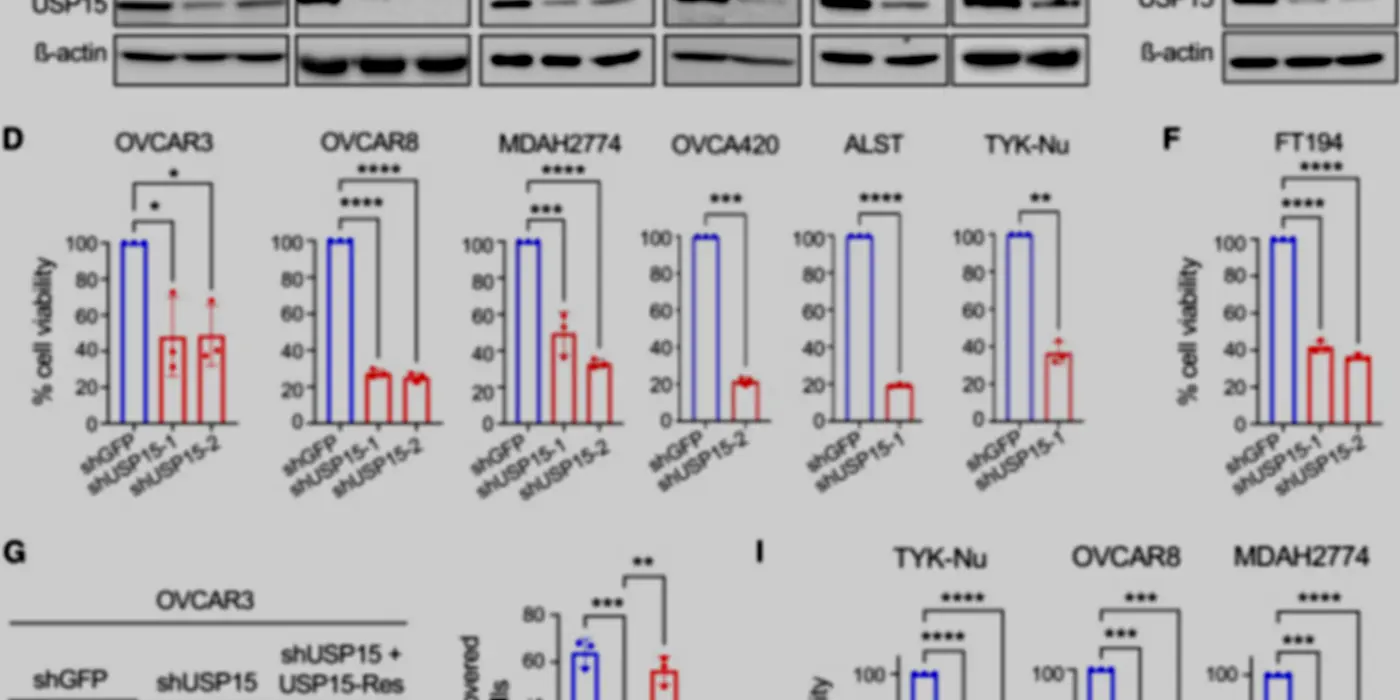
Enzyme USP15 Limits Ovarian Cancer Cells And Boosts Chemotherapy
Ovarian cancer is devastating, five-year survival rate under 30%, when detected after it has spread. New basic research may improve that.
Ovarian cancer is devastating, five-year survival rate under 30%, when detected after it has spread. New basic research may improve that.


A new class of antibody drugs may help in treatment of childhood eye diseases but specialists need to be alert for the possibility of serious side effects, according to an editorial in the August Journal of American Association for Pediatric Ophthalmology and Strabismus (AAPOS).In the editorial, Dr. Robert L. Avery discusses issues related to the use of antibodies against vascular endothelial growth factor (VEGF) in pediatric ophthalmology.
Don't chew someone else's food if you have HIV or AIDS? Sure, that sounds like common sense but lots of things that seem like common sense to some are abstract to others - try explaining geodesics, Euclidean geometry and spacetime to people who just need a gas station and want to know the quickest route.But science does studies so common sense can be science rather than urban myth so researchers have verified cases in which HIV was almost certainly transmitted from mothers to children through pre-chewed food.
Your mother, despite lacking an expensive lab studying phytochemicals or a PhD (well, for most of us anyway) told you that carrots would help you see better. And she was right, but purple carrots here and there may be even better for you because they have anthocyanins.But carrots are not the only way to go, it turns out. New research suggests that a diet high in omega-3 fatty acids may help prevent one of the leading causes of legal blindness among the elderly.
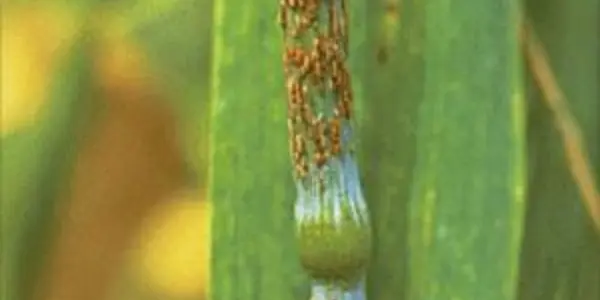
A deadly new airborne wheat rust disease threatens wheat production and food security throughout Afghanistan. The disease also threatens the region that stretches east across neighboring Pakistan and into India.
Often the topic of controversy, stem cells research has once again proved itself necessary. University of Florida researchers were able to program bone marrow stem cells to repair damaged retinas in mice. The success in repairing a damaged layer of retinal cells in mice implies that blood stem cells taken from bone marrow can be programmed to restore a variety of cells and tissues, including ones involved in cardiovascular disorders such as atherosclerosis and coronary artery disease.
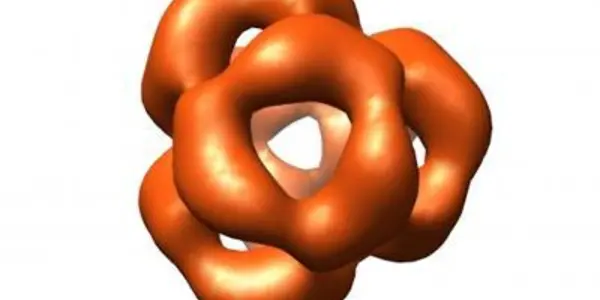
The human eye lens consists of a highly concentrated mix of several proteins. Protective proteins keep them from aggregating and clumping. If this protection fails, the lens blurs and the patient develops cataracts. Two research groups at the Department of Chemistry of the Technische Universitaet Muenchen (TUM) have succeeded in explaining the molecular architecture of this kind of protective protein. Their findings, which are published in PNAS (Proceedings of the National Academy of Sciences).
The effects of amphetamines on gene expression in zebrafish have been discovered. This new study, published in BioMed Central's open access journal Genome Biology, provides clues to the genetics that underlie susceptibility to addiction by describing the nad zebrafish mutant, which does not feel the rewarding effects of the drugs.
Ever since graphene was discovered in 2004, this one-atom thick, super strong, carbon-based electrical conductor has been billed as a "wonder material" that some physicists think could one day replace silicon in computer chips.But graphene, which consists of carbon atoms arranged in a honeycomb lattice, has a major drawback when it comes to applications in electronics: it conducts electricity almost too well, making it hard to create graphene-based transistors that are suitable for integrated circuits. In Physics World, Kostya Novoselov--a condensed-matter physicist from Manchester University--explains how their discovery of graphane, an insulating equivalent of graphene, may prove more versatile.
Stem cell researchers trying to understand the mechanisms that determine whether stem cells divide or differentiate, and what types of cells they become and how to control them to develop new treatments, may have gotten some much needed help. Investigators at the Burnham Institute for Medical Research (Burnham) and The Scripps Research Institute (TSRI) have made a comparative, large-scale phosphoproteomic analysis of human embryonic stem cells (hESCs) and their differentiated derivatives. The study was published in the journal Cell Stem Cell.

Comets contained vast oceans of liquid water in their interiors during the first million years of their formation, argue Professor Chandra Wickramasinghe and colleagues at the Cardiff Centre for Astrobiology in a paper published in the International Journal of Astrobiology. The watery environment of early comets, together with the vast quantity of organics already discovered in comets, would have provided ideal conditions for primitive bacteria to grow and multiply, they say.
Previously thought to be indivisible, with negative charge for all, the electron is one of the fundamental building blocks of nature. A new experiment, however, has shown that electrons, if crowded into narrow wires, are seen to split apart. The electron is responsible for carrying electricity in wires and for making magnets. These two properties of magnetism and electric charge are carried by electrons which seem to have no size or shape and are impossible to break apart.
There has long been an on-again, off-again debate about the health effects of red wine. Is it killing our liver or is it preventing the next pandemic? It appears scientists from Scotland and Singapore have answered this question.Red wine is healthy because the resveratrol it contains controls inflammation. But how? New research published in the August 2009 print issue of The FASEB Journal (http://www.fasebj.org), not only explains resveratrol's one-two punch on inflammation, but also show how it—or a derivative—can be used to treat potentially deadly inflammatory disease, such as appendicitis, peritonitis, and systemic sepsis.