You Feel Colder As You Age: The Science Reason Why
Older people report feeling colder, enough that it is clearly happening, but why has been a mystery. Until now.
Older people report feeling colder, enough that it is clearly happening, but why has been a mystery. Until now.


Often the topic of controversy, stem cells research has once again proved itself necessary. University of Florida researchers were able to program bone marrow stem cells to repair damaged retinas in mice. The success in repairing a damaged layer of retinal cells in mice implies that blood stem cells taken from bone marrow can be programmed to restore a variety of cells and tissues, including ones involved in cardiovascular disorders such as atherosclerosis and coronary artery disease.
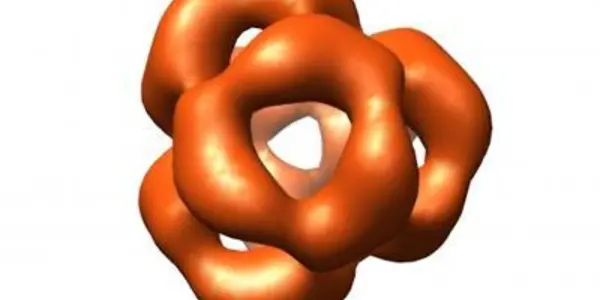
The human eye lens consists of a highly concentrated mix of several proteins. Protective proteins keep them from aggregating and clumping. If this protection fails, the lens blurs and the patient develops cataracts. Two research groups at the Department of Chemistry of the Technische Universitaet Muenchen (TUM) have succeeded in explaining the molecular architecture of this kind of protective protein. Their findings, which are published in PNAS (Proceedings of the National Academy of Sciences).
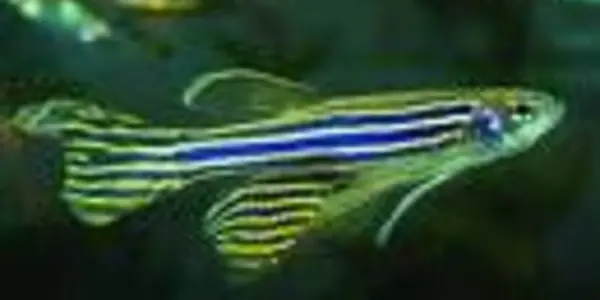
The effects of amphetamines on gene expression in zebrafish have been discovered. This new study, published in BioMed Central's open access journal Genome Biology, provides clues to the genetics that underlie susceptibility to addiction by describing the nad zebrafish mutant, which does not feel the rewarding effects of the drugs.
Ever since graphene was discovered in 2004, this one-atom thick, super strong, carbon-based electrical conductor has been billed as a "wonder material" that some physicists think could one day replace silicon in computer chips.But graphene, which consists of carbon atoms arranged in a honeycomb lattice, has a major drawback when it comes to applications in electronics: it conducts electricity almost too well, making it hard to create graphene-based transistors that are suitable for integrated circuits. In Physics World, Kostya Novoselov--a condensed-matter physicist from Manchester University--explains how their discovery of graphane, an insulating equivalent of graphene, may prove more versatile.
Stem cell researchers trying to understand the mechanisms that determine whether stem cells divide or differentiate, and what types of cells they become and how to control them to develop new treatments, may have gotten some much needed help. Investigators at the Burnham Institute for Medical Research (Burnham) and The Scripps Research Institute (TSRI) have made a comparative, large-scale phosphoproteomic analysis of human embryonic stem cells (hESCs) and their differentiated derivatives. The study was published in the journal Cell Stem Cell.

Comets contained vast oceans of liquid water in their interiors during the first million years of their formation, argue Professor Chandra Wickramasinghe and colleagues at the Cardiff Centre for Astrobiology in a paper published in the International Journal of Astrobiology. The watery environment of early comets, together with the vast quantity of organics already discovered in comets, would have provided ideal conditions for primitive bacteria to grow and multiply, they say.
Previously thought to be indivisible, with negative charge for all, the electron is one of the fundamental building blocks of nature. A new experiment, however, has shown that electrons, if crowded into narrow wires, are seen to split apart. The electron is responsible for carrying electricity in wires and for making magnets. These two properties of magnetism and electric charge are carried by electrons which seem to have no size or shape and are impossible to break apart.
There has long been an on-again, off-again debate about the health effects of red wine. Is it killing our liver or is it preventing the next pandemic? It appears scientists from Scotland and Singapore have answered this question.Red wine is healthy because the resveratrol it contains controls inflammation. But how? New research published in the August 2009 print issue of The FASEB Journal (http://www.fasebj.org), not only explains resveratrol's one-two punch on inflammation, but also show how it—or a derivative—can be used to treat potentially deadly inflammatory disease, such as appendicitis, peritonitis, and systemic sepsis.

Plancks Law is a well-established physical law describes the transfer of heat between two objects.Some physicists have predicted that the law should break down when the objects are very close together but scientists had never been able to confirm, or measure, this breakdown in practice. MIT researchers say they have now done it but that the heat transfer can be 1,000 times greater than the law predicts. The new findings could lead to better design of recording heads of the hard disks used for computer data storage,and new kinds of devices for harvesting energy from heat that would otherwise be wasted.
A University of Exeter research team recently tested squirrels' ability to learn to choose between two pots of food after watching another squirrel remove a nut from one of the pots.One group was rewarded for choosing the same pot as the previous squirrel, the second group was rewarded for targeting the other pot. Those that were rewarded for choosing food from the other pot learned more quickly than those that were rewarded for choosing the same pot. This suggests that grey squirrels learn more quickly to recognize the absence of food.
Future biology may rely more heavily on ancient math - namely algebra - according to researchers at Sweet Briar College and the Virginia Bioinformatics Institute (VBI) at Virginia Tech.Future generations of biologists will routinely use mathematical and computational approaches to develop and frame hypotheses, design experiments, and analyze results. Sound mathematical models are essential for this purpose and are currently used in the field of systems biology to understand complex biological networks.
If you're an ordinary, law-abiding citizen in the UK, you can't own a gun. So who owns them? Criminals, of course, making crimes easier to commit. But it isn't just organized crime and the assumption that gangs are most often at the root of gun crime in the UK is overstated, according to a study published today in Criminology and Criminal Justice. In their paper, professor Simon Hallsworth and Dr Daniel Silverstone suggest that while gangs certainly exist, they are not involved in most illegal shootings.In one of the largest studies examined, the Home Office conducted 80 structured interviews with young people involved with weapons, visiting UK cities with high levels of gun crime and penal establishments.