Enzyme USP15 Limits Ovarian Cancer Cells And Boosts Chemotherapy
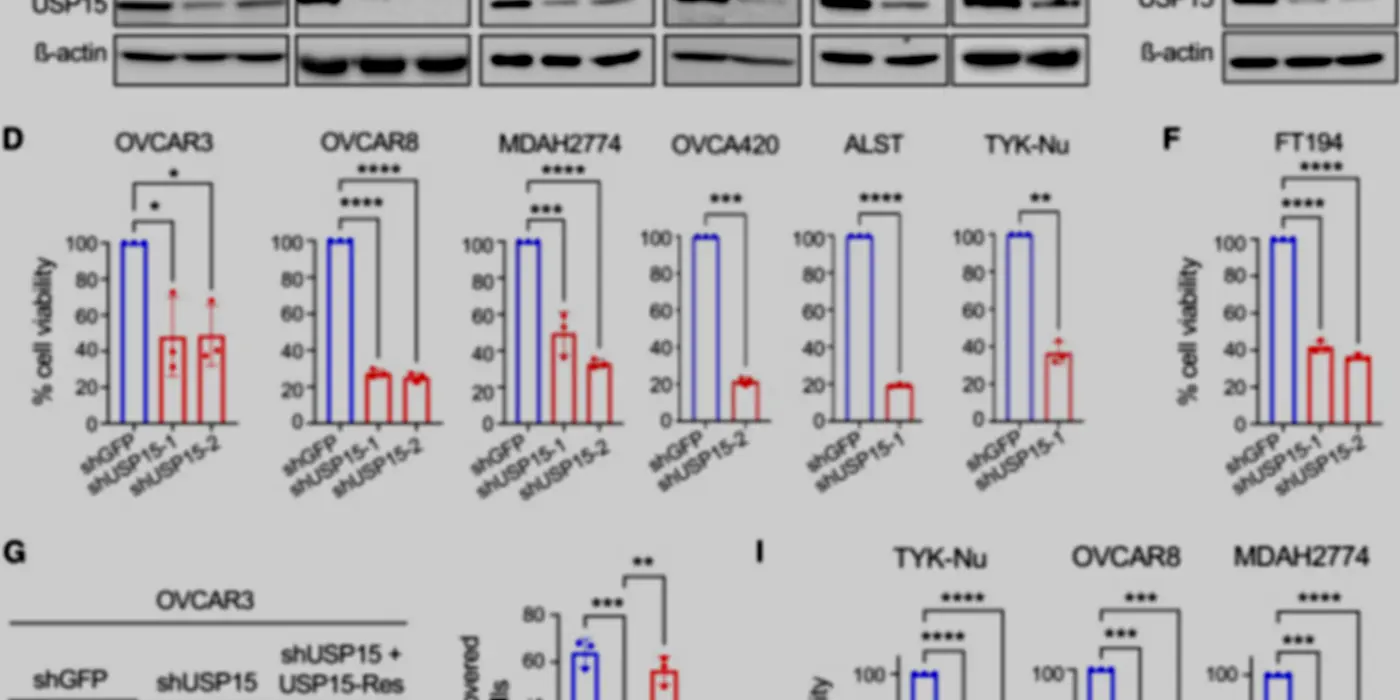
Ovarian cancer is devastating, five-year survival rate under 30%, when detected after it has spread. New basic research may improve that.
Ovarian cancer is devastating, five-year survival rate under 30%, when detected after it has spread. New basic research may improve that.


Researchers who make generalizations about the effects of domestication and dog-wolf differences in the utilization of human visual signals, take note; a new study says dog breeds selected to work in visual contact with humans, such as sheep dogs and gun dogs, are better able to comprehend a pointing gesture than those breeds that usually work without direct supervision. In a series of tests, Márta Gácsi from Eötvös University, Hungary worked with a team of researchers to examine the performance of different breeds of dogs in making sense of the human pointing gesture.

Men are adopting some modern attitudes but in some ways they are still the same. According to a new study on the current thoughts and attitudes of men in the UK, 89% of men surveyed thought that any girl they date should have marriage potential and 38% thought anyone they date shouldn’t have had more than 5 former lovers. How very Victorian. No question addressed how many former lovers men should have. Let's assume it's 5X, as nature intended.68% would not punch their boss in the face, even if they could get away with it, but only 50% would punch a colleague if they had the same opportunity. Which is positively civilized.
Pancakes make you happy. Science knows that now. For decades, social scientists have been searching for a way to measure happiness without any success.Surveys provide some useful information but people misreport and misremember their feelings when confronted by aguy with the clipboard. Ditto for studies where volunteers call in their feelings. Generally speaking, people get squirrely when they know they're being studied.But Peter Dodds and Chris Danforth, a mathematician and computer scientist working in the Advanced Computing Center at the University of Vermont, say they have created a remote-sensing mechanism that can record how millions of people around the world are feeling on any particular day — without their knowing it.
Humans, bah. Multimodal, egg-headed, tool-using, bipedal, opposing-thumbed existence is so 2008. Ants are where it's at, to the delight of neo-rationalists everywhere (and Edward O. Wilson too).They can accomplish tasks a lot more rationally than humans, says a Arizona State University and Princeton University study in Proceedings of the Royal Society: Biological Sciences.This is not a case of overall smartness. Humans and other animals simply often make irrational choices when faced with very challenging decisions, note Stephen Pratt and Susan Edwards.

Clusters, the largest structures in the Universe, are comprised of many galaxies, like the Milky Way. One mystery about clusters is why the gas in the centers of some are rapidly cooling and condensing but not forming into stars. Until recently, no model existed that successfully explained how this was possible.
A team of scientists say they have discovered a method for attaching molecules to semiconducting silicon that may help manufacturers end-run the current limits of Moore's Law in the quest to make microprocessors smaller and more powerful. Moore's Law is named after Intel co-founder Gordon Moore who said in 1965 that the number of transistors that can be placed on an integrated circuit doubles about every two years. But even Moore said the law cannot be sustained indefinitely. Or can it?
Some researchers, and certainly some new businesses, are counting on the fact that the brain imaging technique known as functional magnetic resonance imaging (fMRI) can reveal thoughts and determine if someone is lying or telling the truth - and maybe even their hidden deep desires. Is there something to it? It depends.Neuroscientists at UCLA and Rutgers University say they have evidence that fMRI can be used in certain circumstances to determine what a person is thinking but their research suggests that highly accurate "mind reading" using fMRI is still far from reality.

There's a coevolutionary struggle between a New Zealand snail and its worm parasite but it ends up being sexually advantageous for the snail, whose females favor asexual reproduction in the absence of parasites, according to scientists who say their report represents direct experimental evidence for the "Red Queen Hypothesis" of sex, suggesting sexual reproduction allows host species to avoid infection by their coevolving parasites by producing genetically variable offspring.They say their Current Biology report also supports the "Geographic Mosaic Theory," meaning natural selection need not act uniformly on all members of a species, but can be intense in pockets of a population (hot spots) and absent elsewhere (cold spots).
A group called the Blind Driver Challenge team in Virginia Tech's Robotics and Mechanisms Laboratory has retrofitted a four-wheel dirt buggy with laser range finders, an instant voice command interface and a host of other cutting-edge technologies.Does it sound like Knight Rider's KITT or something out of a Terminator movie? Only if those drivers are blind.It's still in the early testing stage but the National Federation of the Blind considers the vehicle a major breakthrough for independent living of the visually impaired.
Scientists in Nevada are reporting development of a new and environmentally friendly process for chicken parts that are a lot better for you than Chicken Nuggets - namely, producing biodiesel fuel from 'chicken feather' meal, the 11 billion pounds of poultry industry waste that accumulate annually in the United States alone. In the study Mano Misra, Susanta Mohapatra, Narasimharao Kondamudi, and Jason Strull used chicken feather meal, which consists of processed chicken feathers, blood, and innards that have been processed at high temperatures with steam.
University of Utah School of Medicine researchers and their colleagues at University of Texas (UT) Southwestern Medical Center have found strong evidence that abnormal calcium signaling in neurons may play an important role in the development of spinocerebellar ataxia type 2 (SCA2), a disorder causing progressive loss of coordination, speech difficulty, and abnormal eye movements. Their findings are published in the Journal of Neuroscience.SCA2 is an inherited neurodegenerative disease that predominantly affects neurons called Purkinje cells in the cerebellum, the region of the brain that controls voluntary muscle movements, balance, and posture. It is one of a group of genetic disorders characterized by ataxia, or loss of muscle coordination.

Scientists in Hangzhou joined residents and tourists across China and India in observing the longest total solar eclipse in a century - and probably the most-viewed one ever. The moon's shadow traced a path across the world's two most populous countries for five minutes and 36 seconds, a treat for scientists and spectators alike. "We saw it! The clouds kept getting thinner, and we even had a pretty good-sized hole in the clouds for the five minutes of totality," reported Expedition Leader Jay Pasachoff, Field Memorial Professor of Astronomy at Williams and chair of the International Astronomical Union's Working Group on Solar Eclipses, at an observatory near Hangzhou, China as part of the Williams College Eclipse Expedition.