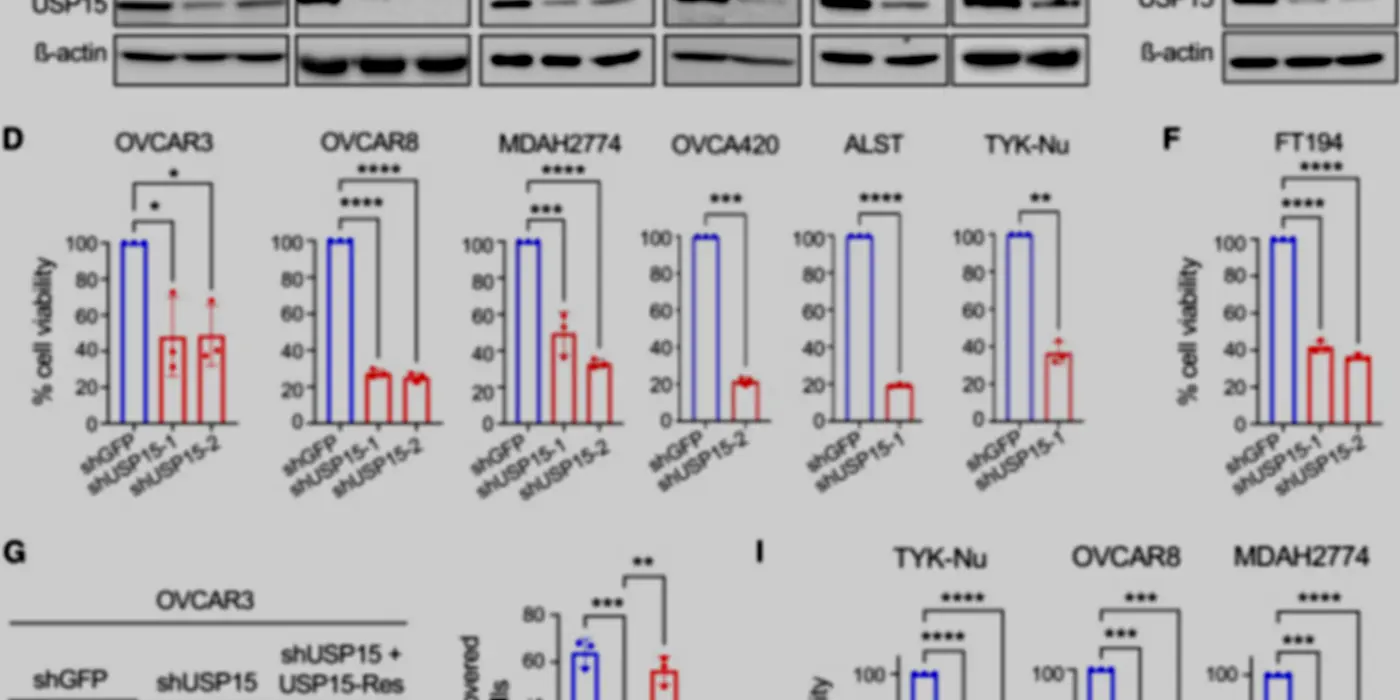
Enzyme USP15 Limits Ovarian Cancer Cells And Boosts Chemotherapy
Ovarian cancer is devastating, five-year survival rate under 30%, when detected after it has spread. New basic research may improve that.
Ovarian cancer is devastating, five-year survival rate under 30%, when detected after it has spread. New basic research may improve that.


A team of astronomers, led by Dr. Bo Wang from the Yunnan Observatory of the Chinese Academy of Sciences, have developed a new model which explains the formation of the most youthful type Ia supernovae. In a paper published in Monthly Notices of the Royal Astronomical Society, Dr. Bo Wang and his team show how the transfer of material from a ‘helium star’ to a compact white dwarf companion causes these cataclysmic events to take place early on in the life of the galaxy they formed in.
'Herbal' doesn't always mean safe and buying diet pills on the internet seems like a higher order of risky behavior but people still do it. Herbal supplement use has continued to rise as people have become aware that some natural products may be superior to synthetic ones, meaning a boost in reported herbal supplement use from 2.5% of people in 1990 to 18.6% in 2002. Herbal supplements with references to "traditional medicine" or "natural components" are widely exempt from FDA regulation because they don't contain ingredients in quantities that can do any harm but a new study tackles Chinese diet capsules that claimed to be purely herbal but nonetheless contain synthetic substances in concentrations far above the therapeutic range and may be a cause of poisoning.
A new study conducted at Mayo Clinic and published in the April issue of Mayo Clinic Proceedings reports that one in six patients receiving therapeutic doses of certain drugs for Parkinson's disease develops new-onset, potentially destructive behaviors, notably compulsive gambling or hypersexuality.That may make grandpa a lot more interesting in doses but hedonistic, destructive behavior can be life-altering for the family members no amused by those antics, like the wife who finds her house mortgaged to have gambling money.
Why are kids in Italian prisons, you might be asking? Italian law says sending kids to prison is a lot less traumatic than being away from their criminal mothers. Italian fathers must be busy boun giorno-ing foreign women on the streets. Whatever the reason, mothers sentenced to prison or awaiting trial can bring their children and live in specific 'nest' areas of the jail. Physicians of the Institute of Paediatric Clinic of the Catholic University of Rome – Policlinico Agostino Gemelli entered the Casa di reclusione di Roma Rebibbia, the main prison of Rome, where the majority of these children live, to assess their health conditions. The paper has been published on the last issue of the Scandinavian Journal of Public Health.
The Earth's original atmosphere held very little oxygen. This began to change around 2.4 billion years ago when oxygen levels increased dramatically during what scientists call the "Great Oxidation Event." The cause of this event has puzzled scientists, but researchers writing in Nature* have found indications in ancient sedimentary rocks that it may have been linked to a drop in the level of dissolved nickel in seawater."The Great Oxidation Event is what irreversibly changed surface environments on Earth and ultimately made advanced life possible," says research team member Dominic Papineau of the Carnegie Institution's Geophysical Laboratory. "It was a major turning point in the evolution of our planet, and we are getting closer to understanding how it occurred."
Nearly half of all hayfever sufferers are more irritable while they are suffering from hayfever symptoms and that impacts their relationships, according to a new survey published today.[1] The survey suggests that up to 2 million people with hayfever[2] feel less affectionate in relationships and up to 600,000 people with hayfever have had an argument due to their hayfever symptoms. Even potential new relationships are at risk, with 6% having cancelled a date or prior arrangement because of their symptoms and 75% feeling self conscious about their appearance.(*)
The findings, announced today, arose from a survey of 787 people with hayfever conducted by YouGov on behalf of Schering-Plough last summer.
Geneticists have tackled a question that has perplexed humanity since the dawn of time: does love at first sight truly exist?
Maybe, according to a study published in the April 2009 issue of the journal GENETICS. A team of scientists from the United States and Australia say they have discovered that, at the genetic level, some males and females are more compatible than others, and that this compatibility plays an important role in mate selection, mating outcomes, and future reproductive behaviors. In experiments involving fruit flies, the researchers found that before mating, females experience what amounts to "genetic priming," making them more likely to mate with certain males over others.
Weight discrimination appears to add to the glass ceiling effect for women, according to a new study in the British journal Equal Opportunities International.
Overweight and obese women are significantly underrepresented among the top CEOs in the United States, according to the research. However, while obese men were also underrepresented, overweight men were actually overrepresented among top CEOs.
The different results for women and men suggest weight bias may contribute to the glass ceiling on the advancement of women to the top levels of management, said Mark Roehling, Michigan State University associate professor of human resource management.
Although fractions are thought to be a difficult mathematical concept to learn, the adult brain encodes them automatically without conscious thought, according to new research in the April 8 issue of The Journal of Neuroscience. The study shows that cells in the intraparietal sulcus (IPS) and the prefrontal cortex — brain regions important for processing whole numbers — are tuned to respond to particular fractions. The findings suggest that adults have an intuitive understanding of fractions and may aid in the development of new teaching techniques.
Acupuncture cannot be shown to have any positive effect on hot flashes during the menopause, says the conclusion of a systematic review of literature by three groups in Daejon, Busan (South Korea) and Exeter (UK), published in the current edition of the peer-reviewed journal Climacteric.
Many women are concerned by the unfavourable publicity given to HRT use, but still have to deal with the symptoms which can occur during and after the menopause. A significant minority of women look for alternatives to HRT to deal with these symptoms. Often these alternatives are untested, and it can be impossible to balance the risks and benefits of these treatments against the risks and benefits of conventional treatments or the discomfort of untreated menopause.
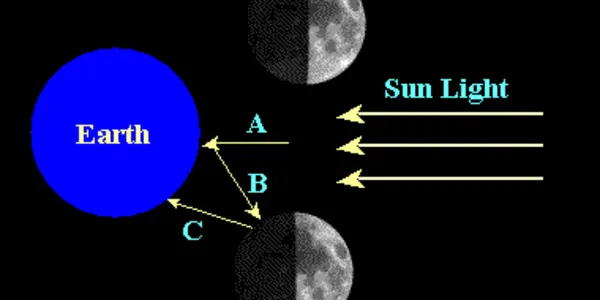
Researchers from the University of Melbourne and Princeton University have shown for the first time that the difference in reflection of light from the Earth's land masses and oceans can be seen on the dark side of the moon, a phenomenon known as earthshine.
Sally Langford from the University of Melbourne's School of Physics who conducted the study as part of her PhD, says that the brightness of the reflected earthshine varied as the Earth rotated, revealing the difference between the intense mirror-like reflections of the ocean compared to the dimmer land.
"In the future, astronomers hope to find planets like the Earth around other stars. However these planets will be too small to allow an image to be made of their surface," she said.
New genome sequence information from the humble baker's yeast has revealed surprising variation in a set of genes that can be thought of as nature's oldest clock. In a paper published in Genome Research scientists show how ribosomal RNA genes that are essential to all Earth's organisms provide insight into how genomes maintain their integrity on their evolutionary journey.