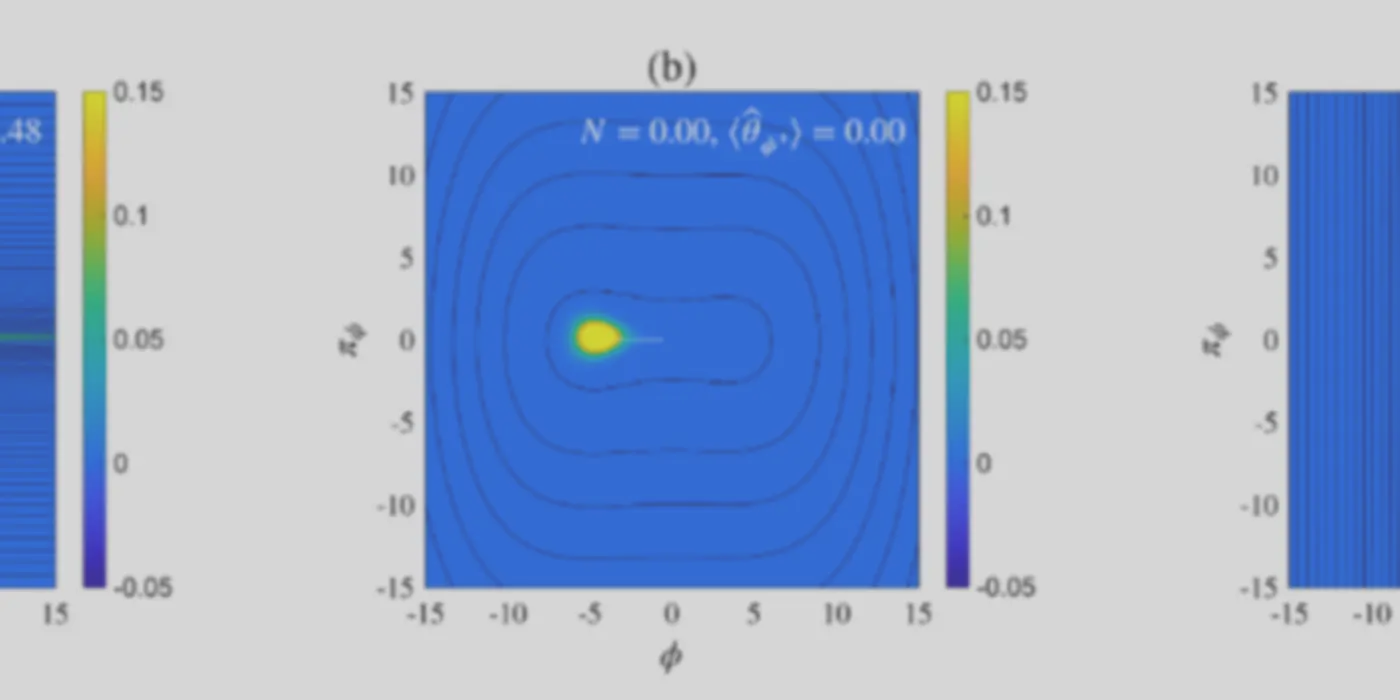
Sorry Higgs, There May Be A New Contender For Low Energy States
If we're trapped in a false vacuum, there's still hope to break free of cosmic lockdown
If we're trapped in a false vacuum, there's still hope to break free of cosmic lockdown


Sliced light is how we communicate now. Millions of phone calls and cable television shows per second are dispatched through fibers in the form of digital zeros and ones formed by chopping laser pulses into bits. This slicing and dicing is generally done with an electro-optic modulator, a device for allowing an electric signal to switch a laser beam on and off at high speeds (the equivalent of putting your hand in front of a flashlight). Reading that fast data stream with a compact and reliable receiver is another matter. A new error-free speed-reading record using a compact ultra-fast component—640 Gbits/second (Gbps, or billion bits per second)—has now been established by a collaboration of scientists from Denmark and Australia.

Whenever humans create a new antibiotic, deadly bacteria can counter it by turning into new, indestructible super-bugs. That's why bacterial infection is the number one killer in hospitals today. But new research from Tel Aviv University may give drug developers the upper hand in outsmarting bacteria once and for all. The secret weapon against a colony of bacteria may be to stress it with its own protection system, which forces it to reduce its population through ... cannibalism.
If you're a female science teacher, male students tend to underrate you. Even worse, if you are a female science teacher in physics, both male and female students underrate you, according to a study of 18,000 biology, chemistry and physics students.Are female science teachers just worse than males and instead got the jobs because of social engineering? No, male and female teachers are equally effective at preparing their students for college, say researchers at Clemson University, the University of Virginia and Harvard University, it's instead gender bias. Their findings appear in Science Education online in the research paper, "Unraveling Bias from Student Evaluations of their High School Science Teachers."

Picture a tree in the forest. The tree "inhales" carbon dioxide from the atmosphere, transforming that greenhouse gas into the building materials and energy it needs to grow its branches and leaves. By removing carbon dioxide from the atmosphere, the tree serves as an indispensable "sink," or warehouse, for carbon that, in tandem with Earth's other trees, plants and the ocean, helps reduce rising levels of carbon dioxide in the air that contribute to global warming.

Some stars go ballistic, racing through interstellar space like bullets and tearing through clouds of gas. Images from NASA's Hubble Space Telescope, taken by Raghvendra Sahai of NASA's Jet Propulsion Laboratory, Pasadena, Calif., and colleagues reveal 14 of these young, runaway stars. The stars are plowing through regions of dense interstellar gas, creating brilliant arrowhead structures and trailing tails of glowing gas. These arrowheads, or bow shocks, form when the stars' powerful stellar winds, streams of matter flowing from the stars, slam into surrounding dense gas. The phenomenon is similar to that seen when a speeding boat pushes through water on a lake.

Scientists today announced the discovery of 10 amphibians believed to be new to science, including a spiky-skinned, orange-legged rain frog, three poison dart frogs and three glass frogs, so called because their transparent skin can reveal internal organs.The species were discovered during a recent Rapid Assessment Program (RAP) expedition in Colombia's mountainous Tacarcuna area of the Darien, near the border with Panama. The expedition was led by herpetologists from Conservation International (CI) in Colombia and ornithologists from the Ecotrópico Foundation, with the support of the local Emberá community of Eyakera.

Adolescents and young adults who are heavy users of marijuana are more likely than non-users to have disrupted brain development, according to a new study. Pediatric researchers found abnormalities in areas of the brain that interconnect brain regions involved in memory, attention, decision-making, language and executive functioning skills. The findings are of particular concern because adolescence is a crucial period for brain development and maturation.
In the year of the 200th anniversary of the birth of Darwin, researchers using comparative genomics have uncovered genetic clues about why some strains of the pathogen that causes Q fever, Coxiella burnetii, are more virulent than others. Relevant? Well, sort of, though genetics came after Darwin, but the evolution of the pathogen makes it relevant and it also gives us a chance to remind you about Darwin Day here on February 12th.

The Galapagos Islands are an archipelago situated some 1 000 km to the west of Ecuador in the Pacific Ocean. They were formed by volcanic activity around 10 million years ago. Out of the 19 islands, two are still active volcanoes. Due to the isolation of the islands, a very unique ecosystem developed and many of the species found there exist nowhere else on Earth. All reptiles, half of the plants and some 40% of the birds are endemic.

All life depends on peaceful coexistence with a swarm of microbial life inside us that performs vital services from helping to convert food to energy to protection from disease. With the help of a squid that uses a luminescent bacterium to create a predator-fooling light organ and a fish that uses a different strain of the same species of bacteria like a flashlight to illuminate the dark nooks of the reefs where it lives, scientists have found that gaining a single gene is enough for the microbe to switch host animals.
Monash Institute of Medical Research (MIMR) scientists have created Australia's first induced pluripotent stem (iPS) cell lines. They have derived the cells from skin cells, and reprogrammed them to behave as embryonic stem cells; a breakthrough that will allow Australian scientists unlimited access to study a range of diseases.Until now, Australian scientists have had to import human iPS cells from America or Japan.Program leader, Dr Paul Verma, said the significance of developing iPS cells 'in-house' cannot be underestimated. "We now have the capability to investigate any human disease we wish, rather than relying on iPS cells from specific diseases that have been generated elsewhere."
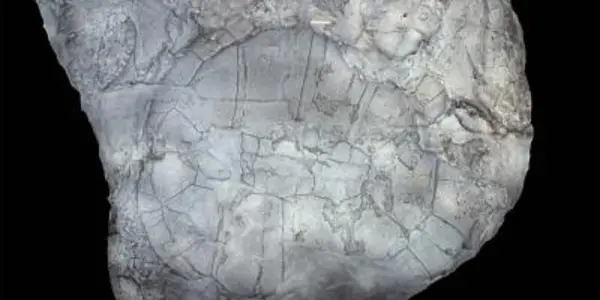
A new find in Arctic Canada strongly suggests that animals migrated from Asia to North America not around Alaska, as once thought, but directly across a freshwater sea floating atop the warm, salty Arctic Ocean. In 2006, John Tarduno, professor of geophysics at the University of Rochester and leader of the Arctic expedition, led an expedition to the Arctic to study paleomagnetism—the Earth's magnetic field in the distant past. Knowing from previous expeditions to the area that the rocks were rich with fossils, Tarduno kept an eye out for them and was rewarded when one of his undergraduate students uncovered the amazingly well preserved shell of a turtle.