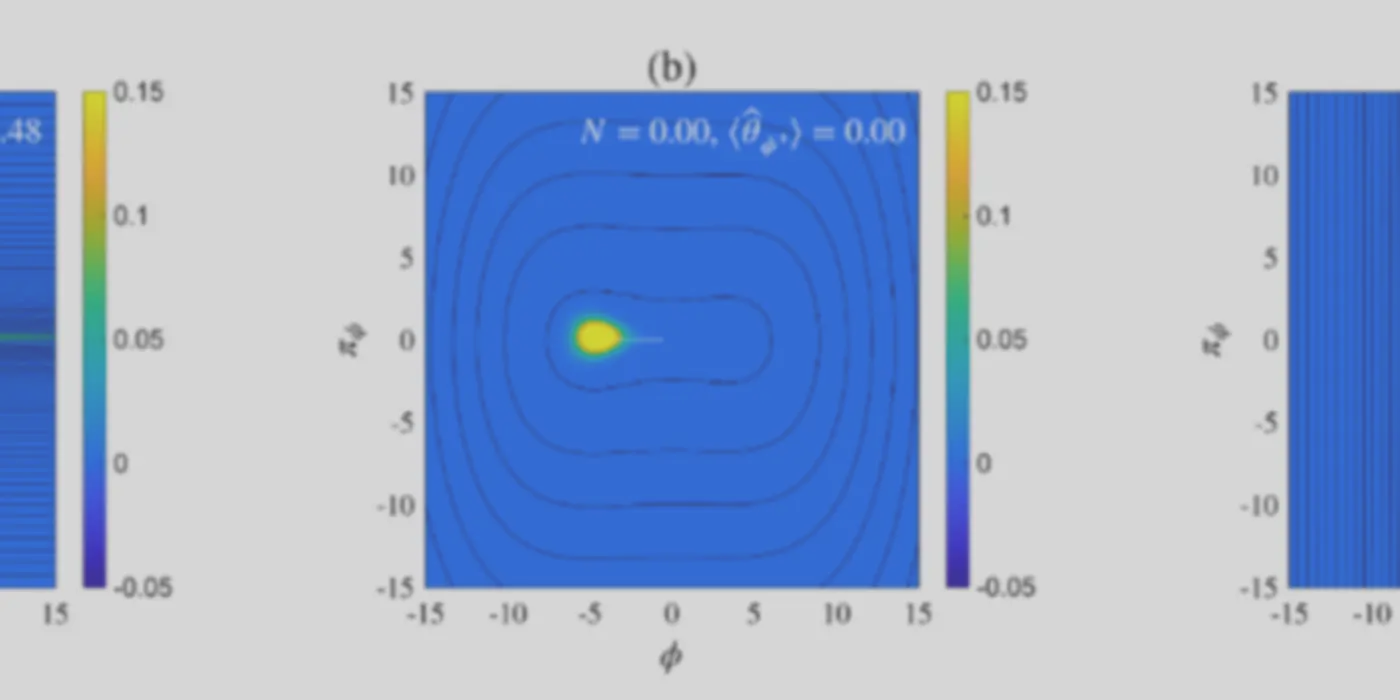
Sorry Higgs, There May Be A New Contender For Low Energy States
If we're trapped in a false vacuum, there's still hope to break free of cosmic lockdown
If we're trapped in a false vacuum, there's still hope to break free of cosmic lockdown


Researchers from Northwestern University's Feinberg School of Medicine appear to have reversed the neurological dysfunction of early-stage multiple sclerosis patients by transplanting their own immune stem cells into their bodies and thereby "resetting" their immune systems. The patients in the small phase I/II trial continued to improve for up to 24 months after the transplantation procedure and then stabilized. They experienced improvements in areas in which they had been affected by multiple sclerosis including walking, ataxia, limb strength, vision and incontinence. The study will be published online January 30 and in the March issue of The Lancet Neurology.
MS is the result of damage to myelin - the protective sheath surrounding nerve fibres of the central nervous system - which interferes with messages between the brain and the body. For some people, MS is characterised by periods of relapse and remission while for others it has a progressive pattern. Symptoms range from loss of sight and mobility, fatigue, depression and cognitive problems.
Scientists have known for more than 200 years that vision begins with a series of chemical reactions when light strikes the retina, but the specific chemical processes have largely been a mystery. A team of researchers from the United States and Switzerland say they have shed new light on this process by "capturing" this chemical communication for future study and say it may lead to the development of new treatments for some forms of blindness and vision disorders.
Researchers at the University of British Columbia have discovered a mimic of one of "nature's antibiotics" that can be used to coat medical devices to prevent infection and rejection. The study, released today in the journal Chemistry and Biology, found that a synthetic form, short tethered cationic antimicrobial peptides (cationic peptide), can protect surfaces, like those of medical devices, killing bacteria and fungi that come into contact with them. Peptides are small proteins.
A study of college freshmen in the United States and in China found that Chinese students know more science facts than their American counterparts but both groups are nearly identical when it comes to their ability to do scientific reasoning - unfortunately neither group was very good at it.The lesson is that educators must go beyond teaching science facts if we hope to produce voters, policy makers and scientists who can make reasoned choices.
The Scientific business of Thomson Reuters today announced the results of a study showing that the United States' share of scientific research has shrunk while Asia-Pacific's share of output has risen but the U.S. remains the leader globally in the relative impact of its research.
In its January/February issue of Science Watch, Thomson Reuters analyzes 12 year's worth of data from its National Science Indicators database to determine the U.S.'s global scientific influence based on the nation's research output and impact.

Investigators from Ludwig-Maximilians-Universität München and a Bolzano colleague have written another chapter in a murder case over 5,000 years old. New investigations reconstructed the chronology of the injuries that Oetzi, the glacier man preserved as a frozen mummy, received in his last days.
In 2007 chocolate was all the rage, with Mars, Inc.-funded scientists even having their own panel at the AAAS meeting. In 2008, blueberries were the rage. In 2009, says Dr. Luis Cisneros, Texas A&M AgriLife Research food scientist, "Stone fruits are super fruits, with plums as emerging stars."
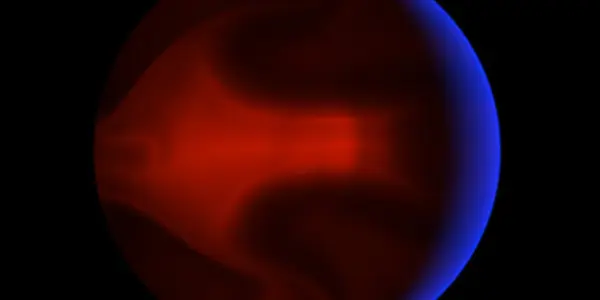
Astronomers have observed the intense heating of a distant planet as it swung close to its parent star, providing important clues to the atmospheric properties of the planet. With that data, astronomers at the University of California, Santa Cruz were able to generate 'realistic' images of the planet by feeding the data into computer simulations of the planet's atmosphere. The researchers used NASA's Spitzer Space Telescope to obtain infrared measurements of the heat emanating from the planet as it whipped behind and close to its star. In just six hours, the planet's temperature rose from 800 to 1,500 Kelvin (980 to 2,240 degrees Fahrenheit).
An international team of researchers has uncovered the first gene linked to the most common type of epilepsy, called Rolandic epilepsy. One out of every five children with epilepsy is diagnosed with this form, which is associated with seizures starting in one part of the brain.The finding is the first step in unlocking the causes of common childhood epilepsies and developing more effective treatments. Children with Rolandic and other types of epilepsies are usually treated with drugs that prevent seizures by suppressing electrical activity in the entire brain.

The team operating NASA's Mars Exploration Rover Spirit plans diagnostic tests this week after Spirit did not report some of its weekend activities, including a request to determine its orientation after an incomplete drive.On Sunday, during the 1,800th Martian day, or sol, of what was initially planned as a 90-sol mission on Mars, information radioed from Spirit indicated the rover had received its driving commands for the day but had not moved. That can happen for many reasons, including the rover properly sensing that it is not ready to drive. However, other behavior on Sol 1800 was even more unusual: Spirit apparently did not record the day's main activities into the non-volatile memory, the part of its memory that persists even when power is off.
Recent studies have suggested that autism spectrum disorder (ASD) may be more prevalent among children born very prematurely. The early symptoms of ASD are also associated with other conditions related to preterm births, such as cerebral palsy, which can make it difficult to correctly screen children for ASD. Because of this, researchers have begun to explore the relationship between preterm birth, cognitive and developmental impairments, and ASD.Two articles soon to be published in The Journal of Pediatrics explore this possible correlation between preterm birth and ASD.