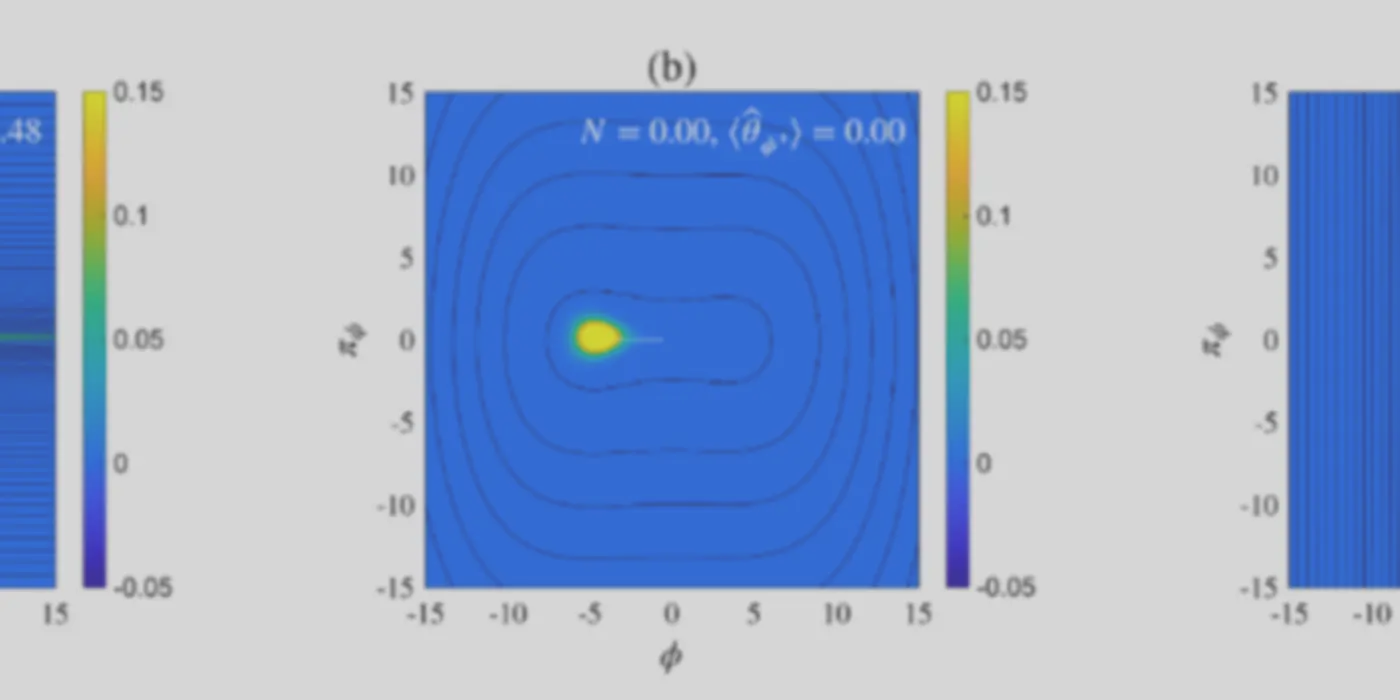
Sorry Higgs, There May Be A New Contender For Low Energy States
If we're trapped in a false vacuum, there's still hope to break free of cosmic lockdown
If we're trapped in a false vacuum, there's still hope to break free of cosmic lockdown


In the first-ever study of food advertisements in UK magazines, researchers found them filled with sugary, salt-filled options often contradicting the health messages the articles were trying to put across. That means that women sitting down to enjoy some reading with their cup of tea and a chocolate bar may be tempted to an even unhealthier diet. Newcastle University researchers collected and compared data on the nutritional content of the foods advertised in 30 most widely-read weekly magazines during November 2007. A detailed nutritional analysis of the foods in the adverts found that the products advertised were generally much higher in sugar and salt, and lower in fiber than the World Health Organisation (WHO) recommendations.
Peter Doran, Associate Professor of Earth and Environmental Sciences at the University of Illinois at Chicago, wasn't all that happy that his Nature paper(1) was widely used by detractors of early 2000s global warming theory so he set out recently to find out just how many other earth scientists believe in human-induced climate change.His research then found that some parts of Antarctica had cooled between 1986 and 2000 so he was lumped in with those disputing global warming, something he did not say. Doran found out, just as Bill Gray later would when he disputed Al Gore's contention that global warming caused Hurricane Katrina, when you go up against crazy people with an agenda life can get ugly.

NGC 253 is one of the brightest and dustiest spiral galaxies in the sky but we are always learning new things about it. Astronomers using the Very Large Telescope's (VLT) near-infrared eye called NACO, an adaptive optics instrument, are now saying that the center of NGC 253 hosts a scaled-up version of Sagittarius A*, the bright radio source that lies at the core of the Milky Way, and which we know harbors a massive black hole."We have thus discovered what could be a twin of our Galaxy's Centre," says co-author Almudena Prieto, part of the group of astronomers from the Instituto de Astrofísica de Canarias (Spain) and lead author of a new paper on the topic, which also disclosed a group of new young, massive and dusty stellar nurseries there.
A review article published in the European journal Psychotherapy and Psychosomatics says there is a relationship between depression and bone metabolism.The study says that the association between psychiatric illness, in particular depression, and osteoporosis has been the subject of a growing body of research yielding various findings, although most identify some effect on bone. In addition to medication-related processes and/or modifiable lifestyle factors associated with mood disturbances, endocrine and immune alteration secondary to depression may play a pathogenetic role in bone metabolism.
Scientists who study how human chemistry can permanently turn off genes have typically focused on small islands of DNA believed to contain most of the chemical alterations involved in those switches. But after an epic tour of so-called DNA methylation sites across the human genome in normal and cancer cells, Johns Hopkins scientists have found that the vast majority of the sites aren’t grouped in those islands at all, but on nearby regions that they’ve named “shores.”
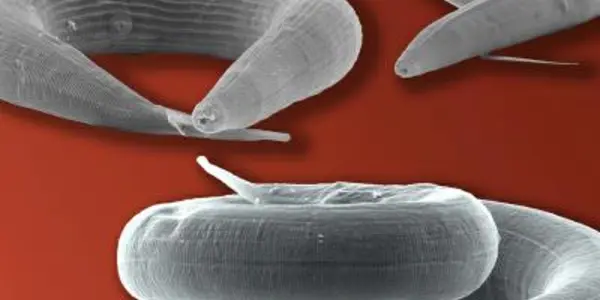
Even 150 years after Charles Darwin’s epochal On the Origin of Species many questions about the molecular basis of evolution are still waiting for answers.How are signaling pathways changed by genes and by the environment enabling the development of new species? A group of scientists at the Max Planck Institute for Developmental Biology in Tübingen, Germany, are striving to decode the molecular basis of parasitism and their objects of research are nematode worms. Do the dauer stages which occur in certain nematodes and the infective larvae of their parasitic cousins share a common evolutionary basis?
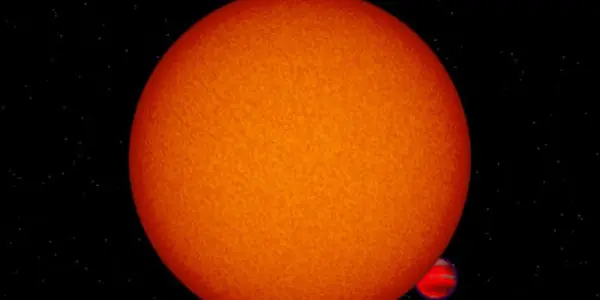
Transiting exoplanets are routinely detected when they pass in front of their parent star as viewed from the Earth, which only happens by chance. The transit event causes a small drop in the observed starlight, which can then be detected.
Smallpox has a nasty history throughout the world. Caused by poxviruses, smallpox is one of the few disease-causing agents against which the human body’s immune system is ineffective.The human immune system is rendered helpless against poxviruses partly because the viruses block a human immune molecule, interleukin-18 (IL-18), from sending out a signal to the immune system. The body acts as if everything is fine and the deadly disease takes over.A major breakthrough by Junpeng Deng, a structural biologist in the Division of Agricultural Sciences and Natural Resources (DASNR) at Oklahoma State University, and his first-year Ph.D. student, Brian Krumm, may be the first step towards a pharmaceutical medication for smallpox and the emerging human monkeypox.

Since man first discovered that he could control fire and combust fuels for heat and cooking, he has had to deal with the byproducts of the combustion of organic fuels. But with more people the byproducts are much greater.For the first two million years of our existence, man’s fuel usage was limited to the combustion of wood in simple campfires. Recently, research has said that continual exposure of early man to campfires used as heat sources in enclosed areas contributed to increased incidences of nasal cancer.Today, man’s need for energy has led to the formation of megacities – large urban and suburban centers whose populations exceed 10 million inhabitants. In 1950, New York City was the world’s only megacity. By 2007, there were 14.
New research by Brunel University, the Universities of Exeter and Reading and the Centre for Ecology&Hydrology says there is a stronger link between water pollution and rising male fertility problems. The study outlines how a group of testosterone-blocking chemicals is finding its way into UK rivers, affecting wildlife and potentially humans. The research was supported by the Natural Environment Research Council and is published in the journal Environmental Health Perspectives.
Climate prediction is difficult stuff. As you know, it's impossible to predict the weather 10 days from now much less six months and aside from "it will get a lot worse" no one can say with any degree of certainty what Earth's climate could look like in the future given changing kinds of pollution conditions and nature itself.
Introducing presumed consent or opt-out system may increase organ donation rates, suggests a new systematic review published in the BMJ (British Medical Journal).There is currently insufficient supply of donor organs to meet the demand for organ transplantations in the UK but the number of patients registered for a transplant continues to increase. In March 2008, 7,655 patients were on the active transplant list and 506 died in the years 2007-2008 while waiting for their transplant.At present the UK has an informed consent legislative system where individuals opt-in if they are willing for their organs to be used after death. However, only a quarter of the UK population are on the NHS donor register.