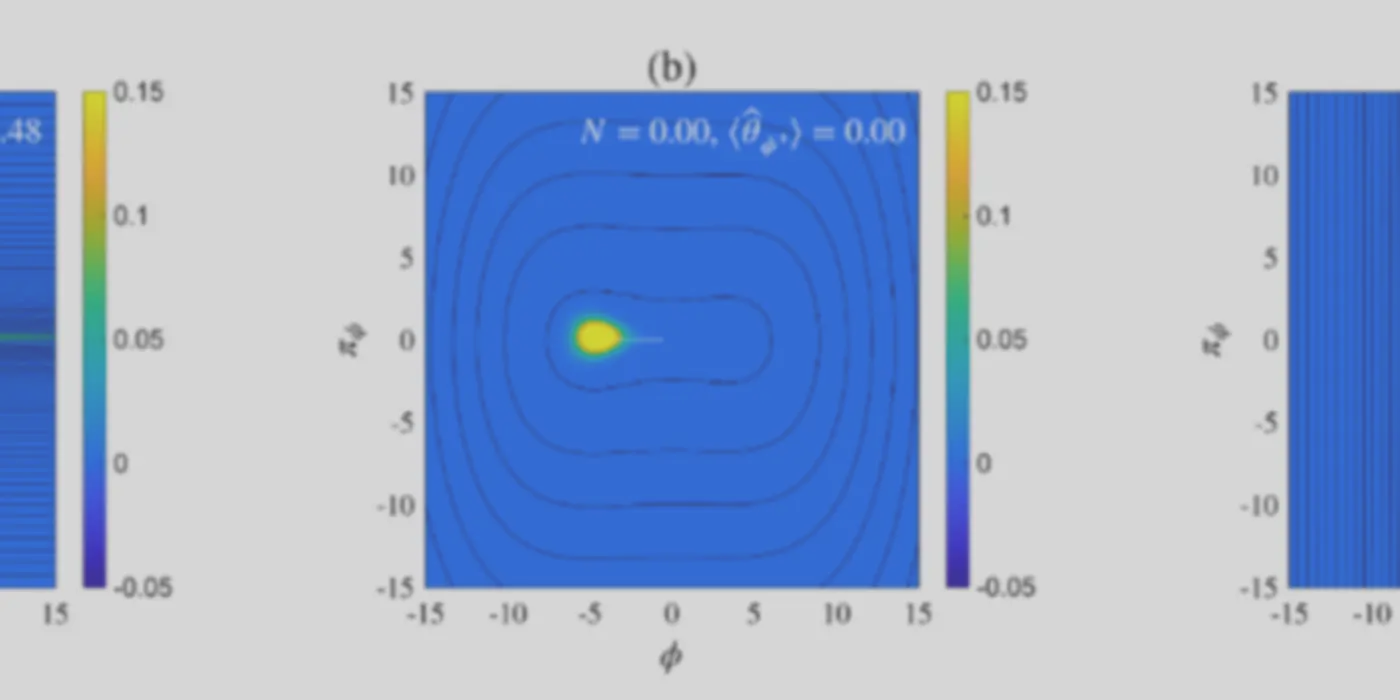
Sorry Higgs, There May Be A New Contender For Low Energy States
If we're trapped in a false vacuum, there's still hope to break free of cosmic lockdown
If we're trapped in a false vacuum, there's still hope to break free of cosmic lockdown

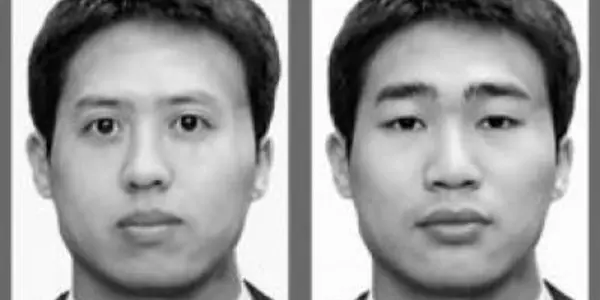
There may be a simple way to address racial bias: Help people improve their ability to distinguish between faces of individuals of a different race, according to Brown University and University of Victoria researchers who say they learned this through a new measurement system and protocol they developed to train Caucasian subjects to recognize different African American faces. "The idea is this that this sort of perceptual training gives you a new tool to address the kinds of biases people show unconsciously and may not even be aware they have," said Michael J. Tarr, the Sidney A. and Dorothea Doctors Fox Professor of Ophthalmology and Visual Sciences and a professor of cognitive and linguistic sciences at Brown.

Headache sufferers either benefit from acupuncture or they mentally fool themselves into thinking acupuncture helps, according to two separate systematic reviews by Cochrane Researchers which show that acupuncture is an effective treatment for prevention of headaches and migraines, but faked procedures, in which needles are incorrectly inserted, can be just as effective.In each study, the researchers tried to establish whether acupuncture could reduce the occurrence of headaches. One study focused on mild to moderate but frequent 'tension-type' headaches, whilst the other focused on more severe but less frequent headaches usually termed migraines. Together the two studies included 33 trials, involving a total of 6,736 patients.

The fossil of a lizard-like New Zealand reptile has been identified by a team of scientists from University College London, University of Adelaide, and the Museum of New Zealand Te Papa Tongarewa. The fossil, dating back 18 million years, has triggered fresh arguments over whether the continent was fully submerged some 25 million years ago. The endangered New Zealand tuatara (Sphenodon) is a lizard-like reptile that is the only survivor of a group that was globally widespread at the time of the dinosaurs. The tuatara lives on 35 islands scattered around the coast of New Zealand, mainland populations having become extinct with the arrival of humans and associated animals some 750 years ago.
Cosmic-rays detected half a mile underground in a disused U.S. iron-mine can be used to detect major weather events occurring 20 miles up in the Earth’s upper atmosphere, according to a new study published in Geophysical Research Letters and led by scientists from the UK’s National Centre for Atmospheric Science (NCAS) and the Science and Technology Facilities Council (STFC). The study shows how the number of high-energy cosmic-rays reaching a detector deep underground, closely matches temperature measurements in the upper atmosphere (known as the stratosphere).

The consensus among scientists has been that while much of the globe has been getting warmer, a large part of Antarctica – the East Antarctic Ice Sheet – has actually been getting colder. Not so, say Eric Steig, a University of Washington professor of Earth and space sciences, and colleagues in Nature.
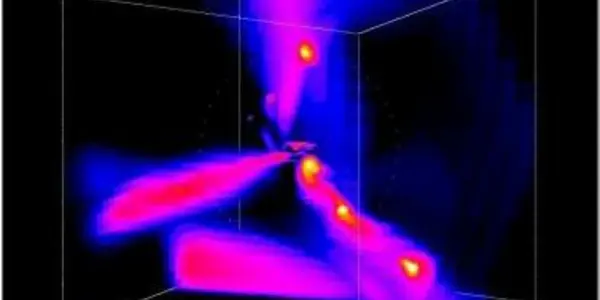
Galaxies are the building blocks of the Universe. Each of them comprises some hundred billion radiant stars, such as our sun, which extend across about 50,000 light years. Every galaxy is embedded in a spherical halo made of dark matter that cannot be seen but is detected through its massive gravitational attraction. The exact nature of this matter is still unknown.
People on low-carbohydrate diets are more dependent on the oxidation of fat in the liver for energy than those on a low-calorie diet, researchers at UT Southwestern Medical Center have found in a small clinical study published in Hepatology.Although the study was not designed to determine which diet was more effective for losing weight, the average weight loss for the low-calorie dieters was about 5 pounds after two weeks, while the low-carbohydrate dieters lost about 9½ pounds on average. Glucose, a form of sugar, and fat are both sources of energy that are metabolized in the liver and used as energy in the body. Glucose can be formed from lactate, amino acids or glycerol.
A new report, co-authored by a University of Hertfordshire academic, which will be launched this Thursday (22 January), has revealed that girls are more likely to have new technologies at home than boys and it is mothers rather than fathers who assist them.The Learning in the Family report which looked at how families are involved in children’s learning, was funded by Becta, commissioned by Intuitive Media Research Services and co-authored by Robert Hart of Intuitive Media and Professor Karen Pine, at the University’s School of Psychology. They conducted two online surveys with a sample of 4,606 children aged six to fourteen, going into more depth with a further 2,535 children and then interviewed twelve families.
It has been difficult to prove that fast-swimming sperms have an advantage when it comes to fertilizing an egg but a research team at Uppsala University say that unfaithful females of the cichlid fish species do influence the males’ sperms - increased competition leads to both faster and larger sperms, and the research findings published in PNAS say that the much mythologized size factor does indeed count.The findings also show that the speed and the size of sperms are closely related: larger sperms are faster. These sperms swim faster thanks to the greater power of a larger flagellum, but faster sperms also need to have a larger store of energy, which in turn results in larger sperms.

In terms of diversity and sheer numbers, the microbes occupying the human gut easily dwarf the billions of people inhabiting the Earth. Numbering in the tens of trillions and representing many thousands of distinct genetic families, this microbiome, as it's called, helps the body perform a variety of regulatory and digestive functions, many still poorly understood. How this microbial mélange may be linked to body weight changes associated with morbid obesity is a relevant and important clinical question that has received recent attention. Now, a new study suggests that the composition of microbes within the gut may hold a key to one cause of obesity—and the prospect of future treatment.
The cast of "House" won't need to find new jobs any time soon but using a robotic assistant to remove a patient's gallbladder by key-hole surgery (laparoscopic cholecystectomy) was as safe as working with a human assistant, a Cochrane Review has concluded. Comparisons between robot- and human-assisted surgery showed that there were no differences in terms of morbidity, the need to switch to open surgery, total operating time, or length of stay in hospital.

It's not quite a "Book of the Dead" but a 14th century brick oven uncovered by archaeologists in Spain found a unique use for animal bones just the same - strengthening city fortifications. The scientists report that the animal bones were burnt in the oven and mixed with other materials to produce a protective coating that strengthened the grand medieval walls of what is today Granada, Spain. It must have worked pretty well since Granada and the surrounding territory were the last bastion of Islamic Iberia during that period.In a study scheduled to appear in the Jan. 15 issue of Analytical Chemistry, scientists describe how they found these materials thanks to their new testing method.