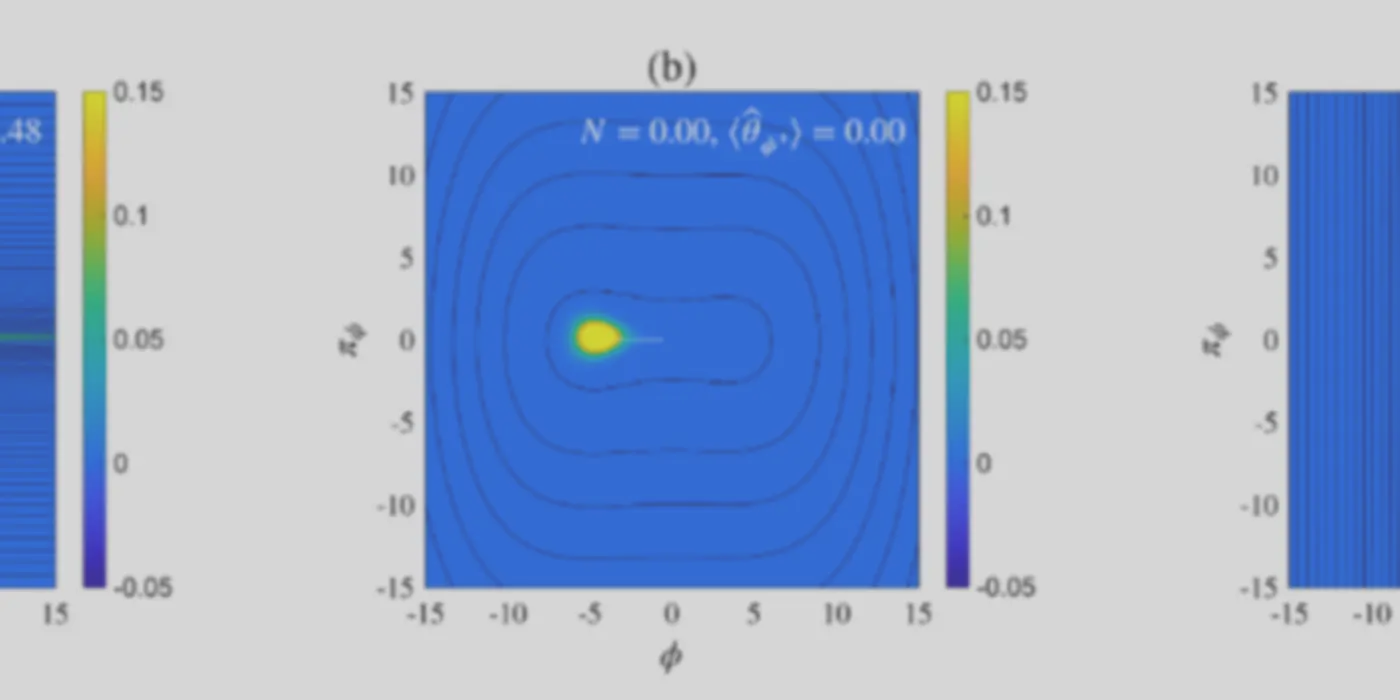
Sorry Higgs, There May Be A New Contender For Low Energy States
If we're trapped in a false vacuum, there's still hope to break free of cosmic lockdown
If we're trapped in a false vacuum, there's still hope to break free of cosmic lockdown


Do volunteers who take part in conservation efforts do it for the wildlife they are trying to protect or just to impress their friends and because they like the way wildlife looks on their property? A University of Alberta case study says it is not altruism that drives them.
A study of purple martin landlords, those who keep and monitor special birdhouses on their land, revealed that they were more motivated to take part in the conservation project for egoistic rather than altruistic reasons.
"Though there were areas of overlap, we found that common motivations for self-benefit included interaction with the birds, a sense of achievement, social interaction, personal stimulation and enjoyment," said Glen Hvenegaard, a co-author on the qualitative study and a professor of geography and environmental studies at the University of Alberta's Augustana campus in Canada.
"Big things come in small packages," the saying goes, and it couldn't be more true when discussing the mouse. This little creature has become a crucial part of human history through its contributions in understanding human genetics and disease.
In a review published in Disease Models & Mechanisms (DMM), genetics researchers from Yale University School of Medicine and Fudan University School of Life Sciences discuss the history and future of mice as a model organism.
They predict that the next frontiers in mouse genetics – such as creating mice expressing human genes to create "humanized" mice – will continue to provide scientists with new tools to not only decipher clinical mysteries, but also to test novel therapies and cures.
Controlling body weight is a complicated process but scientists investigating the brain's intricate neurocircuitry and its role in maintaining energy balance are forming a clearer picture of the myriad events that lead to weight gain ... and weight loss.
Writing in Nature Neuroscience, a study led by scientists at Beth Israel Deaconess Medical Center (BIDMC) identifies another piece of this complex puzzle, demonstrating that the neurotransmitter GABA --one of the master communicators among neurons – plays a role in controlling energy balance.
Anyone who has ever tried smoking probably remembers that first cigarette vividly - it likely brought either a nasty coughing fit or a rush of pleasure - a "buzz."
A new study links those first experiences with smoking, and the likelihood that a person is currently a smoker, to a particular genetic variation.
The new finding also adds to growing suspicion surrounding the role of a particular nicotine-receptor gene in smoking-related behaviors and in lung cancer. Other researchers have already linked variations in the same genetic region to smokers' level of dependence on nicotine, to the number of cigarettes smoked per day and to a far higher risk of lung cancer — the ultimate outcome of a lifetime of smoking.

Fingerprints don't get a lot of respect on television shows like CSI these days - but they are about to make a comeback.
A new technology developed at Purdue University can detect trace amounts of explosives, drugs or other materials left behind in fingerprints and can even distinguish between overlapping fingerprints left by different individuals - a difficult task for current optical forensic methods.
A team led by R. Graham Cooks, Purdue's Henry Bohn Hass Distinguished Professor of Analytical Chemistry, has created a tool that reads and provides an image of a fingerprint's chemical signature. The technology can be used to determine what a person recently handled.
A newly discovered function for a hormone in melons suggests it plays a role in how sexual systems evolve in plants.
Scientists from several French institutions, led by Abdel Bendahmane of the National Institute for Agricultural Research (INRA), isolated the melon sex determination gene and determined its function. As part of this collaborative effort, New York University biologists Jonathan Flowers and Michael Purugganan, who are part of NYU's Center for Genomics and Systems Biology, conducted the evolutionary analysis of the study.
Because plants' sexual systems are varied—species may possess various combinations of male, female, or hermaphrodite systems—their evolution has long been of interest to scientists. This is especially the case in melons, whose sexual system—andromonoecy—carries both male and bisexual flowers and appears to have evolved recently. In this study, the researchers sought to understand what determines the recent formation of melons' new sexual system.
People like ideological commitment more than moderation and 'across the aisle' thinking in times of uncertainty, says University of Southern California economist Juan Carrillo, so extreme positions build trust among an electorate during rough periods.
In defiance of oddsmakers, he seems to think this is an advantage for Republicans, who have been predicting a 1964-era loss for John McCain.
"The current political advantage of the Republican Party stems from the ability of its candidates to develop 'signature ideas.' This strategy is rewarded even when the electorate has ideological reservations," he says.

We don't have spacecraft to take us outside our solar system but astronomers have still been able to develop a good understanding of how our solar system formed and in turn, how others formed. In the last dozen years, the nearly 300 exoplanets have been discovered have added to our knowledge base.
Conventional knowledge said most solar systems were like our own but three Northwestern University researchers questioned that assumption and explored the question in detail. What they learned is that the solar system in which the Earth orbits our sun is actually uncommon.
Edward Thommes, Soko Matsumura and Frederic Rasio were the first to develop large-scale, sophisticated computer simulations to model the formation of planetary systems from beginning to end. Because of computing limitations, earlier models provided only brief glimpses of the process. The findings of their study titled, "Gas Disks to Gas Giants: Simulating the Birth of Planetary Systems," are detailed in the August 8, 2008 issue of Science magazine.
/a>
High levels of testosterone may be a key factor in spreading disease among mice, according to biologists. The findings could help explain why males in a population are often more likely to get infected, and transmit disease.
Previous research has linked testosterone, the male sex hormone, to immune system suppression. Studies have shown that males, compared to females, experience more bouts of disease, and account for a larger share of disease transmission. However, it is not fully clear what makes males such super-spreaders of disease.
South Africans don't use bug zappers or commercial flypaper to ward off pesky flies, but instead hang up a bunch of Roridula gorgonias leaves.
Attracted to the shiny adhesive droplets on the leaf's hairs, the flies are soon trapped by this 'natural flypaper.' But R. gorgonias plant is also home to a population of Pameridea roridulae (mirid bugs), which dine on the trapped insects and the mirid bugs never get stuck.
Curious to find out how that works, Dagmar Voigt and Stanislav Gorb from the Max-Planck Institute for Metals Research, Germany, decided to take a look at the non-stick bugs to see how they elude R. gorgonias' grasp and they published their results in The Journal of Experimental Biology on August 8 2008.
They were able to call on R.
Scientists have unravelled a potential mechanism for how top-level rowers develop enlarged strengthened hearts as a result of long-term intensive training.
The research in the August edition of Clinical Endocrinology suggests a causal link between naturally occurring hormone levels and strengthening of the heart muscle in professional rowers. Elite rowers were found to have higher levels of insulin-like growth factor 1 (IGF-1) compared to healthy sedentary volunteers. In these athletes, IGF-1 values correlate with enlargement and strengthening of heart muscle cells.
IGF-1 is a hormone that is produced by the liver in response to growth hormone stimulation.
Many sports teams select their uniforms based on the mascot, city or country they are representing and not on a referee’s preference or bias but a new study has found that choosing the color red for a uniform in competitive sports can actually affect the referee’s split-second decision-making ability and even promote a scoring bias.
Psychologists Norbert Hagemann, Bernd Strauss and Jan Leiβing from the University of Münster specifically found that referees tended to assign more points to TaeKwon Do competitors dressed in red than those dressed in blue. The researchers presented 42 experienced tae kwon do referees with videos of blue- and red-clad competitors sparring. The two sets of clips were identical except that the colors were reversed in the second set, making the red athlete appear to be wearing blue and vice versa. The referees were then asked to score the performance of each competitor, red or blue, after each video.